

Archive · 22 Sep 2026
Khamiri Roti: The Indian Subcontinent’s Fermented Flatbread Tradition
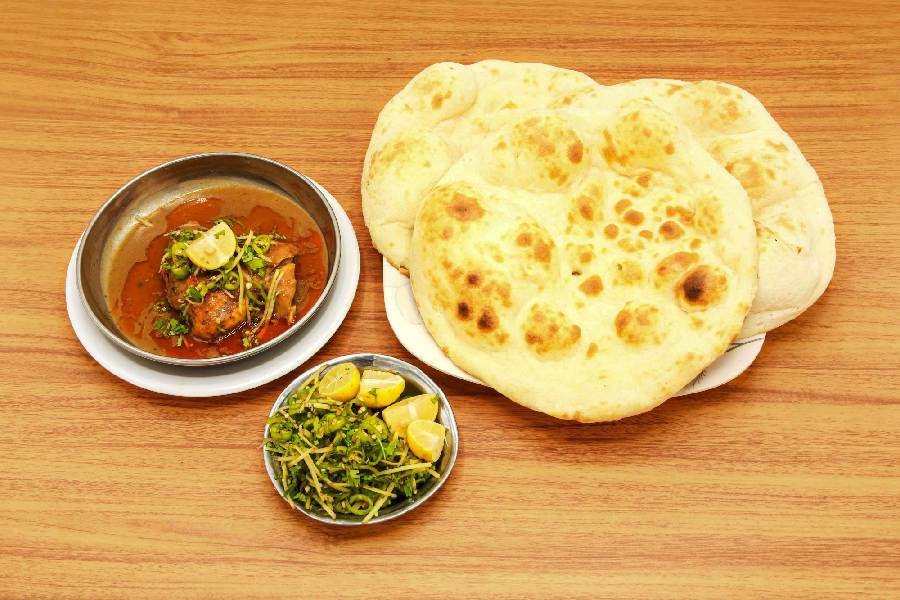
Khamiri roti is a soft, thick Indian flatbread.
It is made from whole wheat instead of refined flour.
The dough rises because it is fermented before cooking.
Traditionally, bakers used curd, wild yeast, bacteria and sometimes jaggery to help it rise.
This gives the bread a gentle sour taste.
It is different from naan, which is richer and chewier, and tandoori roti, which is thinner and crisper.
It is also not exactly the same as sourdough because the starters and fermentation conditions differ.
In Kolkata, people can eat it with korma, kababs or a little ghee.

Khamiri roti is a thick, soft and fluffy flatbread made with whole wheat and a fermented starter.
Its name comes from the Urdu word “khamir,” meaning yeast, and the bread traditionally used wild yeast, bacteria, sour milk or curd, and jaggery.
The bread emerged from the bread-making traditions of Delhi Sultanate and Mughal India, alongside naan and other tandoor breads.
Unlike sourdough, khamiri roti traditionally relies on curd and fermentation practices shaped by the warmer Indian-subcontinent climate.
In Kolkata, it is available at Karim’s and Mann-O-Salwa, and is commonly paired with korma, kababs or ghee.
- Who
- Traditional bakers, including the Naan Bais and Bhatiyaras, made breads such as khamiri roti; food researchers and restaurant owners explain its history and preparation.
- What
- Khamiri roti is a fermented, whole-wheat flatbread that is thick, soft and spongy.
- When
- Its traditions developed before commercial yeast; Amir Khusrau mentioned related naan breads around 1300, while chapatti became popular in the 16th century.
- Where
- The bread is associated with the Indian subcontinent, Delhi Sultanate and Mughal India; in the article, Kolkata is identified as a place to eat it.
- Why
- Fermentation gives whole-wheat dough its rise, soft texture and mild sourdough-like flavor.
- Main ingredient
- Whole wheat
- Traditional fermentation
- Wild yeast and bacteria from fermenting atta, with sour milk or curd and sometimes jaggery
- Texture
- Thick, soft, fluffy and spongy
- Flavor
- Mildly sour
- Compared with naan
- Khamiri roti uses whole wheat, while naan uses refined flour, dairy and yeast
- Compared with tandoori roti
- Khamiri roti is softer and fermented, while tandoori roti is plain, thin, dense and crisp
- Kolkata restaurants
- Karim’s and Mann-O-Salwa