Archive · 29 Sep 2026
US Exempts Select Indian Specialty Drugs From 100% Tariffs
The United States is changing the import taxes charged on some medicines.
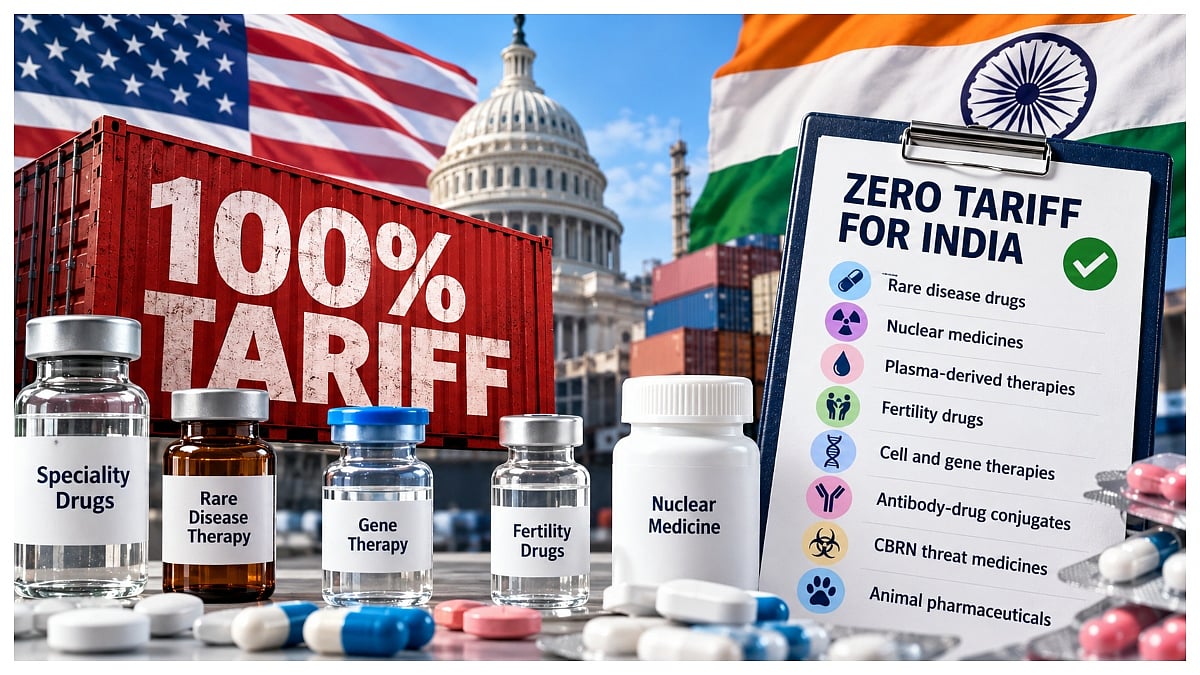
Certain specialty medicines from India and 19 other jurisdictions will have a zero-percent tariff.
These include treatments for rare diseases, infertility, and some cell and gene therapies.
Nuclear medicines, plasma-derived treatments, antibody-drug conjugates, some medical countermeasures and animal medicines are also included.
The zero-tariff rule also covers certain ingredients used to make eligible medicines.
It does not cover every medicine exported from India.
Some patented medicines and related ingredients may still receive a 100% tariff.
Generic medicines and their ingredients are currently outside these Section 232 pharmaceutical tariffs.
Companies can request special relief for medicines urgently needed in the United States, while certain research and clinical-trial imports may also qualify.

The United States will apply a zero-percent tariff to specified specialty medicines and related ingredients from India and 19 other jurisdictions.
Eligible products include orphan, fertility, cell, gene, nuclear, plasma-derived and antibody-drug therapies, certain medical countermeasures and animal-health products.
The exemption applies to qualifying products entered for consumption from 12:01 a.m. US Eastern time on September 29, 2026.
Certain patented medicines, biologics and associated ingredients may still face a 100% Section 232 tariff, while generic medicines remain outside those tariffs.
Companies may seek case-by-case relief for urgent US health needs, and some clinical-trial, research and non-commercial imports may also qualify for zero tariffs.
- Who
- The United States government, including the United States Department of Commerce and its Bureau of Industry and Security, along with Indian exporters and exporters from 19 other jurisdictions.
- What
- The United States is exempting specified specialty medicines and related ingredients from tariffs while retaining a possible 100% tariff on certain patented pharmaceutical imports.
- When
- The zero-tariff treatment applies to eligible goods entered for consumption from 12:01 a.m. US Eastern time on September 29, 2026. The notice was reported as published in the Federal Register on September 23 or September 29, depending on the article.
- Where
- The measures apply to eligible pharmaceutical goods entering the United States from India and 19 other listed jurisdictions.
- Why
- The broader tariff policy is intended to encourage pharmaceutical manufacturing in the United States, while the exemptions are linked to trade and security framework agreements and urgent US health needs.
Potential Benefits
Remaining Constraints
Impact on Indian exporters
Potential Benefits
The exemption protects the cost competitiveness of Indian companies supplying eligible specialty medicines and ingredients to the US market.
Remaining Constraints
The relief is limited to specified categories and does not provide a blanket exemption for Indian pharmaceutical exports.
Treatment of patented medicines
Potential Benefits
Specialty medicines that meet the listed conditions can avoid the additional percentage-based import duty.
Remaining Constraints
Patented medicines and associated ingredients outside the designated categories may still face a 100% tariff unless another exemption or tariff treatment applies.
Treatment of generic medicines
Potential Benefits
Generic medicines and their ingredients remain outside the Section 232 pharmaceutical tariffs, preserving their current tariff treatment.
Remaining Constraints
The new notice does not itself grant zero-tariff treatment to every Indian pharmaceutical product; its direct benefit is concentrated in specified specialty segments.
- Zero-tariff rate
- Zero percent for eligible specialty medicines, their components and certain clinical-trial, research, development and other non-commercial imports.
- Potential tariff
- A 100% tariff applies to specified patented pharmaceuticals, biologics and associated ingredients unless another exemption or tariff treatment applies.
- Covered jurisdictions
- India and 19 others: Argentina, Bangladesh, Cambodia, Ecuador, El Salvador, the European Union, Guatemala, Indonesia, Japan, Jordan, Malaysia, North Macedonia, South Korea, Switzerland, Liechtenstein, Taiwan, Thailand, Britain and Vietnam.
- Eligible products
- Orphan, fertility, cell, gene, nuclear and plasma-derived therapies; antibody-drug conjugates; certain medical countermeasures; animal-health products; and associated ingredients.
- Generic medicines
- Generic pharmaceutical products and their associated ingredients are outside the Section 232 pharmaceutical tariffs, according to the Commerce Department notice.
- Effective date
- The exemption applies to goods entered for consumption, or withdrawn from warehouse for consumption, from 12:01 a.m. US Eastern time on September 29, 2026.
- Relief process
- Companies may request case-by-case relief for specialty products that the Commerce Department determines address an urgent US health need.
- Scope clarification
- Pharmaceutical articles cover finished products, active pharmaceutical ingredients and key starting materials, but not excipients or inactive substances.
Sources

US waives tariffs on certain speciality drugs from 20 countries, including India
US Exempts Speciality Drugs From Tariffs For India, 19 Other Countries Ahead Of Pharma Duty
US Waives Percentage Tax On Rare Disease, Speciality Drugs Imported From India
India Gets US Pharma Tariff Exemption, But Which Drugs Still Face Trump’s 100% Duty?

US exempts select Indian specialty drugs from 100% tariff
India Secures Zero US Tariff On Select Speciality Drugs, What Does It Mean For Pharma Companies?