

Archive · 16 Aug 2026
Myanmar moves to revive $3.6 billion China-backed Myitsone dam
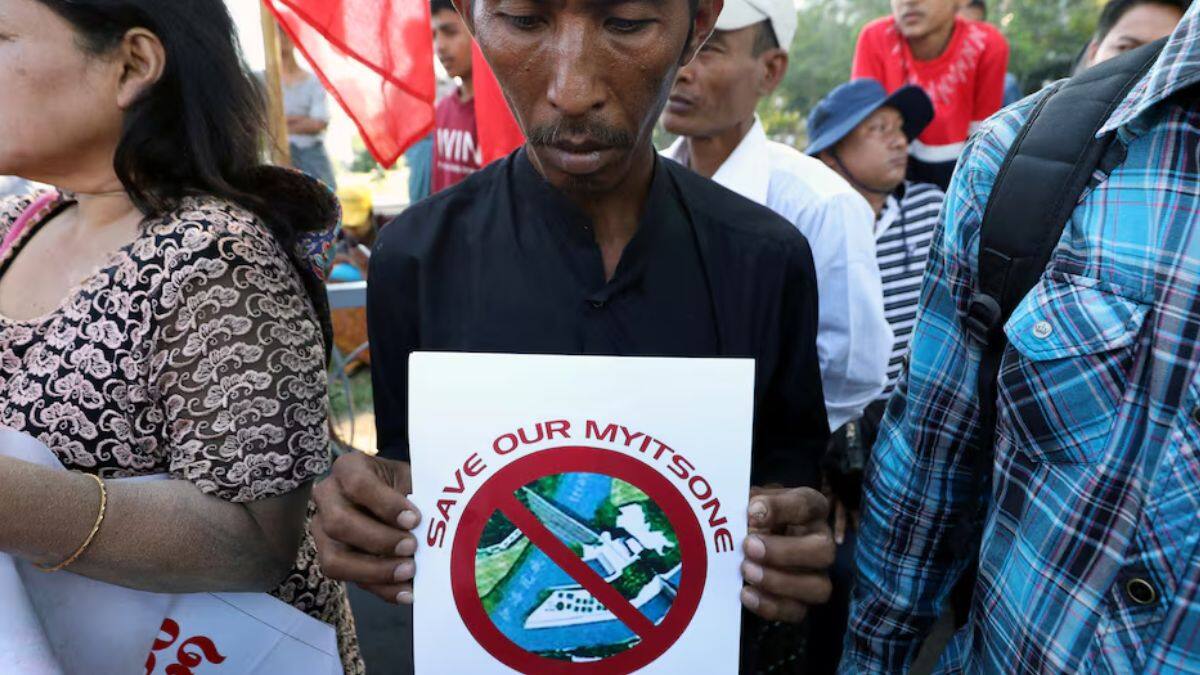
Myanmar wants to build a very big dam called the Myitsone.
A dam is like a giant wall that holds back river water to make electricity.
The dam would be built where the Mali and Nmai rivers meet in Kachin State, in the north of Myanmar.
Fourteen years ago, many people protested, and the building was stopped.
Now the country's leaders say they want to start building it again.
If it is finished, the dam could make more than half of all the electricity Myanmar needs.
But many people are worried because the area has strong earthquakes.
If a big earthquake damaged the dam, it could be dangerous for people living nearby.
People also say much of the electricity would go to China, and that homes and nature near the rivers would be harmed.
The government says the dam is a historic project that will bring power to the country.

Myanmar is preparing to restart the $3.6 billion China-backed Myitsone hydropower project in Kachin State after a 14-year suspension.
The dam could generate up to 6 gigawatts of electricity, more than half of Myanmar's current national demand of around 10 GW.
Construction was suspended in 2011 after public protests, and a restart could cost up to $11.5 billion, over three times the original estimate.
Under the original agreement, 90 percent of the dam's electricity was to be exported to China's southern power grid, a controversial arrangement given Myanmar's power shortages.
Opponents cite earthquake, environmental and displacement risks, and 49 civil society organisations have called for its permanent cancellation.
- Who
- Myanmar's military-led administration under President Min Aung Hlaing, with China's backing
- What
- Reviving the suspended $3.6 billion Myitsone hydropower project at the headwaters of the Irrawaddy in Kachin State
- When
- About 14 years after construction was suspended in 2011; Reuters reported revival plans on 1 July, with an official announcement expected shortly
- Where
- Kachin State, Myanmar, at the confluence of the Mali and Nmai rivers, about 37 km upstream from Myitkyina
- Why
- To address Myanmar's unreliable electricity supply and increase generation capacity; the dam could supply more than half of the country's current demand
Dam opponents (civil society and ethnic communities)
Myanmar government and China
Safety in an earthquake-prone area
Dam opponents (civil society and ethnic communities)
Critics say a large reservoir near active geological faults could threaten downstream communities if an earthquake severely damaged the dam; Myanmar's March magnitude 7.7 earthquake has added to the concern.
Myanmar government and China
Officials say China has promised to use advanced engineering methods to address geological risks; Kachin State chief minister Khet Htein Nan reportedly said, 'There is nothing to worry about.'
Who benefits from the electricity
Dam opponents (civil society and ethnic communities)
Under the original agreement, 90 percent of the dam's electricity was to be exported to China's southern grid, and the project 'offers no benefits to the public' while Myanmar faces frequent power shortages.
Myanmar government and China
The government says the project will increase Myanmar's generation capacity and is evaluating benefits versus negative impacts; it remains unclear whether export terms have changed.
Environmental and social damage
Dam opponents (civil society and ethnic communities)
Opponents say the reservoir would destroy habitats, alter the Irrawaddy river system and displace communities that depend on the river for their livelihoods; 49 civil society organisations called for permanent cancellation.
Myanmar government and China
The authorities say they are providing accurate information through local committees so residents can make their own decisions, and the chief minister reportedly called the dam a 'historic achievement.'
- Project
- Myitsone hydropower dam
- Original cost
- $3.6 billion (£2.8 billion), agreed in 2009
- Potential restart cost
- Up to $11.5 billion (£9.1 billion)
- Capacity
- Up to 6 gigawatts (GW)
- Location
- Kachin State, Myanmar, at the Mali and Nmai rivers' confluence
- Dam height
- About 152 metres (500 feet)
- Reservoir size
- Roughly the size of Singapore
- Original export arrangement
- 90% of electricity to China's southern power grid