9 months ago
PARAM SHAKTI Supercomputing Facility Launched at IIT Madras
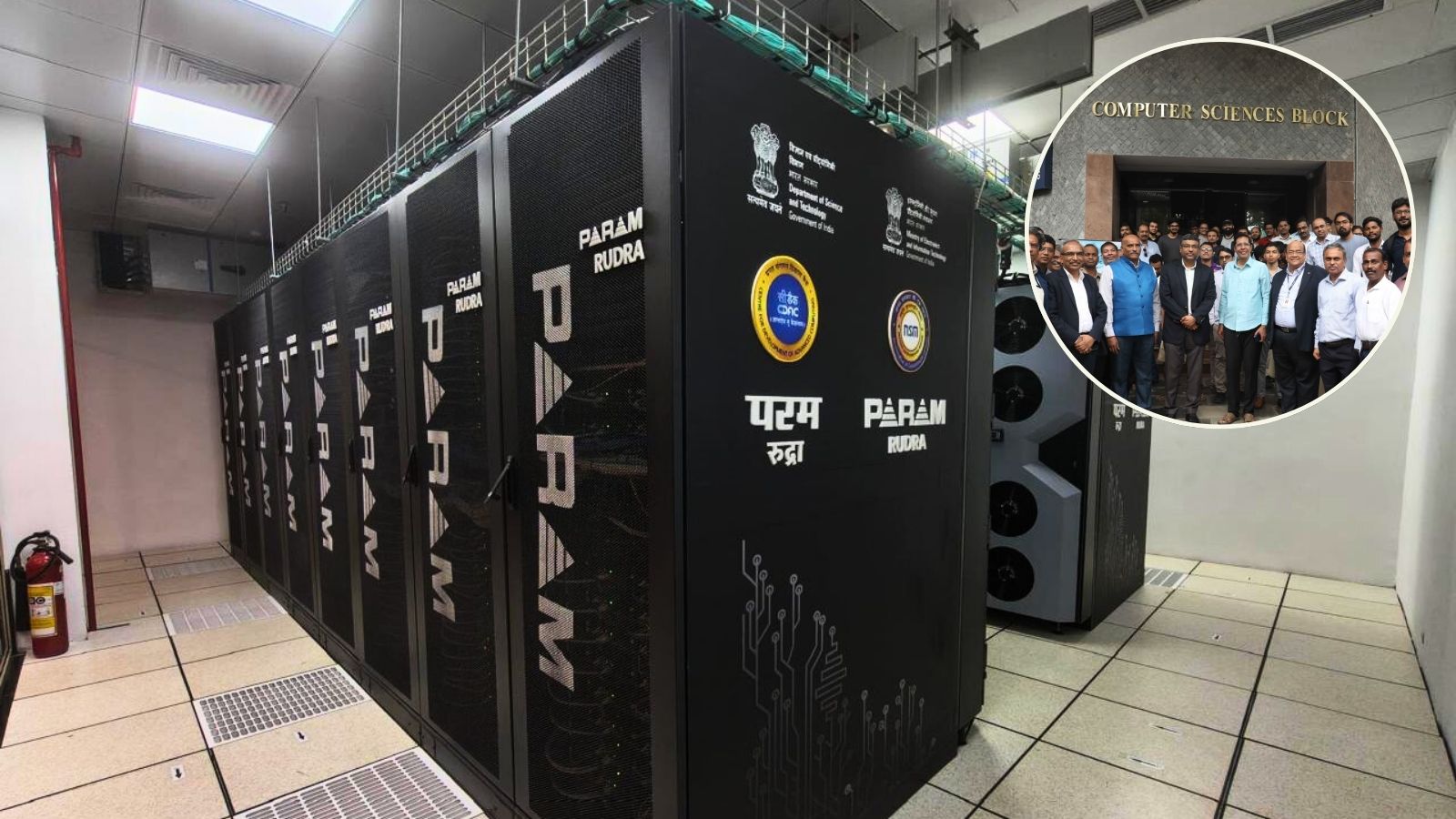
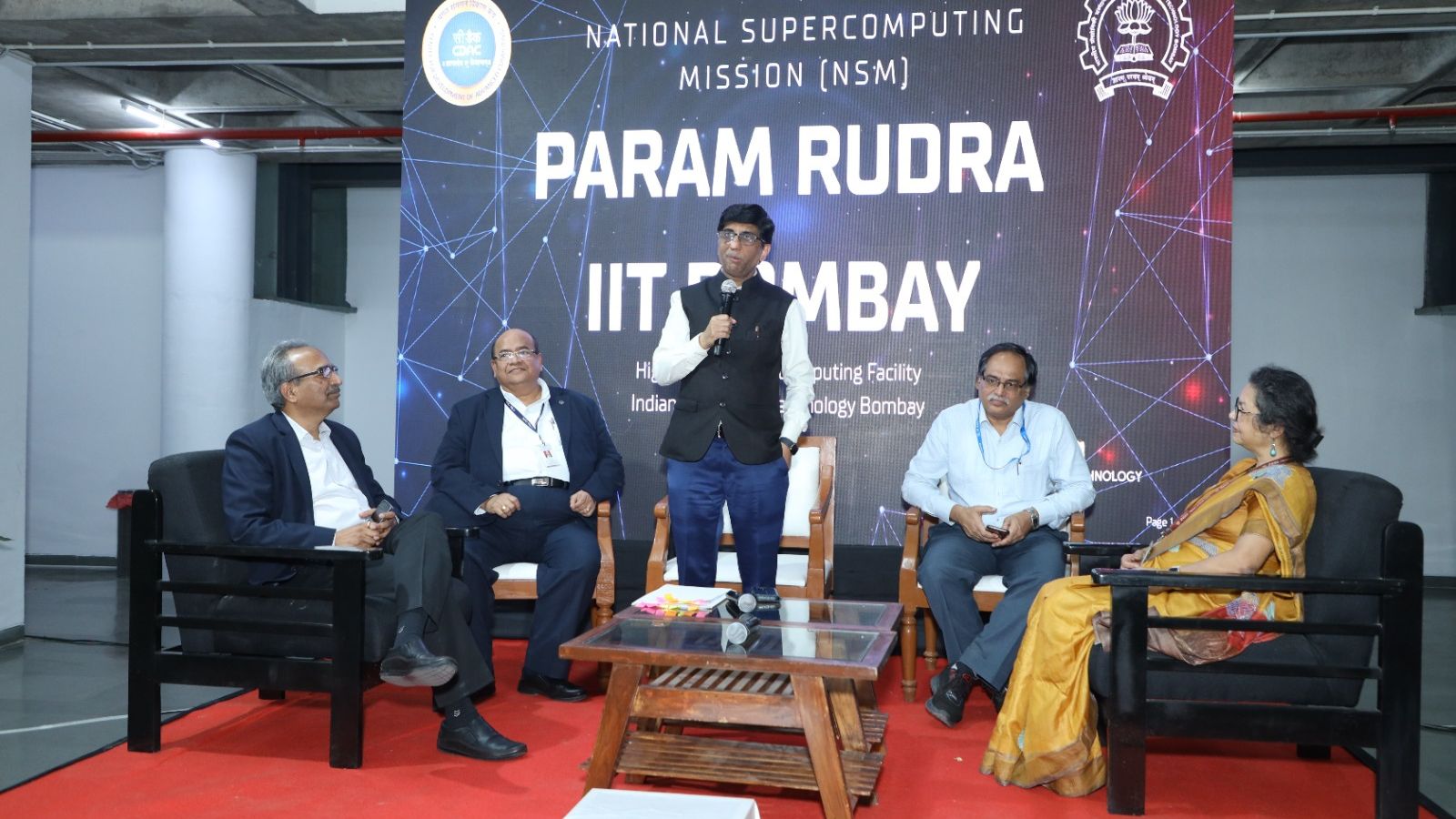
The Ministry of Electronics and Information Technology (MeitY) has launched a new supercomputing facility called PARAM SHAKTI at IIT Madras.
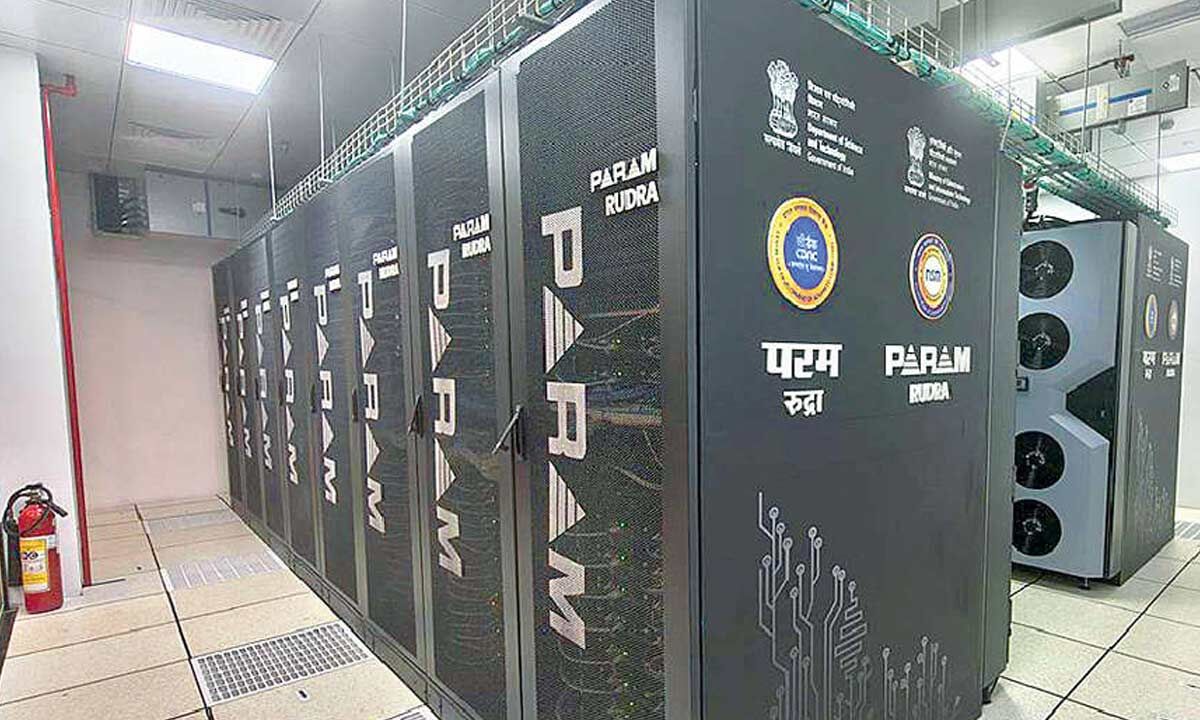
This facility has a supercomputer named PARAM RUDRA, which can do over 3.1 quadrillion calculations per second.
It was made in India and uses special software.
The supercomputer will help scientists and researchers in many fields like aerospace, climate science, and medicine.
IIT Madras will use it for different kinds of research.
The government is also setting up more supercomputers across the country to help with research and innovation.
The facility has been operational since May 2025 and is already being used a lot by researchers.
It is very energy-efficient and helps make research faster and cheaper.

PARAM SHAKTI supercomputing facility was launched at IIT Madras on January 3, 2026.
The facility hosts the PARAM RUDRA system, developed by C-DAC under the National Supercomputing Mission.
PARAM SHAKTI has a peak computing capacity of 3.1 petaflops and is fully developed and manufactured in India.
The system supports research in aerospace engineering, materials science, climate modelling, and other scientific domains.
IIT Madras will utilize the facility for simulations and research across multiple disciplines, with over 80% utilization since May 2025.
- Who
- Ministry of Electronics and Information Technology (MeitY), Centre for Development of Advanced Computing (C-DAC), and IIT Madras
- What
- Launch of PARAM SHAKTI supercomputing facility
- Where
- Indian Institute of Technology Madras (IIT Madras)
- When
- January 3, 2026
- Why
- To support research across multiple scientific domains and accelerate research timelines
Government and C-DAC
Researchers and Students
Utilization and Access
Government and C-DAC
The government and C-DAC emphasize the strategic importance of the facility for national research and technological self-reliance, focusing on its capacity and interdisciplinary applications.
Researchers and Students
Researchers and students highlight the practical benefits, such as high utilization rates and the facility's role in accelerating their specific research projects.
Key facts
- Launch Date
- January 3, 2026
- Peak Computing Capacity
- 3.1 petaflops
- Developed by
- Centre for Development of Advanced Computing (C-DAC)
- Host Institution
- Indian Institute of Technology Madras (IIT Madras)
- Software Used
- AlmaLinux and indigenously developed system software stack by C-DAC
- National Mission
- National Supercomputing Mission (NSM)
- Applications
- Aerospace engineering, materials science, climate modelling, combustion studies, molecular dynamics, nuclear sciences, and drug discovery
- Power Usage Effectiveness (PUE)
- 1.2 to 1.4
- Utilization Rate
- Over 80%
Quotes
S. Krishnan
Secretary, Ministry of Electronics and Information Technology (MeitY)
“Under the National Supercomputing Mission, we are supporting a wide range of use cases and application-driven projects with dedicated funding, designed to operate at a scale that can make a real difference. With 37 supercomputers already installed across institutions nationwide and more in the pipeline, including the largest system planned for Bengaluru, these efforts are strengthening India’s research and innovation ecosystem.”
 thehindubusinessline.com
“The department deliberately avoids promoting a single technology or GPU type, instead enabling access to multiple GPU architectures, allowing our innovators, scientists, and researchers to gain broad exposure and develop the capability to master diverse platforms.”
thehindubusinessline.com