

Archive · 12 Jan 2026
Parasitic Weed Threatens India's Mustard Crops
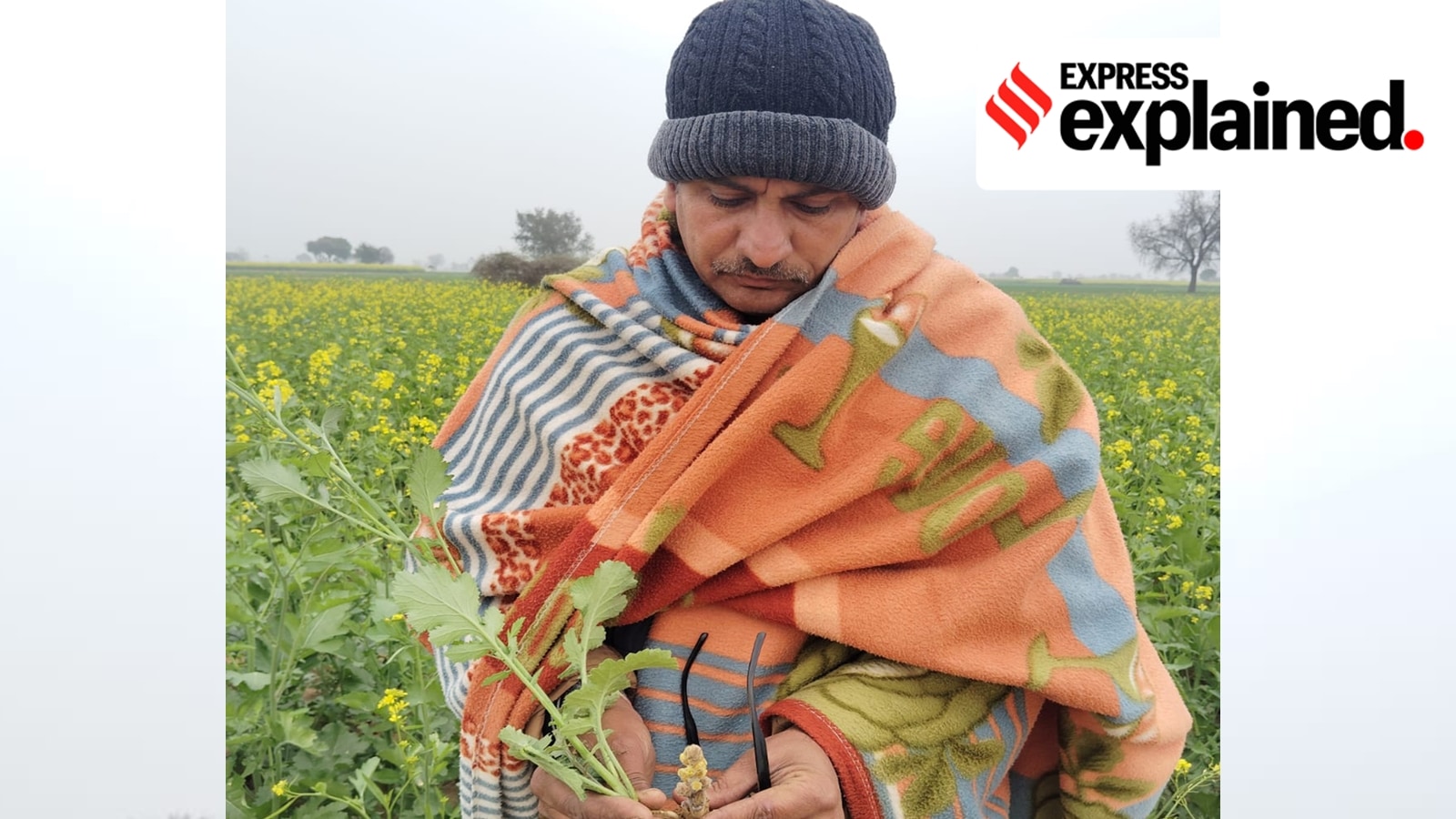
Mustard is a very important crop in India because it is used to make oil.
However, a sneaky weed called Orobanche is causing big problems for mustard farmers.
This weed attaches to the roots of mustard plants and steals their food and water, making the plants weak and producing less mustard seeds.
Farmers are trying different ways to stop this weed, including using special herbicides and new types of mustard seeds that can resist the weed.
The government needs to make important decisions about how to help farmers deal with this problem.

Orobanche aegyptiaca is a parasitic weed threatening mustard crops in India, causing wilting and stunted growth.
Farmers in Haryana and Rajasthan report significant yield reductions due to the weed's infestation.
Glyphosate herbicide has proven ineffective in controlling the parasite, leading to a search for alternative solutions.
Corteva Agriscience has developed an imidazolinone-resistant mustard hybrid that can tolerate specific herbicides, offering a potential solution.
Scientists at Delhi University have developed GM mustard lines resistant to multiple herbicides to combat the weed.
- Who
- Farmers in major mustard-growing regions of India
- What
- Parasitic weed Orobanche aegyptiaca is threatening mustard crops
- When
- The issue has been worsening over the past few years, with significant impact in the 2024-25 crop season
- Where
- Major mustard-growing areas in Rajasthan, Haryana, Uttar Pradesh, Madhya Pradesh, and West Bengal
- Why
- The weed attaches to mustard roots, depriving the plants of nutrients, water, and carbon, leading to lower yields
- Crop Affected
- Mustard
- Parasitic Weed
- Orobanche aegyptiaca
- Major Growing Areas
- Rajasthan, Haryana, Uttar Pradesh, Madhya Pradesh, West Bengal
- Yield Impact
- Reduced yields due to wilting and stunted growth
- Herbicide Solution
- Imidazolinone-resistant mustard hybrid
- Seed Cost
- Rs 3,150 per acre
- Mustard Importance
- India's largest indigenous edible oil source
- Oil Imports
- 16 mt per year, valued at $15.9 billion in 2023-24 and $18.3 billion in 2024-25