Archive · 16 Sep 2026
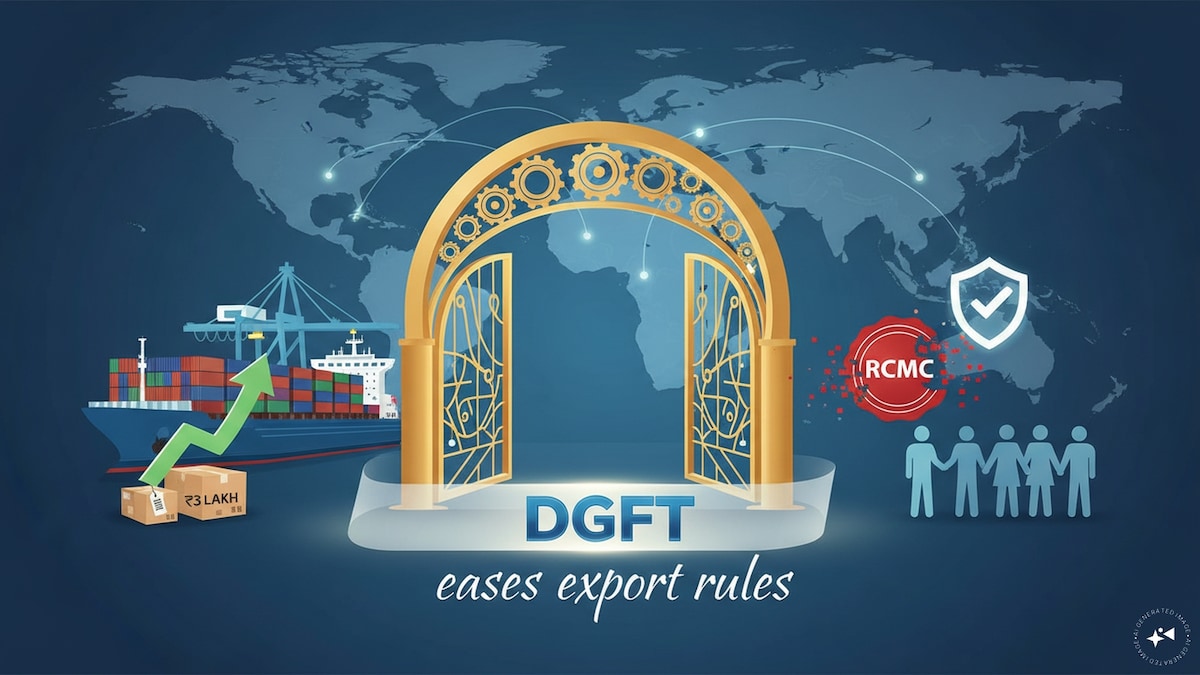
DGFT Waives Export Registration for Shipments Up to ₹3 Lakh

The government has made it easier for small businesses in India to send goods to other countries.
They can now ship eligible consignments worth up to ₹3 lakh without getting an RCMC or another registration certificate first.
The rule applies when that certificate would normally be required.
It is meant to help small businesses, artisans, entrepreneurs, and people exporting for the first time.
It may also help businesses using online marketplaces, post, and courier services.
These exporters can try foreign markets without as much paperwork or upfront cost.
If their consignments become worth more than ₹3 lakh, they must follow the existing registration rules.
One industry group says the government should go further by using annual export turnover instead of shipment value to decide who receives an exemption.

The Directorate General of Foreign Trade removed the RCMC or Certificate of Registration requirement for eligible export consignments worth up to ₹3 lakh.
The exemption was introduced through an amendment to Paragraph 2.57 of the Foreign Trade Policy, 2023.
Shipments exceeding ₹3 lakh will continue to require the relevant registration wherever the policy mandates it.
The measure targets MSMEs, artisans, small manufacturers, entrepreneurs, and first-time or occasional exporters using channels such as e-commerce, post, and courier services.
Government data shows shipments up to $3,000 made up 43% of shipping bills but only 0.86% of India’s merchandise export value from 2021-22 through 2025-26.
- Who
- The Directorate General of Foreign Trade changed the rule for MSMEs, artisans, small manufacturers, entrepreneurs, and first-time or occasional exporters.
- What
- Eligible export consignments worth up to ₹3 lakh no longer require an RCMC or Certificate of Registration where such registration would otherwise be mandated.
- When
- The change was announced on Wednesday; the articles do not provide a calendar date.
- Where
- The exemption applies to exports from India, including shipments sent through postal, courier, e-commerce, and other emerging channels.
- Why
- To reduce paperwork and initial compliance costs, lower entry barriers, and help smaller exporters test overseas markets.
Government’s Targeted Exemption
India SME Forum’s Broader Reform
How eligibility should be determined
Government’s Targeted Exemption
The government has exempted individual consignments up to ₹3 lakh, while retaining registration requirements for larger consignments wherever applicable.
India SME Forum’s Broader Reform
India SME Forum president Vinod Kumar said compliance capacity is better measured by annual export turnover and recommended an automatic exemption for exporters with annual exports up to ₹50 lakh.
Role of export-body membership
Government’s Targeted Exemption
The government said exporters that grow beyond the threshold can obtain membership of the relevant Export Promotion Councils or Commodity Boards and access export-promotion and market-access support.
India SME Forum’s Broader Reform
The India SME Forum said access to government export benefits should not depend on purchasing industry-body membership when exporter credentials can be verified digitally; it said membership should be driven by the value of support provided.
- Issuing authority
- Directorate General of Foreign Trade
- Policy provision amended
- Paragraph 2.57 of the Foreign Trade Policy, 2023
- Exemption threshold
- Free-on-board export value of up to ₹3 lakh
- Certificates covered
- Registration-cum-Membership Certificate or Certificate of Registration, where otherwise required
- Rule above threshold
- Consignments exceeding ₹3 lakh still require the relevant registration wherever mandated
- Low-value shipment share
- Shipments worth up to $3,000 accounted for 43% of shipping bills from 2021-22 through 2025-26
- Share of export value
- Those shipments represented 0.86% of India’s total merchandise export value