

Archive · 30 Nov 2025
Why Staircases Appear Uneven to Some
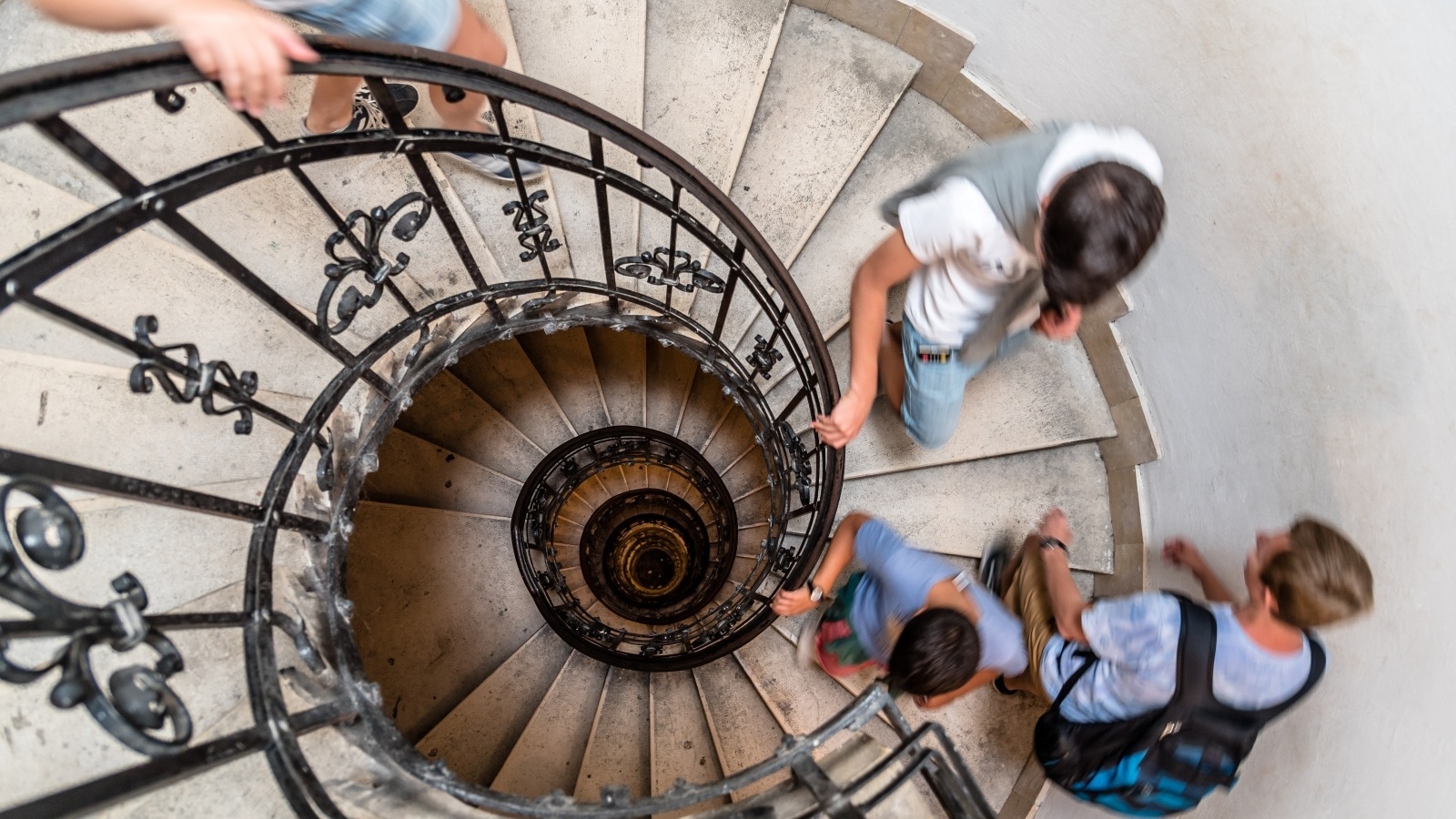
Some people have trouble seeing where one step ends and the next begins on a staircase.
This happens because our eyes and brain work together to judge heights, but sometimes things like poor lighting or not enough contrast between steps can make it harder.
When this happens, people might feel unsure or move carefully when going down the stairs.
Doctors say this is usually not a serious health issue, but it can be annoying.
They explain that our eyes need clear pictures, good light, and the right contrast to see steps correctly.
If any of these things are missing, it can be tricky to tell where one step ends and the next starts.

Some people struggle to differentiate between the end of one step and the start of another on staircases.
This issue is often due to disrupted depth perception components: visual clarity, contrast, light source, and brain interpretation.
Dr. Pradyut Ranjan Bhuyan, a neurologist, explains that these components are crucial for judging step heights.
Disruptions in these components can lead to uncertainty or insecure movements while descending stairs.
This phenomenon is generally not associated with serious health issues.
- Who
- People experiencing difficulty with depth perception on staircases
- What
- Difficulty differentiating between the end of one step and the start of another
- When
- When descending staircases
- Where
- On staircases
- Why
- Due to disrupted depth perception components: visual clarity, contrast, light source, and brain interpretation
- Issue
- Difficulty differentiating between steps on staircases
- Cause
- Disrupted depth perception components
- Components
- Visual clarity, contrast, light source, brain interpretation
- Effect
- Uncertainty or insecure movements while descending
- Expert
- Dr. Pradyut Ranjan Bhuyan, Consultant Neurology at Manipal Hospital, Bhubaneshwar