

Archive · 30 Nov 2025
Africa's Forests Shift from Carbon Sink to Source
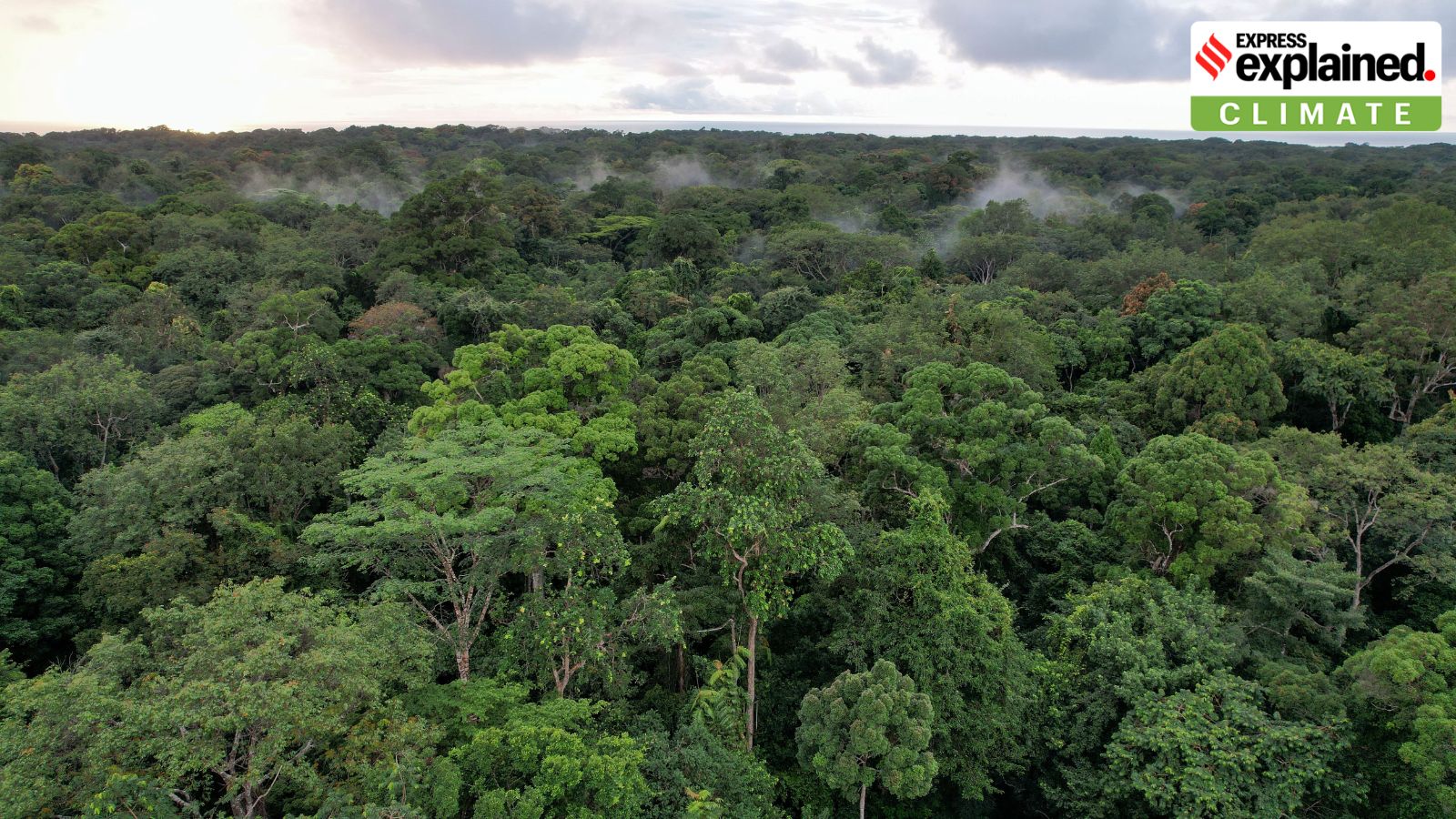
Africa's forests used to help fight climate change by absorbing carbon dioxide from the air.
But a new study says that since 2017, these forests are now releasing more carbon than they absorb.
This is mostly because of things people do, like cutting down trees for farming, burning wood for fuel, building roads, and mining.
The study found that between 2010 and 2017, Africa's forests lost a lot of carbon, which is bad for the planet.
Scientists say we need to do more to protect these forests, like using a special fund called the Tropical Forest Forever Facility (TFFF) to help countries keep their forests healthy.
But not enough countries are helping with this fund yet.

Africa's forests have shifted from a carbon sink to a carbon source since 2017.
The shift is due to human activities like deforestation, agricultural burning, and mining.
The study found that Africa's forests lost 106 billion kg of biomass per year between 2010 and 2017.
The worst affected regions are the Democratic Republic of Congo, Madagascar, and parts of West Africa.
The study highlights the urgent need for initiatives like the Tropical Forest Forever Facility (TFFF) to conserve forests.
- Who
- Researchers from the National Center for Earth Observation and Universities of Leicester, Sheffield, and Edinburgh
- What
- Africa's forests have shifted from a carbon sink to a carbon source
- When
- The shift occurred after 2017
- Where
- Africa, particularly the Democratic Republic of Congo, Madagascar, and parts of West Africa
- Why
- Due to human activities such as forest cover loss, agricultural and fuelwood burning, shifting cultivation, infrastructure projects, mining, and wildfires
- Study Title
- Loss of tropical moist broadleaf forest has turned Africa’s forests from a carbon sink into a source
- Publication Date
- November 28
- Research Institutions
- National Center for Earth Observation, Universities of Leicester, Sheffield, and Edinburgh
- Carbon Loss
- 106 billion kg of biomass per year (2010-2017)
- Worst Affected Regions
- Democratic Republic of Congo, Madagascar, and parts of West Africa
- Global Temperature Increase
- 1.2 degrees Celsius above pre-industrial levels
- Projected Temperature Increase
- 2.8 to 3.1 degrees Celsius by 2100