

Archive · 15 Dec 2025
Ancient Moon Volcano Discovered Under Two Craters
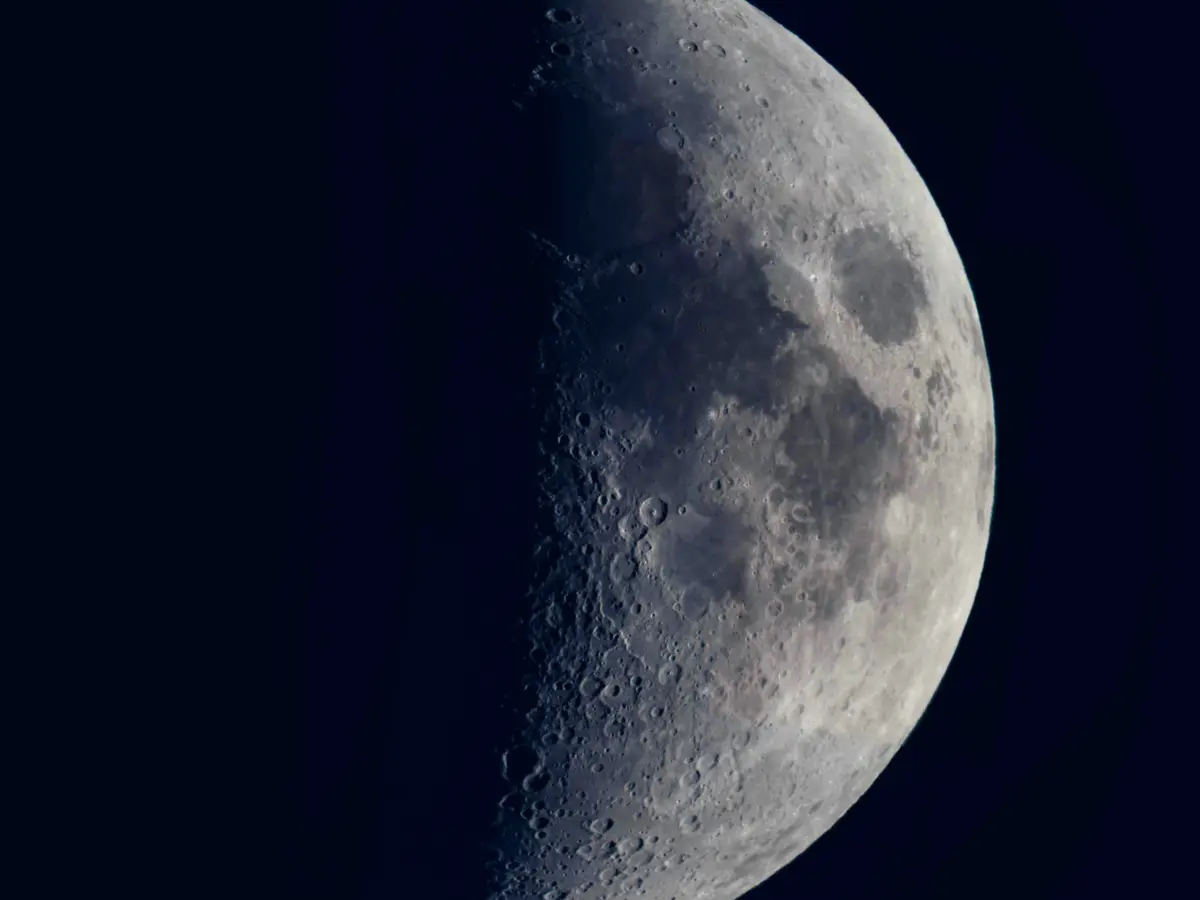
Scientists have found a special kind of rock called granite under two big holes, or craters, on the Moon.
This granite is usually only found on Earth.
The scientists think this granite was made by a volcano that erupted a very long time ago, about 3.5 billion years ago.
The area where the granite is found is warmer than the places around it.
The scientists used special tools from space to find this out.
They think there might be more places like this on the Moon and even on other planets.

Scientists discovered granite under the Compton and Belkovich craters on the Moon, a material rarely found outside Earth.
The granite is believed to be the result of a volcanic eruption that occurred 3.5 billion years ago.
The volcanic surface spans 20 kilometers and is 10 degrees Celsius warmer than nearby areas.
Researchers used data from Chinese Chang'E 1 and 2 orbiters to map temperatures below the lunar surface.
The discovery suggests the possibility of finding similar granite formations in other lunar regions and cosmic bodies.
- Who
- Scientists using data from Chinese and American lunar orbiters
- What
- Discovery of an ancient volcano under two moon craters
- When
- Last eruption occurred 3.5 billion years ago
- Where
- Compton and Belkovich craters on the far side of the Moon
- Why
- To study the lunar surface and understand its geological history
- Location
- Compton and Belkovich craters on the far side of the Moon
- Material Found
- Granite
- Last Eruption
- 3.5 billion years ago
- Volcanic Surface Area
- 20 kilometers
- Temperature Difference
- 10 degrees Celsius warmer than nearby areas
- Research Tools
- Chinese Chang'E 1 and 2 orbiters
- Researchers
- Dr Matt Siegler and Dr Rita Economos