

Archive · 26 Jul 2026
Brain vs Heart: Where Love Really Lives
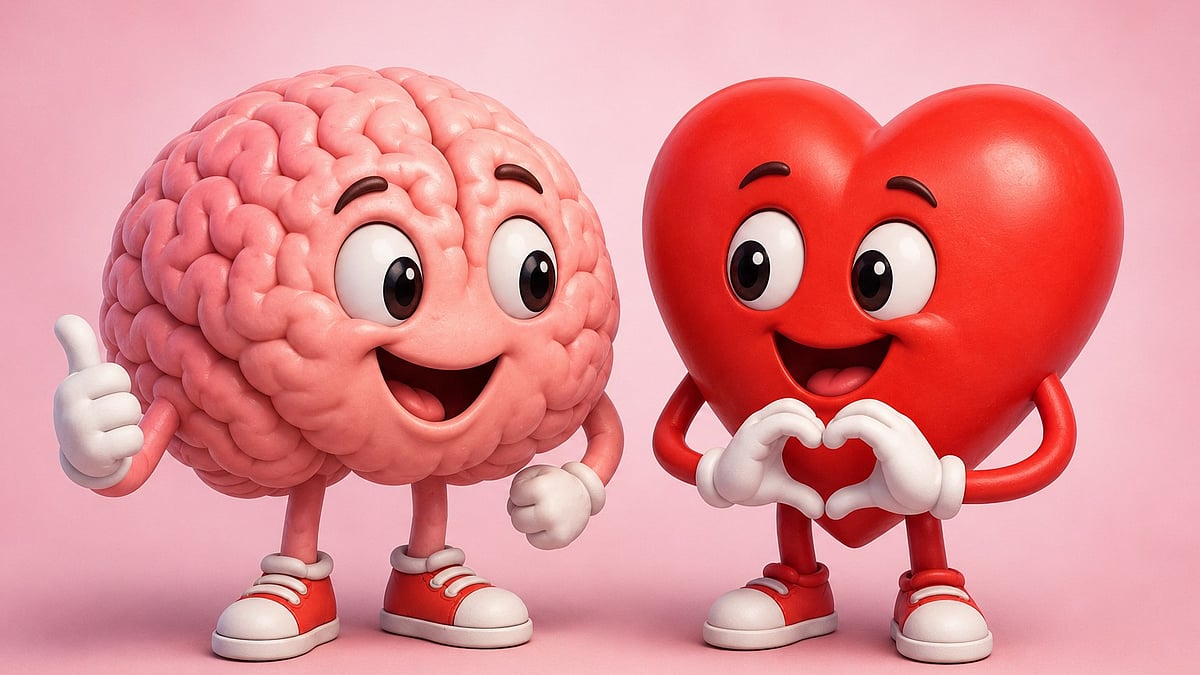
Love is often associated with the heart, but science shows it's really the brain that's in charge.
The brain releases chemicals like dopamine and oxytocin that make us feel happy and attached to someone.
The heart responds to these feelings by beating faster and giving us that fluttery sensation.
Ancient thinkers like Aristotle thought the heart was the center of emotions, which is why we still use heart symbols to represent love.
So, while the heart feels the love, it's the brain that makes it happen.

Love is primarily a brain experience, orchestrated by neurochemicals like dopamine and oxytocin.
The heart responds to emotional signals from the brain, causing physical sensations like fluttering and increased heart rate.
Modern neuroscience shows distinct brain regions lighting up during romantic love.
Cultural and historical beliefs have long associated love with the heart, leading to enduring symbols and expressions.
Ancient thinkers like Aristotle believed the heart housed the soul and emotions.
- Who
- Scientists, poets, philosophers, lovers
- What
- The biological and cultural understanding of love
- When
- Throughout history, with modern neuroscience providing current insights
- Where
- Globally, with cultural and scientific contributions from various regions
- Why
- To understand the biological and cultural aspects of love
Brain's Role in Love
Heart's Role in Love
Origin of Love
Brain's Role in Love
Love is orchestrated by the brain through a complex neurochemical symphony involving dopamine, oxytocin, norepinephrine, and serotonin.
Heart's Role in Love
The heart responds to emotional signals from the brain, causing physical sensations like fluttering and increased heart rate.
Physical Manifestations
Brain's Role in Love
The brain's reward circuitry, including regions like the ventral tegmental area and nucleus accumbens, lights up during romantic love.
Heart's Role in Love
The heart can experience real physical conditions like 'broken heart syndrome' due to extreme emotional stress.
Cultural Perception
Brain's Role in Love
Modern neuroscience shows that love is fundamentally a brain experience.
Heart's Role in Love
Cultural and historical beliefs have long associated love with the heart, leading to enduring symbols and expressions.
- Key Neurochemicals
- Dopamine, Oxytocin, Norepinephrine, Serotonin
- Brain Regions Involved
- Ventral Tegmental Area, Caudate Nucleus, Nucleus Accumbens
- Heart's Response
- Increased heart rate, chest tightness, 'broken heart syndrome'
- Cultural Beliefs
- Heart as the seat of emotions, heart-shaped symbols, expressions like 'from the bottom of our heart'
- Ancient Thinkers
- Aristotle believed the heart housed the soul and emotions