9 months ago
Telangana University Achieves Aeroponic Saffron Bloom, Offering New Cultivation Avenues
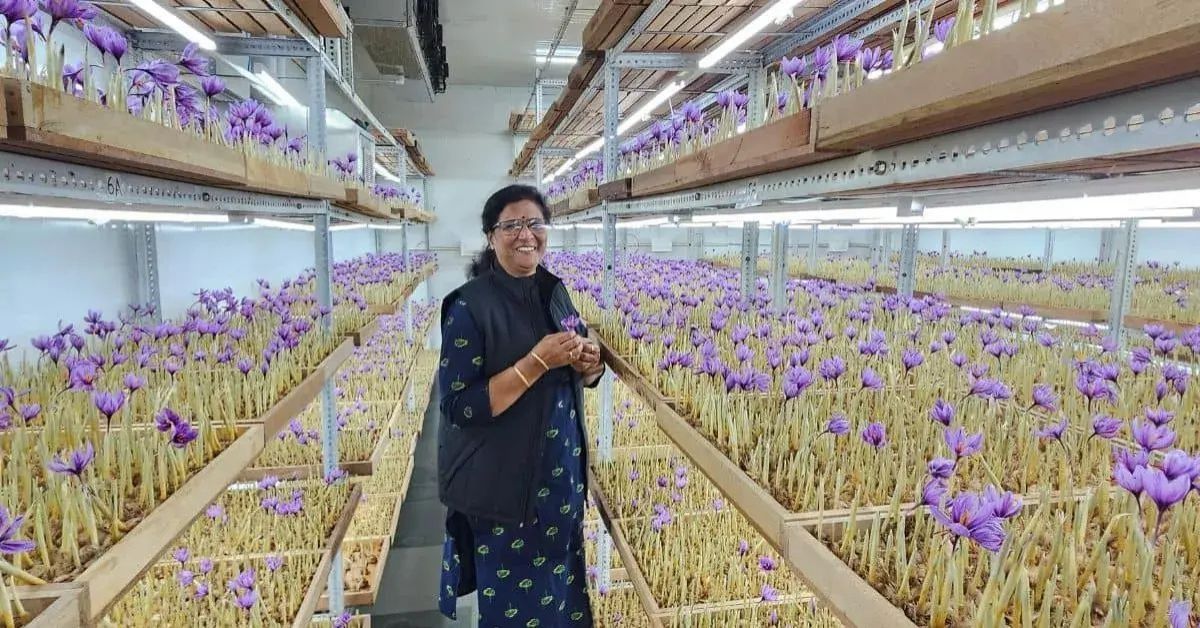
Imagine a very special spice called saffron that usually only grows in one cold, humid place in India.
Scientists at a university in Telangana wanted to see if they could grow it somewhere else, even though the weather is different.
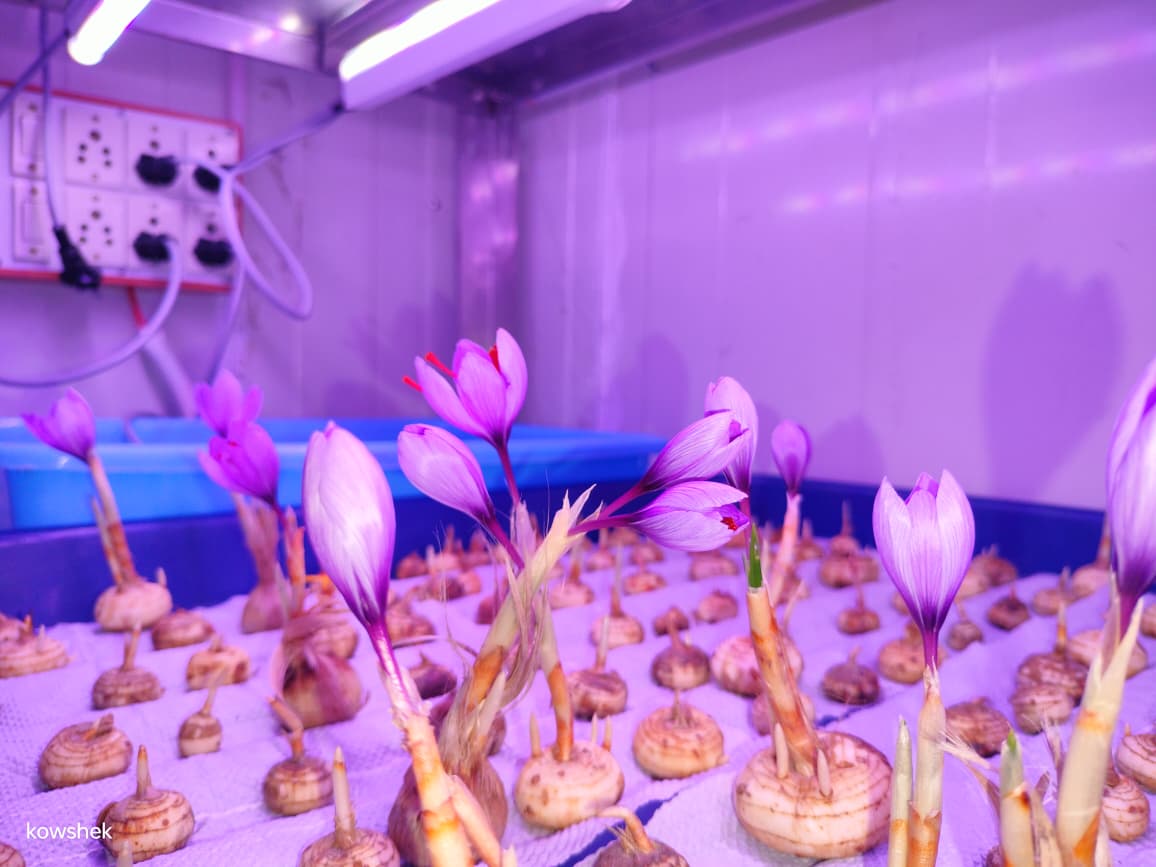
They used a special high-tech method called aeroponics, where plant roots hang in the air and get misted with nutrients.
They created a mini-Kashmir inside a lab by carefully controlling the temperature, light, and air.
This experiment worked, and they grew saffron flowers!
This is exciting because it means more farmers might be able to grow this valuable spice in the future, even in places like Telangana, and it uses less space and needs less help.

Saffron flowers have bloomed for the first time in Telangana through an aeroponic experiment at Sri Konda Laxman Telangana Horticultural University.
The aeroponic method involves growing plants with roots suspended in the air and periodically misted with a nutrient solution.
The university team successfully replicated the cool and humid climate of Kashmir within a controlled laboratory environment.
This research project, conducted in a 200-square-foot area over two months, demonstrated promising results for yield and quality.
The initiative aims to standardize aeroponic cultivation for saffron, potentially enabling farmers in Telangana to grow this valuable cash crop and addressing challenges faced by traditional cultivation regions.
- Who
- Agriculture team at Sri Konda Laxman Telangana Horticultural University
- What
- Successfully cultivated saffron flowers for the first time in Telangana using aeroponic technology.
- Where
- A test farm in Wanaparthy district, Telangana, within a laboratory setting.
- When
- During a two-month research project culminating in recent flowering.
- Why
- To standardize saffron cultivation through aeroponic methodology, replicate Kashmir's climate, and explore alternative cultivation methods due to shrinking traditional areas.
Traditional Saffron Cultivation
Aeroponic Saffron Cultivation in Telangana
Geographical Limitation
Traditional Saffron Cultivation
Saffron cultivation in India is traditionally confined to the Pampore region of Jammu and Kashmir.
Aeroponic Saffron Cultivation in Telangana
Saffron has been successfully cultivated experimentally in Telangana using aeroponics, expanding potential growing regions.
Environmental Factors
Traditional Saffron Cultivation
Relies on the specific cool and humid climate of Kashmir.
Aeroponic Saffron Cultivation in Telangana
Replicates Kashmir's climate conditions artificially in a controlled laboratory environment using aeroponic technology.
Area and Yield Concerns
Traditional Saffron Cultivation
Area under traditional cultivation is shrinking due to real-estate pressure and environmental changes, affecting quantity and quality.
Aeroponic Saffron Cultivation in Telangana
Aeroponic method offers high-quality production and potentially higher yields in a small, controlled space (200 sq ft experimental area), with minimal labor needs.
Technological Advancement
Traditional Saffron Cultivation
Relies on traditional farming methods.
Aeroponic Saffron Cultivation in Telangana
Employs modern, app-controlled aeroponic technology with precise control over environmental factors like temperature, humidity, sunlight, and CO2 levels.
Key facts
- Location of Experiment
- Wanaparthy district, Telangana
- Institution
- Sri Konda Laxman Telangana Horticultural University
- Cultivation Method
- Aeroponics
- Experimental Area
- 200-square-foot
- Duration of Project
- Two months
- Key Personnel
- Prof. Pidigam Saidaiah (Principal Investigator), Dr Danda Rajireddy (Vice Chancellor)
- Traditional Saffron Region (India)
- Pampore, Pulwama district, Jammu and Kashmir
Quotes
Prof. Pidigam Saidaiah
principal investigator of the saffron project
“In Kashmir, machines are used to create different day and night temperatures, humidity, sunlight, and carbon dioxide levels. We have replicated the same here. Saffron bulbs from Kashmir are placed in the lab and exposed to controlled temperatures and artificial lights required for germination, growth, and flowering. The saffron is then harvested.”
 deccanchronicle.com
“Because the entire system is app-controlled, labour needs are minimal. The crop is completely organic, and the yield quality, along with the chemical components that give saffron its value, is significantly higher in this method. Many enthusiasts are showing interest in aeroponic cultivation.”
deccanchronicle.com
Dr Danda Rajireddy
Vice Chancellor
“We will soon introduce this technology to farmers across Telangana. We will share complete details and, if needed, set up saffron model labs in colleges and horticulture research institutes under the university and train local farmers.”
deccanchronicle.com
“We are conducting research to bring modern technologies to farmers. As part of this effort, we took up saffron cultivation, normally a Kashmir-only crop, on a pilot basis in the university college.”
deccanchronicle.com
Sources
Related news

Farooq Abdullah’s Threat Claims Ignite Fury Over Kashmir Statehood

Mehbooba Mufti Urges Omar Abdullah to Resolve Intern Stipend Dispute
Karra Says J-K People Caught Between Two Power Centres

Rival NC-BJP Protests Roil J&K as Police Halt Marches
Omar Abdullah Alleges Unequal Treatment of Srinagar Political Protests