

Archive · 25 Oct 2025
19th-Century Trade: Russia's Push to Connect with India
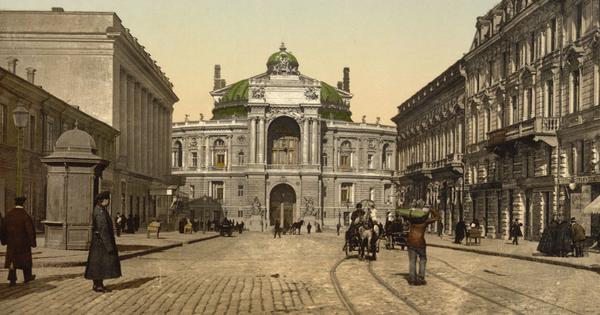
Imagine two countries, Russia and India, wanting to trade with each other.
Before, they had to go through long and expensive routes.
Then, someone had a smart idea to use ships, like the Nakhimoff, to sail directly.
The ships would carry things like coal to India and bring back cotton and other goodies.
However, one person, Keith Abbott, wasn't so sure it was a good idea, as he thought the Russian goods weren't suitable for Indian markets.
Another person, WL Halsey, had a different opinion on the tea trade and the reasons behind its issues.
Despite the challenges, the idea was the start of a link that would grow later, with ships going back and forth, eventually connecting the cities more closely.

The Russian steamship Nakhimoff sailed from Odessa to Bombay in 1871 to establish direct trade.
The journey was made possible by the Suez Canal, aiming to bypass slow and expensive trade routes.
The initial voyage carried coal to India and returned with goods such as cotton and rice.
British officials like Keith Abbott questioned the economic viability of the trade route.
Indian officials, such as WL Halsey, believed there was an opportunity for Indian goods in Russia.
- Who
- Russia and Britain, with key figures like Keith Abbott and WL Halsey involved.
- What
- An early attempt to establish direct trade between Russia and India via the sea.
- When
- The 1870s, shortly after the opening of the Suez Canal.
- Where
- Odessa (Black Sea) to Bombay (India), with routes extending to China.
- Why
- To establish faster and cheaper access for trade, bypassing existing routes.
- Key Ships
- Nakhimoff, Tchikatcheff
- Initial Voyage Date
- March 1871
- Starting Port
- Odessa, Black Sea
- Destination
- Bombay, India
- Goods from India
- Cotton, rice, coffee, gum, pepper
- Goods from China
- Tea