

Archive · 14 Jun 2025
India's Strategic Oil Reserves: A Buffer Against Global Energy Shocks
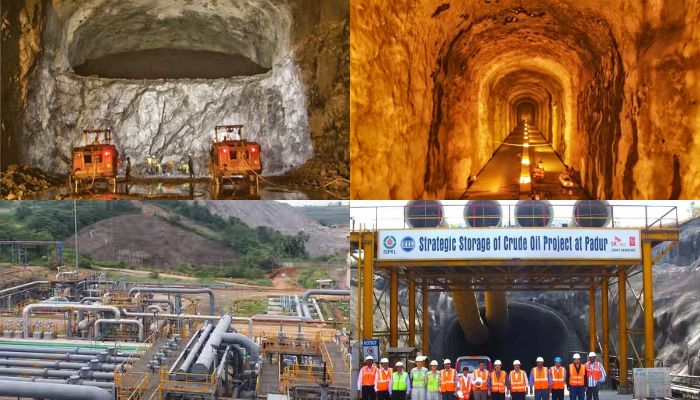
India is preparing for any problems with getting oil from other countries.
They have built big underground storage tanks for oil, called Strategic Petroleum Reserves (SPRs).
These reserves help India if oil supplies get interrupted or prices go up.
They're also using ethanol (made from plants) in gasoline and exploring other fuels to reduce their need for oil.
This helps India have more control over its energy and be safer from problems elsewhere in the world.

India has expanded its Strategic Petroleum Reserves (SPR) to safeguard against crude oil supply disruptions.
ISPRL manages three SPR facilities in underground rock caverns with a total capacity of 5.33 million metric tonnes.
The government is expanding SPR capacity with new facilities under a public-private partnership model.
India diversifies its crude oil sources and promotes biofuels to reduce dependence on specific regions.
Ethanol blending and alternative fuels are part of a strategy to reduce crude oil import dependence.
- Who
- The Indian Strategic Petroleum Reserve Limited (ISPRL) manages the reserves, overseen by the Ministry of Petroleum and Natural Gas.
- What
- India's Strategic Petroleum Reserves (SPRs) and strategies to ensure energy security.
- When
- SPR expansion has been ongoing, particularly increasing under the Modi government.
- Where
- SPR facilities are located in Visakhapatnam, Mangaluru, and Padur, India.
- Why
- To ensure energy security by providing a buffer against supply disruptions and price fluctuations.
- SPR Total Capacity
- 5.33 million metric tonnes
- Operational Sites
- Visakhapatnam, Mangaluru, Padur
- Padur Capacity
- 2.5 MMT
- Ethanol Blending Target
- 20% in petrol by end of 2025
- SPR Expansion Funding
- Public-private partnership
- Ethanol Production
- Grain-based ethanol accounts for 51% of output (2023-24)