

Archive · 15 Sep 2026
How Indian Sculptures’ Global Dispersal Complicates Their Interpretation
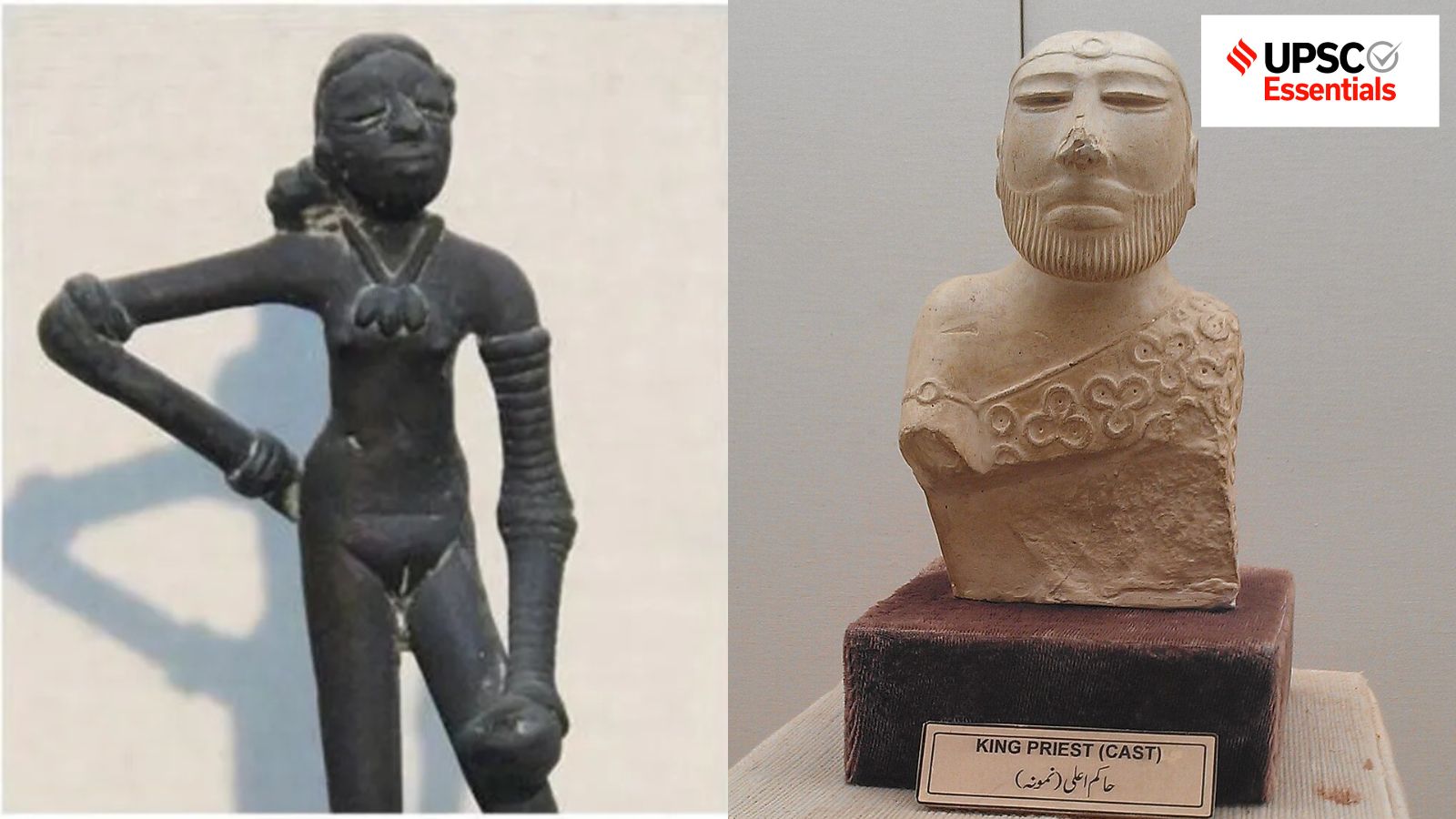
Indian sculptures were made long ago for worship, ceremonies, decoration, and other uses.
Some of the earliest known examples came from the Indus Civilisation.
Famous pieces include the Priest-King and the Dancing Girl, although scholars still debate what they represent.
Later, Mauryan artists made highly polished stone pillars and animal sculptures.
Artists also created human-like yaksha and yakshi figures.
These traditions helped shape later images of the Buddha.
Different scholars disagree about whether Buddha images were inspired mainly by Greek or Indian traditions.
When sculptures are moved from sacred places into museums, their meaning and identity can change.

Indian sculptures served religious, ritual, decorative, and practical purposes from the Indus Civilisation onward.
Colonial interpretations often labeled Indian art as static, obscene, mysterious, or conceptually inferior.
The Indus-era Priest-King and Dancing Girl remain influential but debated examples of early sculpture.
Mauryan-associated works include polished Ashokan pillars, animal capitals, yakshis, fly-whisk bearers, and nude torsos.
The worldwide dispersal of sculptures raises questions about their sacred meaning, museum display, and changing identities.
- Who
- The sculptures, their makers, museum collections, and scholars who have interpreted them.
- What
- The article examines the development, interpretation, and changing identities of Indian sculptures.
- When
- From the 2nd–3rd millennium BCE through the Kushana period, especially the 1st–3rd centuries CE.
- Where
- Across the Indus region, eastern and northern India, and museums including institutions in Pakistan and New Delhi.
- Why
- Their original religious and cultural contexts, later scholarly interpretations, and dispersal into museums complicate their study.
Indian-Origin and Indigenous Development
External Influence and Cross-Cultural Exchange
Origins of Buddha’s Image
Indian-Origin and Indigenous Development
A. K. Coomaraswamy argued that the anthropomorphic Buddha image developed from Indian yaksha traditions, particularly around Mathura.
External Influence and Cross-Cultural Exchange
A. Foucher attributed the invention and development of the human Buddha image to Greek influence, especially in Gandhara.
Dating Mauryan-Associated Sculptures
Indian-Origin and Indigenous Development
Their polish and naturalism have traditionally connected works such as the Didarganj Yakshi with Mauryan art.
External Influence and Cross-Cultural Exchange
Frederick Asher and Walter Spink argued that several eastern Indian sculptures may date to the 1st–2nd centuries CE because polished stonework was not exclusive to the Mauryan dynasty.
Museum Meaning
Indian-Origin and Indigenous Development
Sculptures should be understood through their original cultic roles and continuing traces of sacred significance.
External Influence and Cross-Cultural Exchange
Museums may place them in an exhibitional frame, treating them primarily as historical and artistic objects removed from their original ritual settings.
- Indus Civilisation
- The mature phase is dated to approximately 2600–1900 BCE.
- Priest-King
- An 18-by-11-centimetre steatite bust excavated at Mohenjo-daro in 1925–26.
- Priest-King location
- The original is preserved in a vault at the Pakistan National Museum, while a replica is displayed publicly.
- Dancing Girl
- A bronze figurine discovered at Mohenjo-daro in 1926 and now displayed at the National Museum in New Delhi.
- Lost-wax casting
- The Dancing Girl was made by forming a clay mould around a wax model, melting out the wax, and casting molten bronze.
- Mauryan sculpture
- Ashokan pillars used polished Chunar sandstone and featured bell, lotus, and animal capitals.
- Buddha imagery
- Gandhara and Mathura traditions developed distinct conventions during the Kushana period, approximately the 1st–3rd centuries CE.