

Archive · 25 Jul 2025
Indonesia's Peatlands Face Threat from Development and Fires
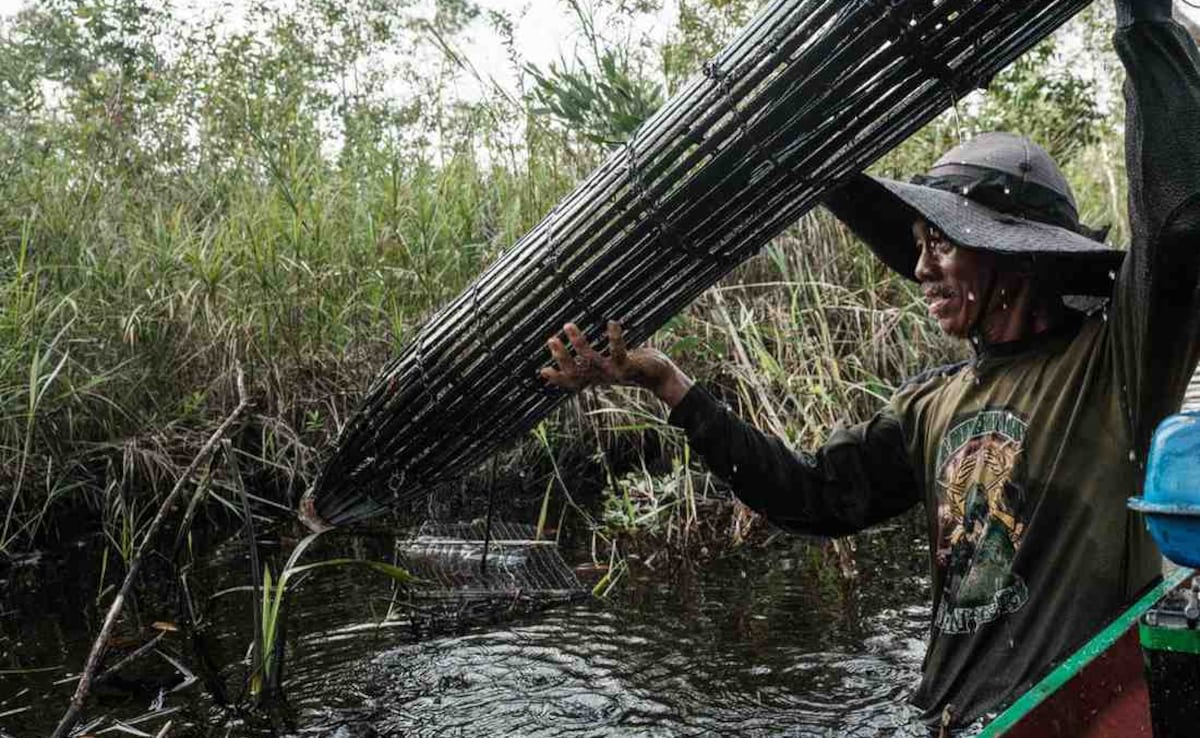
Peatlands in Indonesia are like giant sponges that store carbon and are home to many animals.
But these areas are being destroyed to make room for farms, which is causing problems.
When the peat dries out, it can catch fire, causing a lot of smoke and pollution.
Locals are fighting to protect these lands, but big companies are trying to take them over.
People have even gone to court to stop the destruction, but so far, they haven't won.
They hope to keep what's left and preserve this special environment.

Indonesia is losing its tropical peatlands, vital for carbon storage and biodiversity.
Only 18.4% of Indonesia's peatlands remain undisturbed, with many converted to plantations.
Local residents in areas like Lebung Itam are protesting the conversion of peatlands by palm oil firms.
Catastrophic fires in 2015, linked to drained peatlands, caused billions in damage.
A recent lawsuit by residents against companies for fire-related impacts was rejected by a local court.
- Who
- Environmentalists, local residents, palm oil companies, and the Indonesian government.
- What
- Indonesian peatlands are being threatened by deforestation and conversion for agriculture.
- When
- Ongoing, with significant fires in 2015.
- Where
- Indonesia, specifically areas near Lebung Itam and Bangsal.
- Why
- Peatlands are being converted for agriculture, leading to environmental damage and catastrophic fires.
Environmental and Community Concerns
Business and Economic Interests
Land Use Priorities
Environmental and Community Concerns
Peatlands are crucial for carbon storage, biodiversity, and preventing flooding.
Business and Economic Interests
Economic benefits of palm oil and timber plantations outweigh environmental concerns.
Corporate Accountability
Environmental and Community Concerns
Companies are responsible for the impacts of fires.
Business and Economic Interests
Companies are not responsible, and the lawsuit should be rejected.
- Undisturbed Peatland
- 18.4%
- 2015 Fire Cost
- $16.1 billion (approx. 2% of GDP)
- Primary Concern
- Conversion to palm oil or timber plantations
- Key Species
- Orangutans and fish
- Local Protest
- Against Bintang Harapan Palma