

Archive · 19 May 2025
Why Birds Fly in V Shape: Aerodynamics and Efficiency
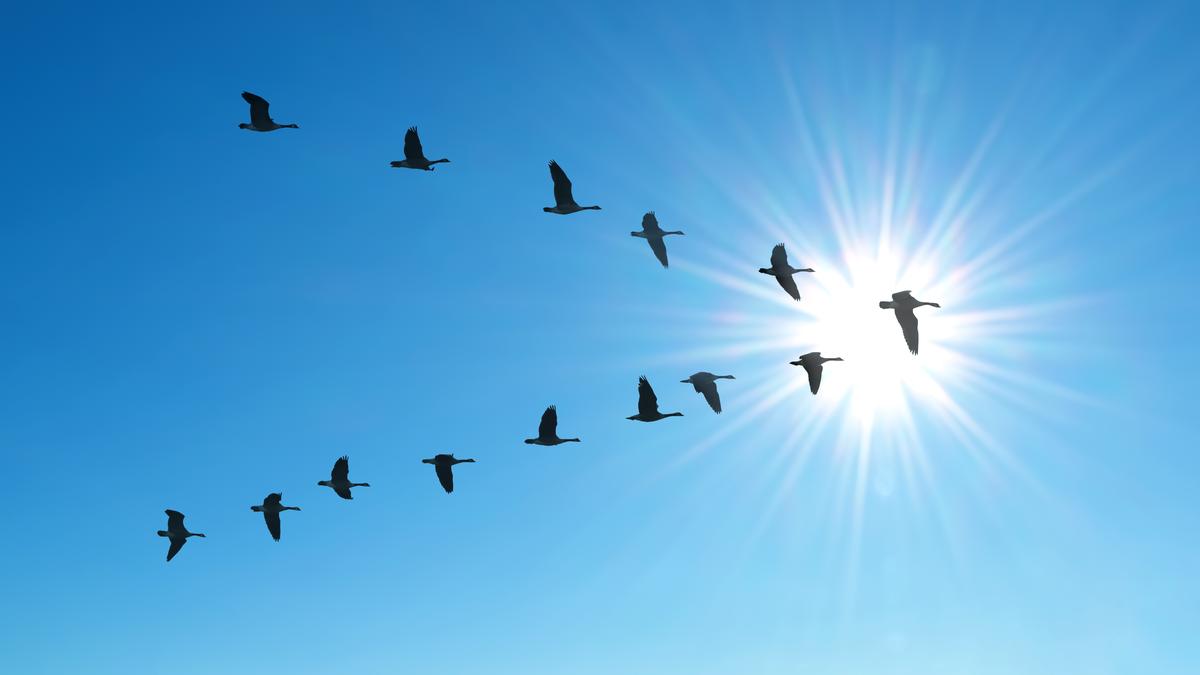
Birds fly in a V-shape formation during long journeys to save energy.
The bird in front works the hardest, while the others use the air currents it creates.
This is like catching a free ride!
Scientists studied ibises and found they fly in very specific positions to get the most lift from the air.
Birds take turns leading, so no single bird always has to work the hardest.
The birds at the back of the V flap their wings less often and have slower heart rates than the lead bird.

Birds fly in a V-shape formation to conserve energy.
The lead bird faces the most wind resistance.
Birds behind the leader benefit from the upwash created by the lead bird.
Studies on ibises show they fly in precise patterns to utilize upwash.
Birds regularly swap positions in the formation, not always following one leader.
- Who
- Birds like geese and pelicans.
- What
- Birds fly in a V-shape to conserve energy.
- When
- Not specified, but the study mentioned was published May 13, 2025.
- Where
- During long migrations, birds fly in a V-shape.
- Why
- Birds fly in a V-shape to take advantage of the airflow created by birds in front of them.
- Main Benefit
- Conserving energy during long migrations
- Aerodynamic Principle
- Upwash
- Example Birds
- Geese and pelicans
- Publication Date
- May 13, 2025