

Archive · 18 Sep 2025
Vivekananda and Gandhi: Pathways to Global Harmony
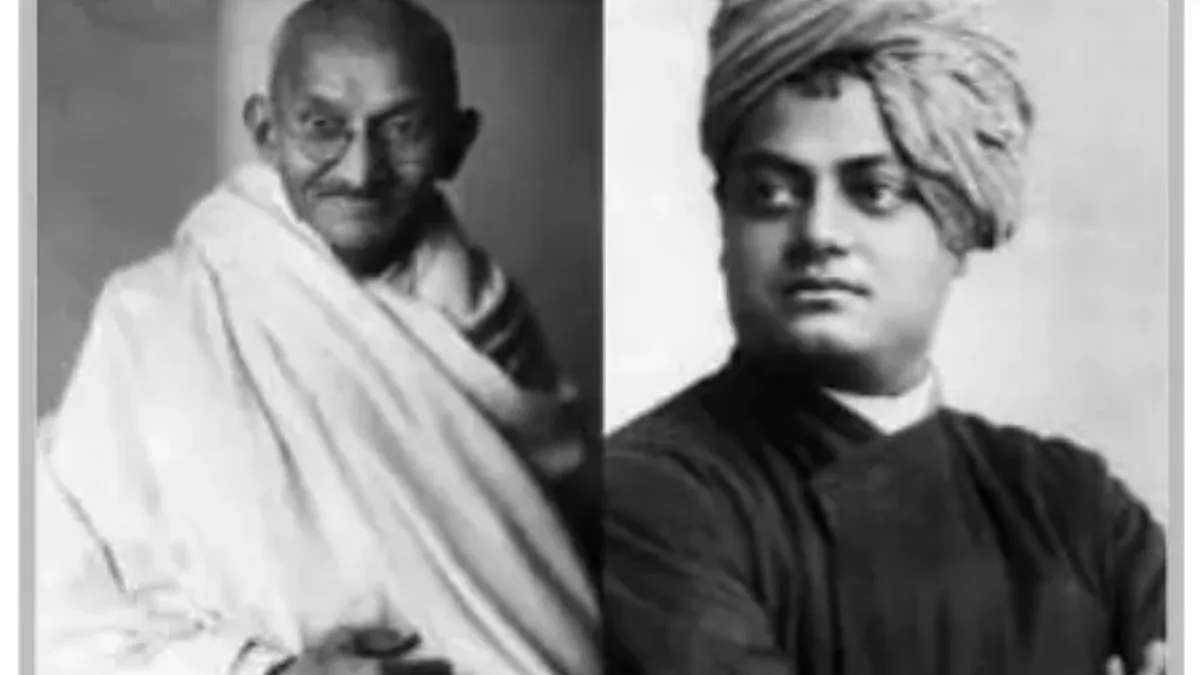
Imagine two wise people, Vivekananda and Gandhi, who taught important lessons about how to get along.
Vivekananda believed in accepting everyone, like a big family.
Gandhi showed how to stand up for what's right without using violence.
They both believed in helping, not fighting, and bringing people together.
Their ideas are still important today because they help us deal with problems like disagreements and violence.
They showed us that being kind and understanding can make the world a better place.

Swami Vivekananda and Mahatma Gandhi emphasized tolerance, non-violence, and unity.
Vivekananda's speech at the Parliament of Religions promoted universal acceptance.
Gandhi launched the Satyagraha movement in South Africa, based on truth and nonviolence.
Their teachings are relevant for addressing contemporary issues like conflict and division.
India's legacy offers a path to peace by prioritizing tolerance and syncretic unity.
- Who
- Swami Vivekananda and Mahatma Gandhi.
- What
- Promoting global harmony, tolerance, and non-violence through their teachings.
- When
- Vivekananda spoke in 1893 and Gandhi began Satyagraha in 1906.
- Where
- Chicago and South Africa.
- Why
- To inspire a global moral uprising and combat fanaticism and violence.
- Key Figures
- Swami Vivekananda, Mahatma Gandhi
- Primary Themes
- Tolerance, non-violence, unity, empathy
- Key Events
- Parliament of Religions (1893), Satyagraha launch (1906), 9/11
- Core Values
- Compassion, Truth, Pluralism