

Archive · 23 Sep 2026
India's BRICS Role Hinges on Reviving the Spirit of Non-Alignment
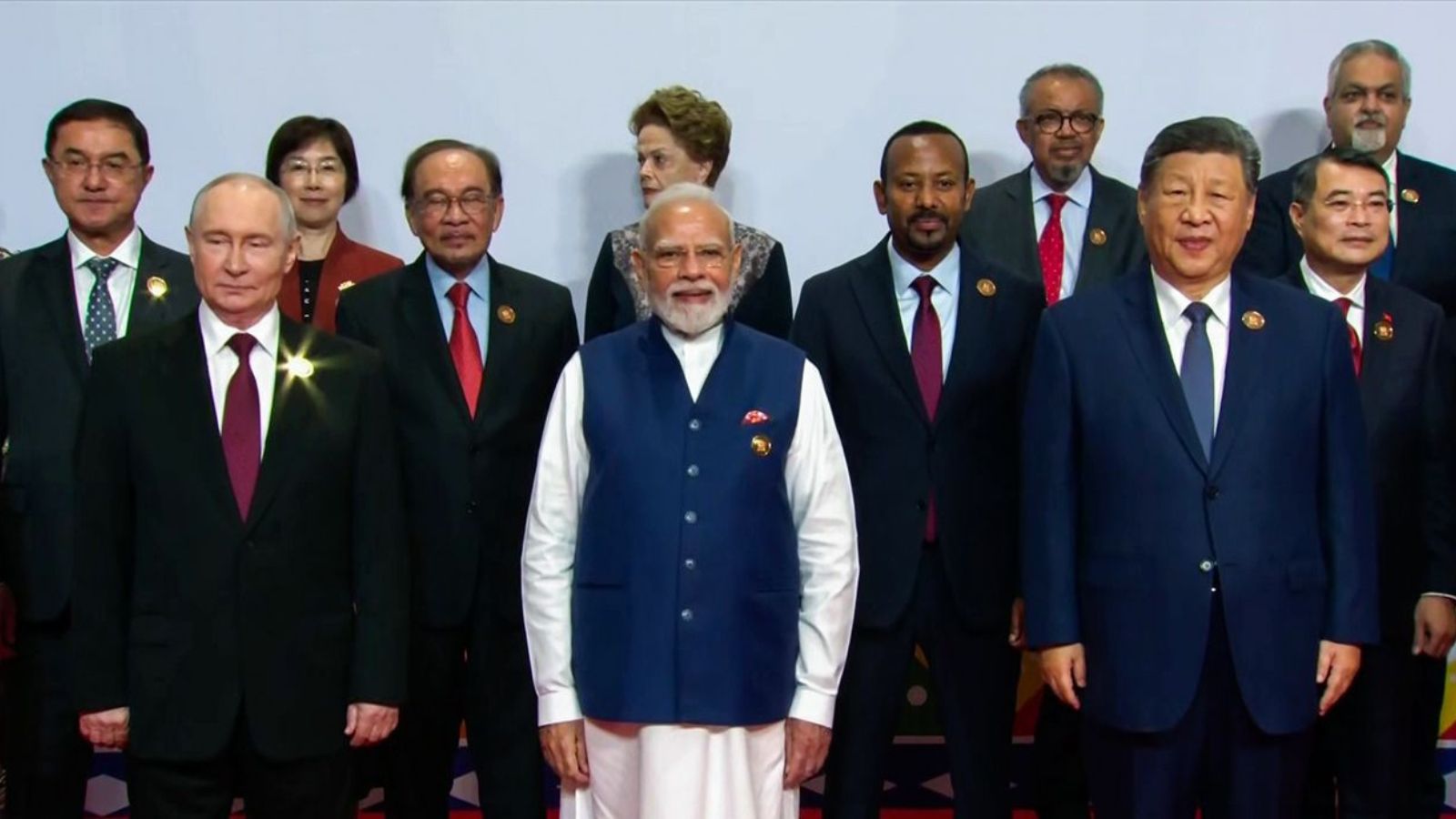
The article says India used to be a leading voice for countries that had recently become independent.
This idea was called non-alignment, meaning countries would not simply join one powerful military group.
The writer says BRICS now gives developing countries another way to work together.
BRICS has called for changes to global institutions and opposed some sanctions and blockades.
However, its members do not always agree, so its statements can be cautious.
The article argues that BRICS is not yet as strongly anti-colonial as the old Non-Aligned Movement.
It criticizes India for becoming closer to the United States and Israel.
The writer wants India to support Palestine, oppose sanctions, and speak more independently.
The main message is that India should use BRICS to defend the interests of poorer countries.

The article argues that India should reclaim its historic Non-Aligned Movement role within BRICS.
It presents BRICS as a growing coalition seeking reforms to global financial and political institutions.
The BRICS declaration addressed sanctions, Palestinian statehood, climate finance, and international institutional reform.
The article says BRICS is not yet a true successor to NAM because members have conflicting interests and avoid naming major powers.
It criticizes India’s closer ties with the United States and Israel and urges stronger support for Palestine and the Global South.
- Who
- India, BRICS member states, and the broader Global South are the main subjects.
- What
- The article calls for India to revive the principles of the Non-Aligned Movement and give BRICS a stronger anti-imperial and Global South-oriented purpose.
- When
- The article refers to the Bandung meeting in April 1955, the founding of NAM in 1961, and the 18th BRICS Summit held the previous week.
- Where
- The discussion focuses on BRICS, India, Bandung in Indonesia, New Delhi, and international institutions including the United Nations, IMF, World Bank, and WTO.
- Why
- The writer argues that India’s closer alignment with the United States undermines its ability to represent developing countries and shape BRICS independently.
Revive Non-Alignment
Pursue Pragmatic Partnerships
India’s foreign-policy role
Revive Non-Alignment
India should regain its former position as an independent moral voice for formerly colonized and developing countries.
Pursue Pragmatic Partnerships
The article describes India as deepening military and trade arrangements with the United States, suggesting a pragmatic strategy centered on stronger partnerships.
Purpose of BRICS
Revive Non-Alignment
BRICS should develop into a stronger platform for Global South solidarity, opposition to sanctions, and resistance to domination by any single power.
Pursue Pragmatic Partnerships
BRICS is presented as a limited coalition whose members have different interests and systems; its cautious language reflects the need for consensus rather than a unified anti-imperial program.
India’s position on West Asia
Revive Non-Alignment
India should show stronger solidarity with Palestine and clearly oppose the destruction of Gaza and policies affecting countries such as Iran and Cuba.
Pursue Pragmatic Partnerships
The article notes that India maintains a strategic relationship with Israel and has not unambiguously condemned the destruction of Gaza, reflecting its existing diplomatic and strategic choices.
- Bandung Conference
- In April 1955, leaders of 29 newly independent Asian and African countries agreed on 10 principles including sovereignty and opposition to military blocs.
- Non-Aligned Movement
- The movement was formally institutionalized in Belgrade six years after Bandung and is described as having 120 members.
- BRICS membership
- The article identifies Brazil, Russia, India, China, South Africa, Egypt, Ethiopia, Iran, Indonesia, and the United Arab Emirates as members.
- BRICS scale
- BRICS is described as representing more than half of humanity and roughly one-third of the global economy.
- New Delhi declaration
- The 18th BRICS Summit produced a 140-point declaration.
- Declaration themes
- The declaration addressed reform of global institutions, unilateral sanctions, Cuba, Palestinian statehood, and climate finance.
- Author’s proposed direction
- The article urges India to oppose sanctions and blockades, support Palestine, demand climate finance, and make BRICS more than a vehicle for institutional reform.