

Archive · 23 May 2025
Ancient Human Fossils Discovered Undersea in Southeast Asia
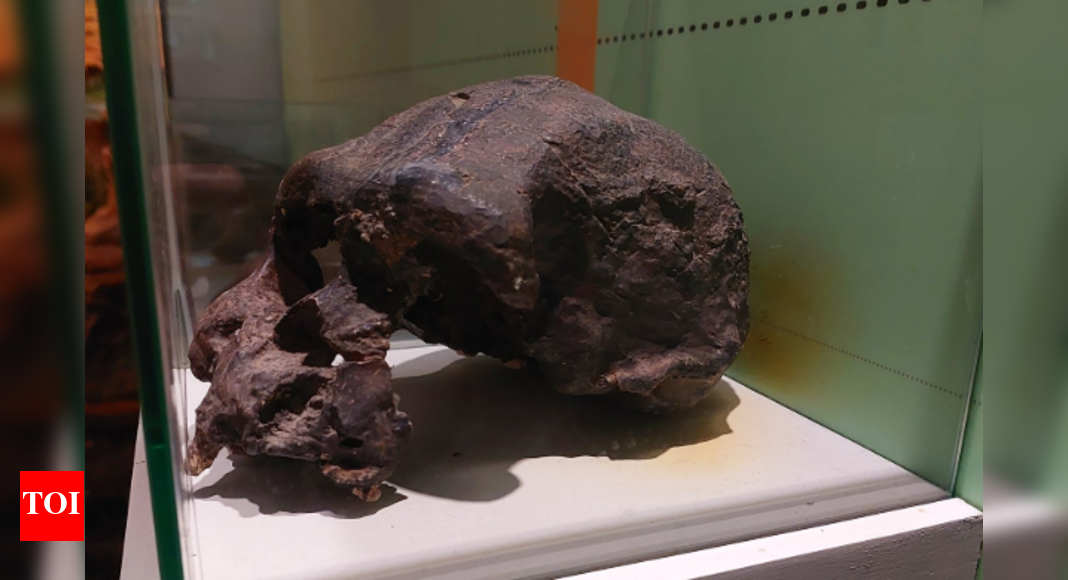
Scientists have found very old human fossils underwater near Indonesia!
These bones are from Homo erectus, an early human ancestor who lived about 140,000 years ago.
The fossils were found while digging in an area that used to be land, called Sundaland, but is now underwater.
The discovery tells us how these early humans hunted animals like turtles and elephants and possibly interacted with other human relatives.
They found fossils of many animals, showing the rich environment the humans lived in.
This gives scientists a clearer picture of how humans lived long ago!

Fossils of Homo erectus were discovered in the Madura Strait near Java, Indonesia.
The fossils are approximately 140,000 years old.
The area was once part of Sundaland, a region now submerged.
Cut marks on animal fossils indicate hunting strategies.
Over 6,000 animal remains were recovered, including Komodo dragons and hippos.
- Who
- Homo erectus, an extinct human ancestor.
- What
- Discovery of 140,000-year-old Homo erectus fossils and animal remains.
- When
- Fossils date back approximately 140,000 years.
- Where
- Madura Strait, Indonesia.
- Why
- The discovery provides insight into the lives, hunting strategies, and potential interactions of Homo erectus in Southeast Asia.
- Species
- Homo erectus
- Age of Fossils
- 140,000 years ago
- Location
- Madura Strait, Indonesia
- Former Land Area
- Sundaland
- Hunted Animals
- Turtles, large bovids
- Animal Remains
- Komodo dragons, hippos, Stegodon