

Archive · 8 Jun 2025
AI and Brain Tumors: Enhancing Detection and Treatment
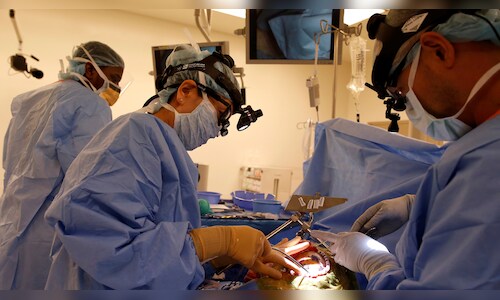
Scientists are using Artificial Intelligence (AI) to improve the detection and treatment of brain tumors.
AI helps analyze brain scans and predict tumor types.
Researchers are developing new AI models like crossNN and DEPLOY.
These tools help doctors plan treatments and provide a better quality of life for those with brain tumors.
Liquid biopsies, a less invasive method, can also detect signs of tumors early.

AI is being integrated with medical imaging for early brain tumor detection.
AI models, like crossNN and DEPLOY, are improving diagnostic accuracy.
DEPLOY can analyze brain tumor images to predict tumor subtypes with 95% accuracy.
Liquid biopsies, combined with AI, are a non-invasive method to detect tumor biomarkers.
These advancements aim to improve early detection and quality of life.
- Who
- Researchers are developing and using AI models and new diagnostic methods.
- What
- AI and advanced technologies are being used to improve early detection, diagnosis, and treatment of brain tumors.
- When
- Ongoing, with recent advancements highlighted in 2024 and 2025.
- Where
- Research is being conducted in various locations, with studies published in journals like Nature Cancer and Nature Medicine.
- Why
- To improve early detection and treatment of brain tumors.
- Key AI Models
- crossNN, DEPLOY
- Publication: Nature Cancer
- June 6 (crossNN)
- Publication: Nature Medicine
- May 2024 (DEPLOY)
- Application of AI
- Tumour segmentation, classification
- Liquid Biopsy
- Non-invasive method to detect biomarkers in body fluids
- Accuracy (DEPLOY)
- 95%