

Archive · 16 Nov 2025
Narnaul: A Haryana Town Rich in Unrecognized Historical Significance
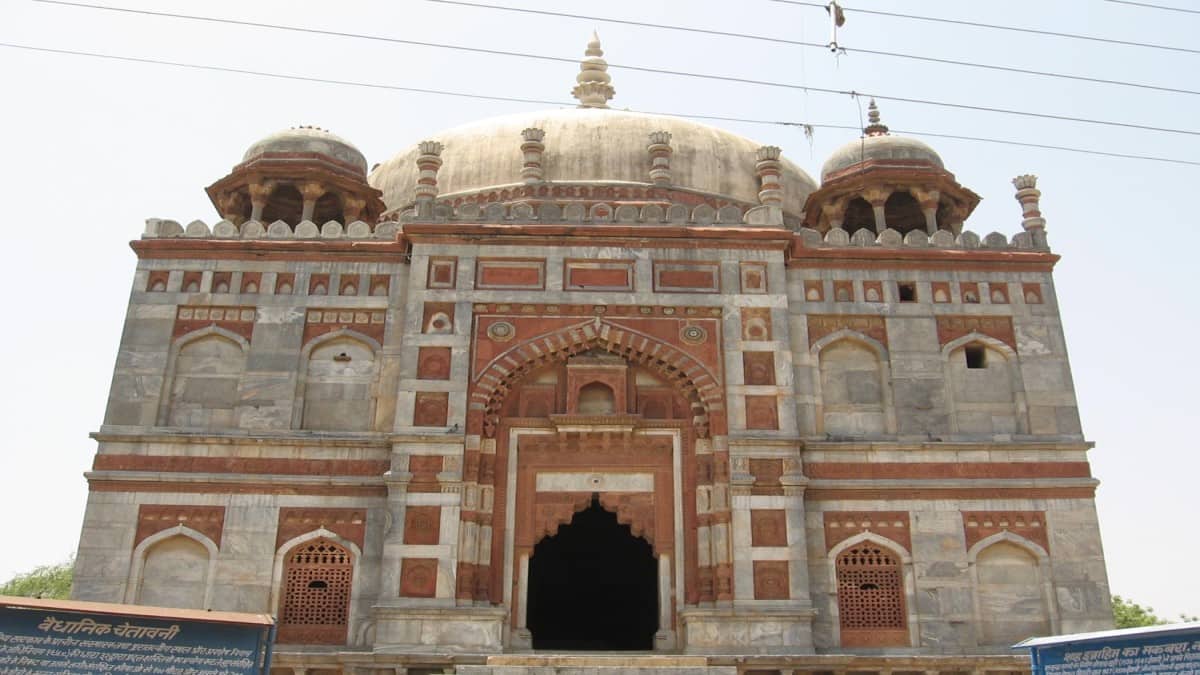
Imagine a town that's like a hidden treasure chest full of old stories.
Narnaul in Haryana is like that!
People driving through to visit other places often miss it, thinking it's just a regular town.
But it has amazing old buildings from kings and queens, like a special palace called Jal Mahal that's in the middle of water and still has beautiful paintings inside.
It was even a place where a big king named Akbar had his own money-making place.
There was also a brave leader named Rao Tula Ram who fought in a big rebellion a long, long time ago.
Even though these stories are super interesting, most people don't know about them.
The old buildings are a bit run down, but they show us how important Narnaul used to be.
It's like the town is whispering its history, but not many people are listening.

Narnaul, Haryana, is a town rich in historical significance with legacies from Sher Shah Sur, Akbar, and the 1857 rebellion, yet often overlooked by travellers.
Notable historical structures include the tomb of Ibrahim Sur (rebuilt by Sher Shah Sur), Akbar's mint, Birbal ka chatta, and the visually striking Jal Mahal (water palace).
Rao Tula Ram, a local zamindar, played a significant role in the 1857 rebellion, sending supplies to rebel forces in Delhi and fighting the British near Narnaul.
The town peaked during Mughal Emperor Akbar's reign, hosting a mint that issued a special 'Jalali' coin and featuring a governor, Shah Quli Khan, who played a role in the Second Battle of Panipat.
Despite its historical importance, many of Narnaul's heritage sites are in a state of neglect, with potential for heritage tourism remaining largely untapped.
- Who
- Travellers, historical figures like Sher Shah Sur, Akbar, Rao Tula Ram, and local residents of Narnaul
- What
- A historical town in Haryana whose rich past is largely unrecognized by travellers passing through, despite numerous significant historical sites and events.
- When
- The historical narrative spans from the 13th century to the Rebellion of 1857 and the Mughal era (1550s onwards), with a focus on its peak during Akbar's reign and the impact of the 1857 rebellion.
- Where
- Narnaul, a town in Haryana, India, with connections to Delhi.
- Why
- The town's historical significance is often overlooked by travellers due to its location and perception as a dusty transit town, leading to a disconnect between its rich past and present-day recognition.
Travellers' Perspective
Town's Potential
Perception of Narnaul
Travellers' Perspective
Travellers from Delhi and Gurgaon often overlook Narnaul, seeing it as just another dusty town in Haryana, unaware of its historical depth.
Town's Potential
Despite being a transit point, Narnaul holds significant historical structures and stories that are often missed by those passing through.
Historical Recognition
Travellers' Perspective
Historical figures like Rao Tula Ram are largely forgotten by the general public, with their stories reduced to street names.
Town's Potential
Key historical figures and events, such as Sher Shah Sur's legacy, Akbar's mint, and Rao Tula Ram's rebellion, are integral to Narnaul's past but are fading from collective memory.
Tourism and Heritage
Travellers' Perspective
Narnaul's heritage sites, like the Jal Mahal and Sher Shah Sur's grandfather's tomb, are in a state of neglect, diminishing their appeal.
Town's Potential
With its wealth of historical sites, Narnaul has the potential to attract heritage tourism, including sound and light shows and heritage walks, making its history more relevant to locals and visitors.
- Key Historical Figures
- Sher Shah Sur, Akbar, Rao Tula Ram, Ibrahim Sur, Shaikh Muhammad Turk Narnauli (Shah Turkman), Jamal Khan, Feroz Tughlak, Todar Mal, Khwaja Shah Mansoor, Shah Quli Khan, Birbal, Hemu
- Notable Structures
- 16th-century tomb of Ibrahim Sur (rebuilt by Sher Shah Sur), Chor Gumbad, Akbar's mint, Birbal ka chatta, Tomb of Quli Khan, Tripolia gateway, Jal Mahal (water palace), Shrine of Shah Turkman
- Historical Periods
- Lodi dynasty, Sher Shah Sur's reign, Mughal era (Akbar's reign), Rebellion of 1857
- Significant Events
- Rebellion of 1857 led by Rao Tula Ram, Establishment of Akbar's mint, Issuance of 'Jalali' coin, Second Battle of Panipat (role of Shah Quli Khan)
- Unique Features
- Water palace (Jal Mahal) built by Shah Quli Khan, Painted ceiling patterns in Jal Mahal, 'Jalali' coin issued by Akbar