

Archive · 21 Jul 2026
Bengaluru Suburban Rail Project Adds Double-Decker Corridor
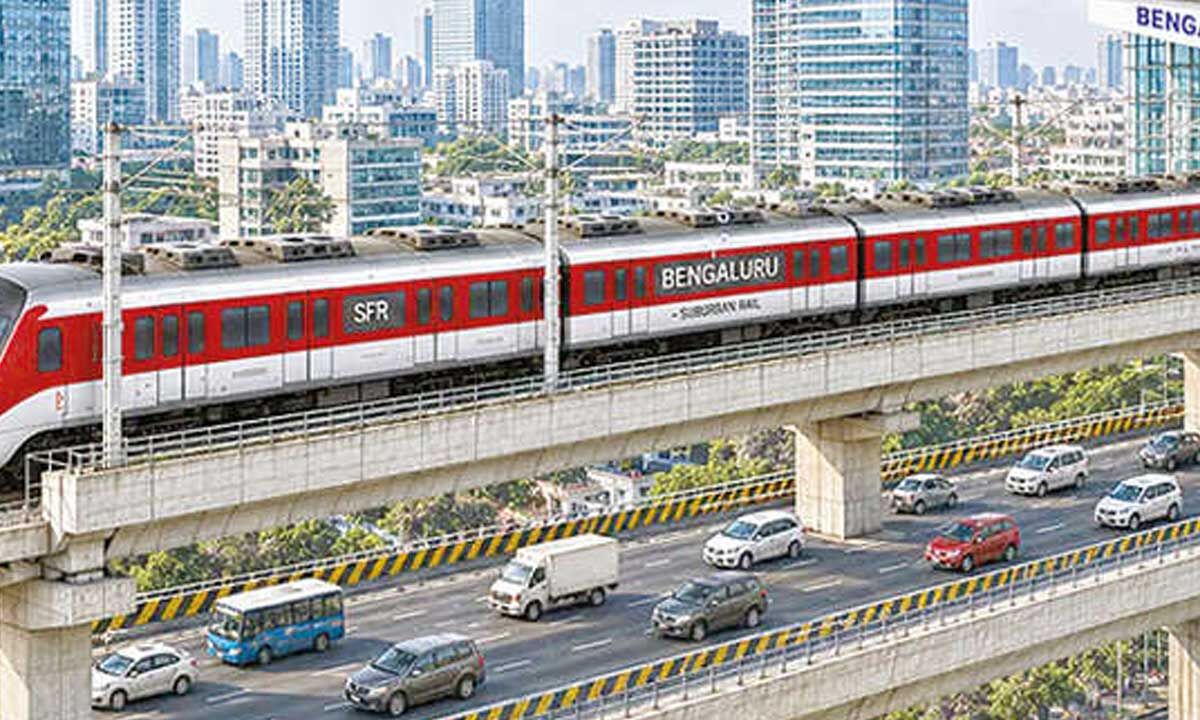
The Bengaluru Suburban Rail Project is adding a 1.2-km double-decker corridor to help with traffic.
This corridor will have a road flyover on the bottom and a train track on top.
It's being built between Byappanahalli and Chikkabanavara.
The project is expected to cost Rs 199 crore and should be finished in about 24 months.
This is part of a bigger plan to make travel easier in Bengaluru.

The Bengaluru Suburban Rail Project will include a 1.2-km double-decker corridor between Byappanahalli and Chikkabanavara.
The structure will feature a road flyover on the lower level and an elevated suburban railway line above.
The project aims to ease traffic congestion and integrate road and rail infrastructure.
A Rs 199-crore tender has been floated for the construction of the double-decker corridor.
The project is part of a larger plan to improve suburban rail connectivity in Bengaluru.
- Who
- Karnataka Rail Infrastructure Development Company (K-RIDE)
- What
- Construction of a 1.2-km double-decker corridor
- When
- Completion target of 24 months for the first phase
- Where
- Between Byappanahalli and Chikkabanavara on the Mallige Line
- Why
- To ease traffic congestion and integrate road and rail infrastructure
Infrastructure Development
Traffic Congestion
Infrastructure Development
Infrastructure Development
The double-decker corridor will integrate road and rail infrastructure, easing traffic congestion and improving connectivity.
Traffic Congestion
The project aims to provide a long-term solution to traffic congestion in the Mattikere-Yeshwanthpur stretch.
- Project
- Bengaluru Suburban Rail Project (BSRP)
- Corridor
- Corridor-2 (Mallige Line)
- Location
- Between Byappanahalli and Chikkabanavara
- Structure
- Road flyover on the lower level and elevated suburban railway line above
- Cost
- Rs 199 crore for the double-decker corridor, Rs 40.22 crore for station concourse works
- Completion Target
- 24 months for the first phase, 18 months for the second and third phases