

Archive · 28 Jun 2025
Canadian Rocks May Be Among Earth's Oldest at 4.16 Billion Years
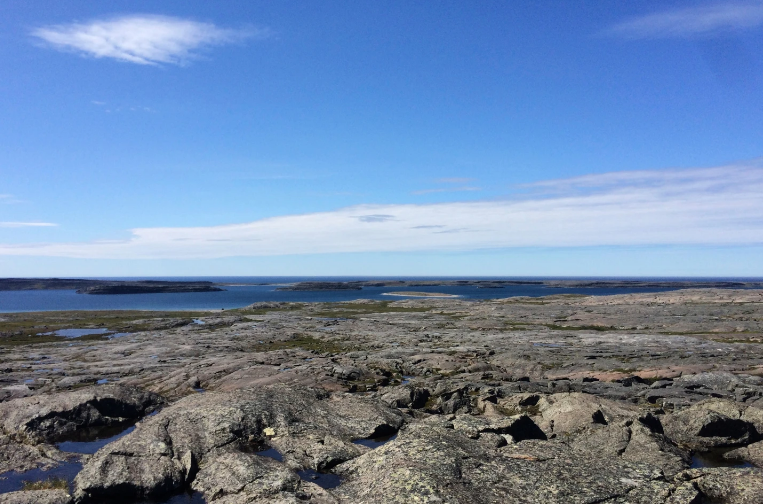
Imagine Earth was just a baby, about 4.5 billion years ago!
Scientists have found some of the oldest rocks ever from a place in Canada called Nuvvuagittuq.
These rocks might be around 4.16 billion years old.
Scientists used two different methods to find out their age, and both gave the same answer.
These old rocks are special because they help scientists learn about how Earth started and how life may have begun.
But, the local people in the area are making sure the scientists don't damage the area when they are studying these rocks.

Scientists have identified potentially the oldest rocks on Earth in the Nuvvuagittuq Greenstone Belt in Canada.
The rocks are estimated to be approximately 4.16 billion years old.
Researchers used two dating techniques that provided the same age estimation.
The Nuvvuagittuq Greenstone Belt is located on the eastern shore of Hudson Bay in Quebec.
The local Inuit community has restricted scientists from taking samples due to past damage.
- Who
- Scientists, including Jonathan O'Neil from the University of Ottawa, are involved in the research.
- What
- Researchers have identified potentially the oldest rocks on Earth.
- When
- The rocks are estimated to be about 4.16 billion years old, in research published on Thursday.
- Where
- The rocks are located in the Nuvvuagittuq Greenstone Belt in Quebec, Canada.
- Why
- To understand Earth's early history and potentially how life began.
- Location
- Nuvvuagittuq Greenstone Belt, Quebec, Canada
- Estimated Age
- 4.16 billion years
- Rock Type
- Greenstone
- Dating Method
- Radioactive element decay
- Published In
- Science
- First Rocks
- Acasta Gneiss Complex (4 billion years old)
- Inuit Restriction
- Limited access to the site for sample collection.