

Archive · 13 Aug 2025
PAU Finds Paddy Dwarfing Virus in Five Punjab Districts
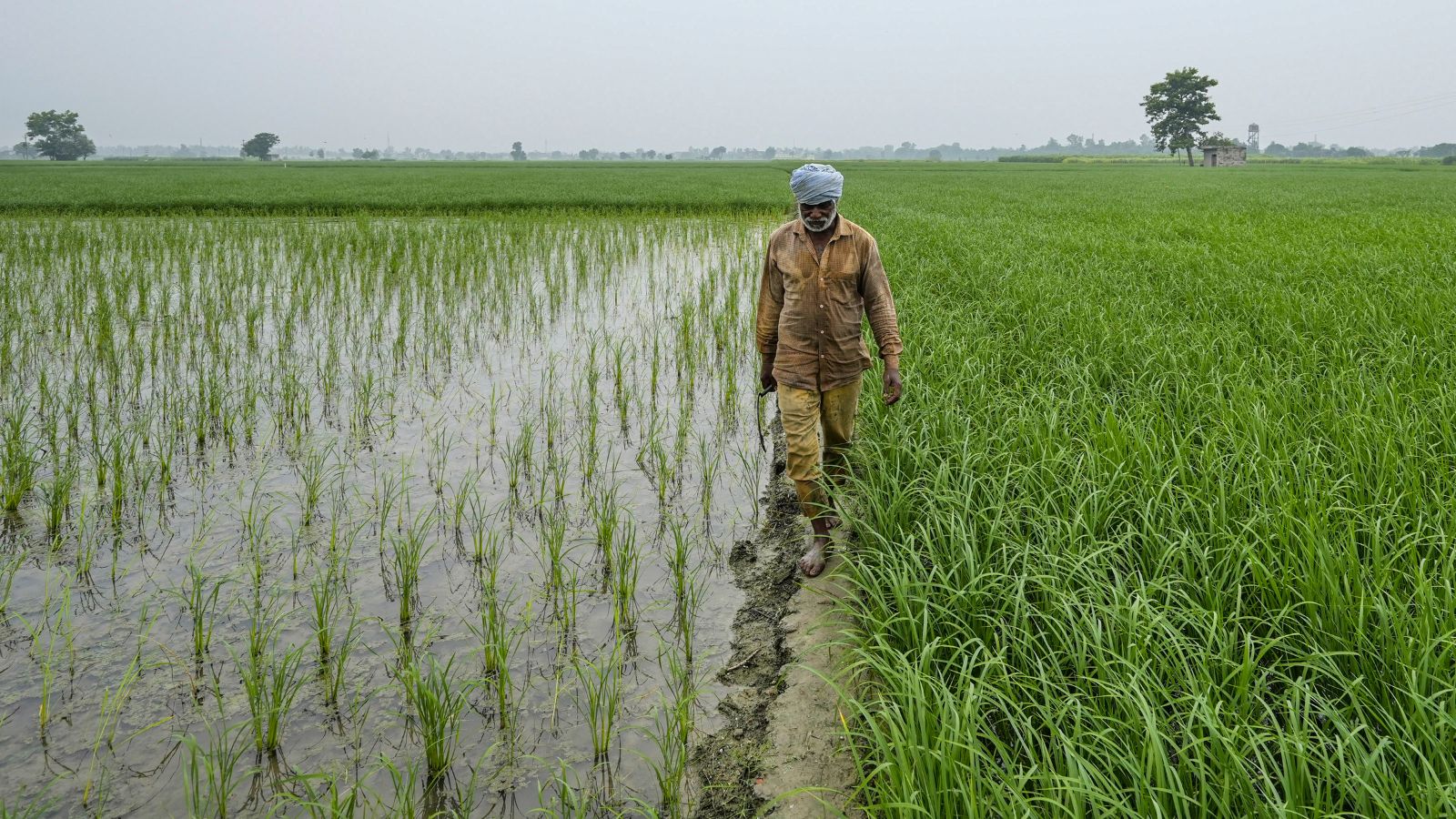
A virus is making rice plants in some parts of Punjab sick, causing them to grow poorly.
This disease, called SRBSDV, is spread by tiny insects called WBPH.
The plants don't grow as tall, and their leaves look different.
Scientists found the disease in five districts after checking farms.
To stop the spread, farmers are told to watch out for the insects and use special chemicals.
Planting rice early seems to make the problem worse.
Experts say this year's outbreak is similar to one in 2022.
Farmers are advised to follow the advice given by experts to keep their crops healthy.

A paddy dwarfing disease caused by a virus has been found in five Punjab districts.
The virus is identified as Southern Rice Black Streaked Dwarf Virus (SRBSDV).
Symptoms include stunting, reduced tillering, and poor root growth.
The disease spreads through the white-backed planthopper (WBPH).
PAU has issued guidelines, including insecticide recommendations, to manage the disease.
- Who
- Farmers in affected districts and Punjab Agricultural University (PAU).
- What
- A paddy dwarfing disease caused by Southern Rice Black Streaked Dwarf Virus (SRBSDV).
- When
- Surveys were conducted in July and August.
- Where
- Found in five districts of Punjab: Pathankot, Gurdaspur, Ropar, Fatehgarh Sahib, and Patiala.
- Why
- To address and manage the spread of the disease in rice crops.
- Disease Name
- Southern Rice Black Streaked Dwarf Virus (SRBSDV)
- Affected Districts
- Pathankot, Gurdaspur, Ropar, Fatehgarh Sahib, Patiala
- Vector
- White-backed planthopper (WBPH)
- Symptoms
- Stunting, reduced tillering, poor root growth, narrow upright leaves, and shortened internodes.
- Insecticide Recommendations
- Pexalon 10 SC, Ulala 50 WG, Osheen/Dominant/Token 20 SG, Imagine/Viola 10 SC, Orchestra 10 SC, Chess 50 WG
- Risk Factor
- Transplanting before June 20 increases infection risks.