

Archive · 29 Sep 2026
NMMC Converts 71.990 Tonnes of Ganeshotsav Floral Waste
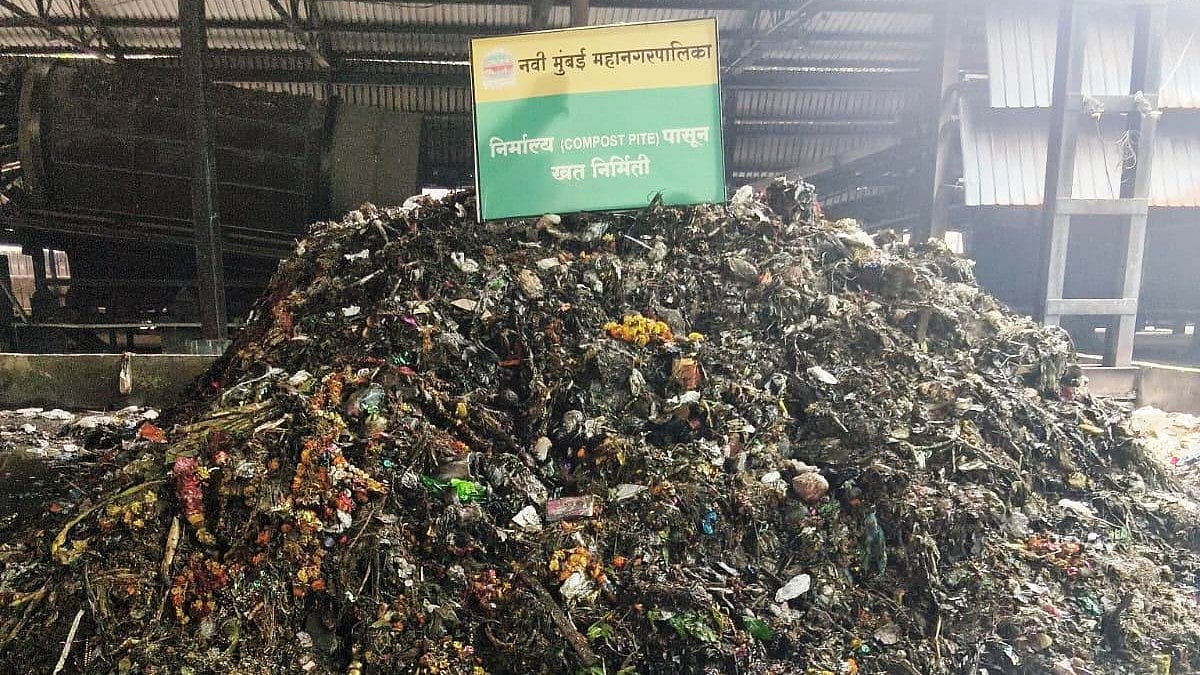
The Navi Mumbai civic body collected flower and other organic waste after Ganeshotsav immersions.
This material is called nirmalya.
Workers collected it from natural and artificial immersion locations.
The wet waste was taken to a facility in Turbhe.
There, it is being turned into compost and manure.
The manure will help fertilize city gardens.
The civic body also encouraged people to use clay idols and artificial ponds.
The article reports a total collection of 71.990 tonnes, although some daily figures listed in it do not add up consistently.

Navi Mumbai Municipal Corporation reported collecting 71.990 tonnes of nirmalya during six Ganeshotsav immersion days.
The waste was gathered from 22 natural and 156 artificial immersion sites across Navi Mumbai.
Wet nirmalya, including flowers, garlands, leaves and fruit waste, was sent to the Turbhe facility for composting.
The resulting manure will be used in gardens maintained by the municipal corporation.
The article lists conflicting immersion-day figures, reporting both 25.990 tonnes and 7.155 tonnes for the seventh day; its stated total is 71.990 tonnes.
- Who
- The Navi Mumbai Municipal Corporation, supported by its sanitation officers and workers, collected the nirmalya.
- What
- The civic body collected 71.990 tonnes of nirmalya and began processing the wet organic waste into manure.
- When
- During the six Ganeshotsav immersion days this year.
- Where
- From 22 natural and 156 artificial immersion sites across Navi Mumbai; processing is taking place at the Turbhe facility.
- Why
- To manage immersion waste environmentally and produce manure for NMMC-maintained gardens.
- Reported total collection
- 71.990 tonnes
- Collection locations
- 178 sites: 22 natural and 156 artificial
- Processing facility
- NMMC's Turbhe facility
- Waste materials
- Flowers, garlands, durva, tulsi, shami, fruit waste and other organic material
- Final use
- Manure for municipal gardens
- Artificial immersion ponds
- 156 ponds were made available
- Reported discrepancy
- The article gives both 25.990 tonnes and 7.155 tonnes for the seventh day, while stating the overall total as 71.990 tonnes