

Archive · 25 Jul 2025
First Percutaneous Trans-Axillary TAVI Procedure Performed in India
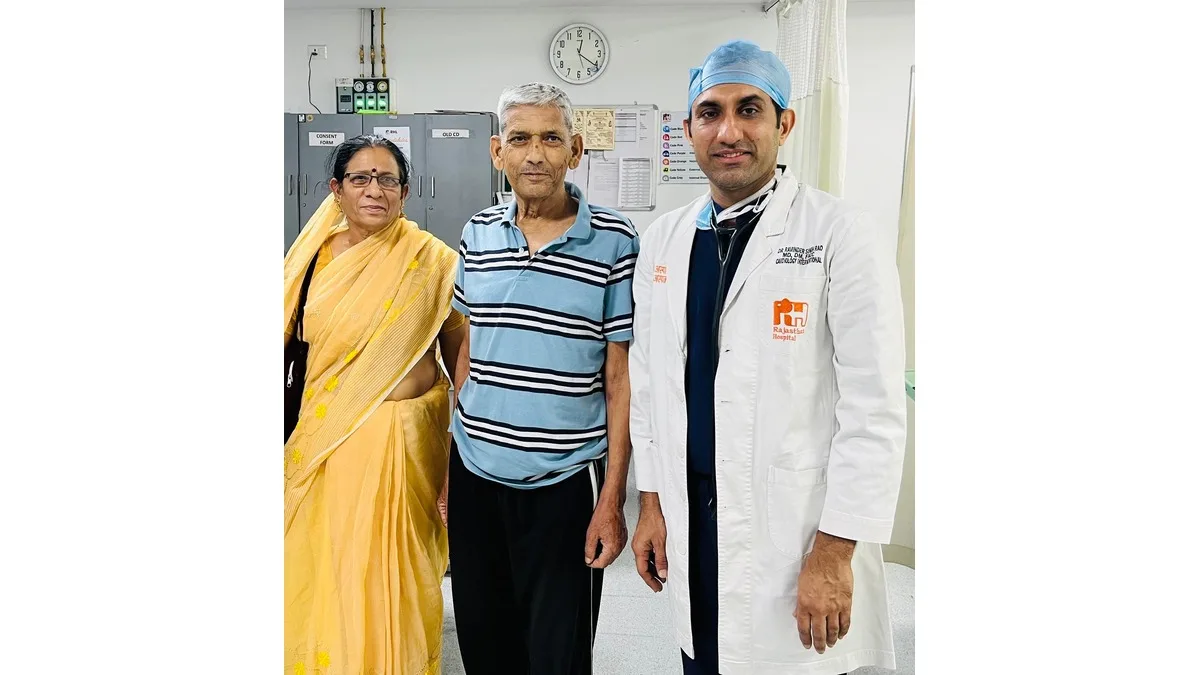
Doctors in India successfully performed a new heart valve replacement procedure.
A 78-year-old man had blocked arteries in his legs, preventing the usual method.
Instead, doctors went through an artery in his arm.
Using special tools and guidance, they put in a new valve.
The patient got better quickly, breathing easier and with better kidney function.
This new method could help other people who have similar problems.

Rajasthan Hospital in Jaipur performed the first percutaneous trans-axillary TAVI in India.
The procedure replaced a non-working heart valve through the arm artery without surgery.
The 78-year-old patient had blocked leg arteries, making the standard TAVI approach impossible.
Doctors used ultrasound guidance to access the subclavian artery in the left arm.
The patient's breathing, kidney function, and heart efficiency improved significantly after the procedure.
- Who
- A 78-year-old man and a team of interventional cardiologists led by Dr. Ravindra Singh Rao.
- What
- First percutaneous trans-axillary TAVI performed in India, replacing a heart valve.
- When
- Details not provided in the article.
- Where
- Rajasthan Hospital in Jaipur, India.
- Why
- The patient's femoral arteries were blocked, making the standard TAVI approach unfeasible.
- Procedure
- Percutaneous trans-axillary TAVI
- Location
- Rajasthan Hospital, Jaipur, India
- Patient Age
- 78 years old
- Patient Condition
- Blocked leg arteries, heart at 25% capacity
- Procedure Access Point
- Subclavian artery in the left arm
- Outcome
- Improved breathing, kidney function, and heart efficiency
- Discharge
- Five days after the procedure