

Archive · 18 Jul 2025
Cycling's Biomechanics: A Simple Yet Ingenious Design
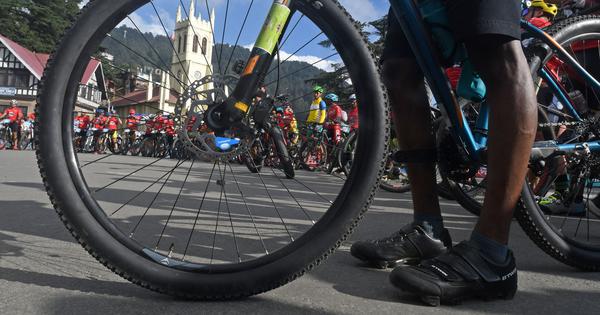
Cycling is super efficient because it uses your body in a smart way!
When you walk, you're constantly lifting and slamming your feet down, wasting energy.
Bicycles use a smooth, circular motion, which is easier on your legs.
They also use wheels, which roll instead of impacting the ground.
Plus, gears help your muscles work at their best speed, making cycling much less tiring than walking or running.
It is at least four times more energy-efficient than walking and eight times more efficient than running.

Cycling is significantly more energy-efficient than walking or running, up to four and eight times respectively.
Bicycles minimize energy drains from limb movement, ground impact, and muscle speed limitations.
Unlike walking, cycling involves a circular motion reducing the effort required to move legs.
Wheels on bicycles provide rolling contact, avoiding energy loss from the impact of footsteps.
Gears allow cyclists to maintain optimal muscle efficiency by adjusting to the speed
- Who
- A biomechanics expert, Anthony Blazevich.
- What
- The biomechanics behind the efficiency of cycling compared to walking and running.
- When
- Not explicitly stated, but the information describes general principles.
- Where
- Not explicitly stated.
- Why
- To explain why cycling is more energy-efficient than walking or running.
Advantages of Cycling
Advantages of Walking on Steep Hills
Efficiency on Hills
Advantages of Cycling
Cycling is more energy-efficient because of its biomechanics.
Advantages of Walking on Steep Hills
Walking is sometimes more effective on steep hills.
- Efficiency vs Walking
- At least 4x more
- Efficiency vs Running
- At least 8x more
- Key Energy Drains Minimized
- Limb movement, ground impact, and muscle speed limitations