3 days ago
Why Silent Indian Meetings Hide Ideas and Truth
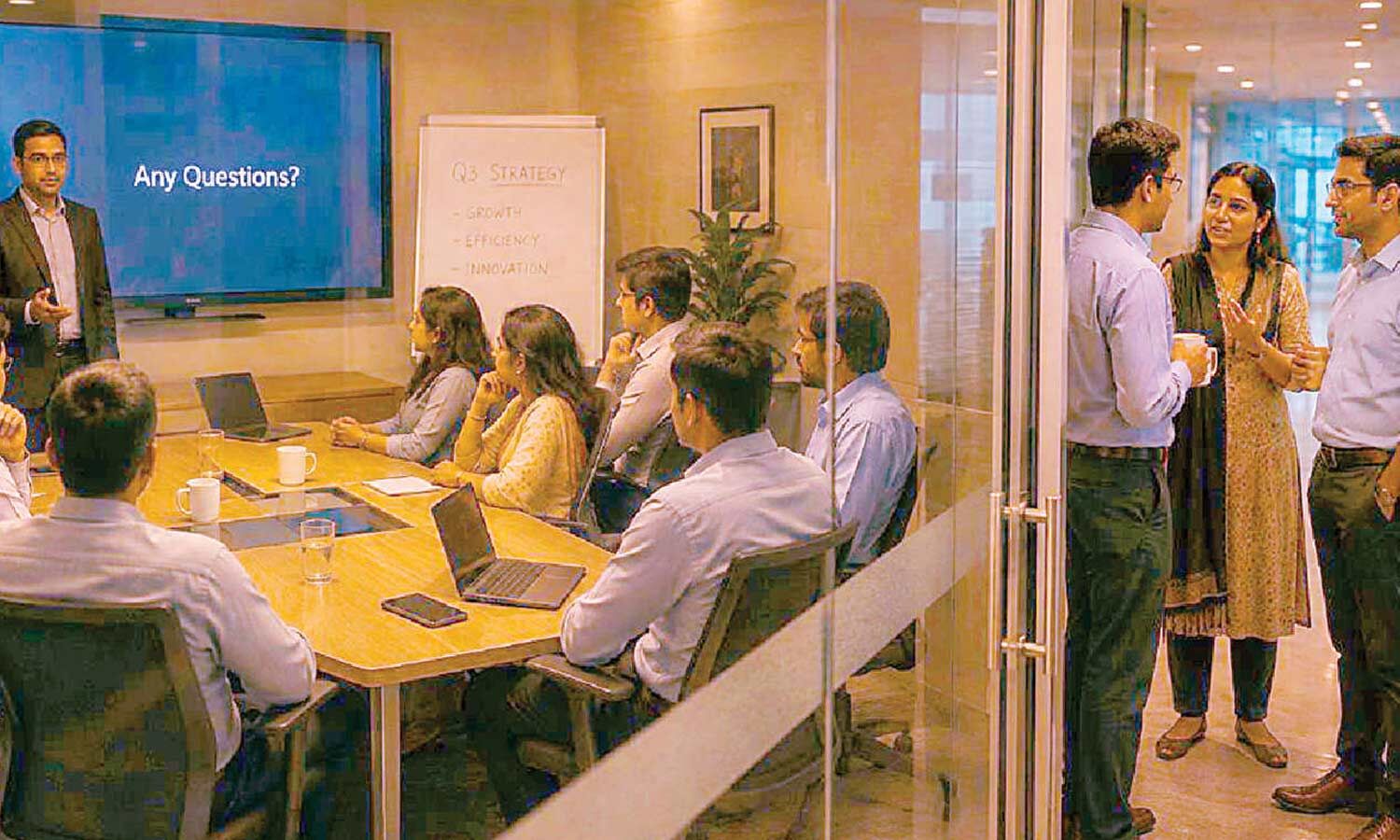
Sometimes people have good ideas or notice problems but do not speak during meetings.
They may worry that the boss or coworkers will judge them.
This feeling is called psychological safety.
A safe team lets people ask questions, admit mistakes, and disagree respectfully.
The article compares modern meetings with a silent gathering in the Mahabharata.
In that story, many respected people stayed quiet when Draupadi asked an important question.
The silence helped create terrible consequences.
Leaders can make meetings safer by thanking people who find problems and admitting their own mistakes.
When people feel safer, useful conversations that usually happen outside the meeting can happen inside it.

Employees may stay silent in meetings when they fear the personal cost of speaking.
Psychological safety means people can ask questions, admit mistakes, and disagree without being shamed.
Researcher Amy Edmondson introduced the concept in 1999, and Google later found safety highly important to team effectiveness.
The Mahabharata’s silent assembly during Draupadi’s questioning is presented as an example of the cost of avoiding honest counsel.
Leaders can build safety by welcoming criticism, admitting mistakes, and listening fully to junior employees.
- Who
- Indian office employees, leaders, and teams; the article also discusses Amy Edmondson and figures from the Mahabharata.
- What
- The article argues that silence in meetings often reflects low psychological safety rather than simple respect or personal character.
- Where
- In Indian workplaces, including meeting rooms and the informal conversations near lifts or over chai.
- When
- The issue arises during routine office meetings, especially when a presentation ends and questions are invited.
- Why
- Employees may believe speaking carries a high social or professional cost; leaders can reduce that cost by rewarding honest questions and criticism.
Key facts
- Key concept
- Psychological safety: a shared belief that people can take interpersonal risks without being shamed.
- Origin of concept
- Harvard scholar Amy Edmondson defined psychological safety in 1999.
- Organizational example
- Google studied its teams and found psychological safety mattered more than talent or resources.
- Cultural reference
- The article uses the Mahabharata’s Kaurava assembly as an example of costly silence.
- Traditional principle
- Vidura Niti values advisers who give beneficial counsel rather than merely pleasant words.
- Suggested leadership actions
- Thank people who identify flaws, admit mistakes first, and listen fully to junior employees.
Quotes
The senior-most person leading an office meeting
A senior participant who invites questions after an office presentation
“Any questions?”
 thehansindia.com

Draupadi
A central figure in the Mahabharata who challenges the Kaurava assembly
“Did Yudhishthira lose himself first, or her?”
thehansindia.com