

Archive · 13 Nov 2025
Experts Urge India to Integrate Robotic Rehab for Post-Stroke Recovery
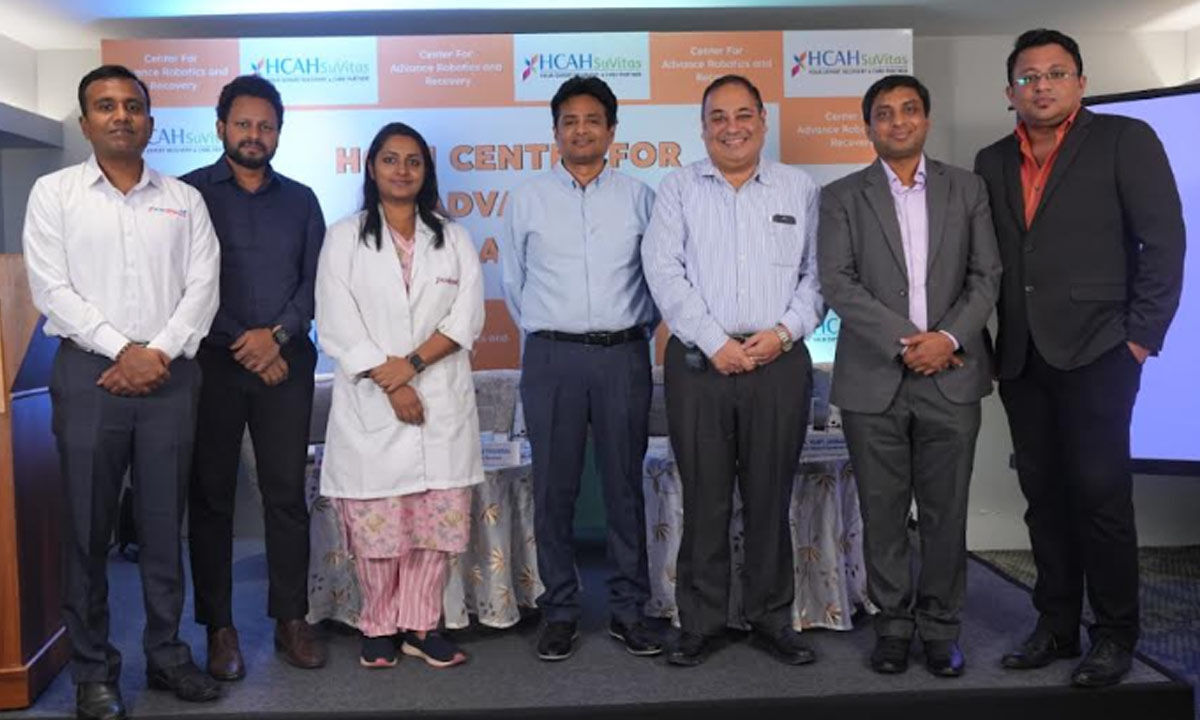
Imagine someone has a stroke, which is like a sudden problem in their brain.
After they leave the hospital, they need special exercises to help their body work again, like moving their arms and legs.
In India, this important exercise part, called rehabilitation, is often missed.
Experts, like doctors, met in Hyderabad and said India should use special robots to help people get better faster.
These robots can do many of the same exercises over and over, very precisely, which helps the brain learn to move again.
This is better than just going home without help.
Using robots means people can recover more quickly and maybe even affordably.
They also want insurance to cover these exercises and for doctors to learn more about this type of help.
It's like teaching the brain new tricks to get back to normal life.

Experts at a Hyderabad session emphasized India's need to integrate robotic rehabilitation for faster post-stroke recovery.
A significant gap exists in India's healthcare system regarding structured rehabilitation after acute stroke treatment.
Robotic rehabilitation enhances therapy with precision and intensity, driving neuroplasticity for quicker patient recovery.
Systemic barriers include limited insurance, a shortage of trained therapists, and lack of rehabilitation in medical curricula.
Calls were made for policy changes to include rehabilitation in insurance, discharge protocols, and public health awareness.
- Who
- Leading neurologists, neurosurgeons, and rehabilitation specialists
- What
- Urged the integration of advanced robotic rehabilitation into post-stroke care for faster and more affordable patient recovery.
- When
- A recent scientific session
- Where
- Hyderabad
- Why
- To address the critical gap in post-stroke rehabilitation, where lives are rebuilt after acute treatment, and to improve patient outcomes and reduce long-term disability and costs.
Current Approach
Proposed Robotic Rehabilitation Approach
Rehabilitation Focus
Current Approach
Rehabilitation is often an afterthought, with patients discharged home without professional guidance, delaying recovery and increasing dependency.
Proposed Robotic Rehabilitation Approach
Robotic rehabilitation, enhanced by AI, provides precise, measurable care that activates recovery and allows patients to start earlier and recover faster.
Role of Technology
Current Approach
Relies on traditional methods with limited intensity and precision, leading to slower progress.
Proposed Robotic Rehabilitation Approach
Uses advanced technologies like AI-powered exoskeletons and motion-tracking systems to drive neuroplasticity through targeted repetitions.
Economic Impact
Current Approach
Delayed recovery leads to increased long-term costs, hospital readmissions, and caregiver burden.
Proposed Robotic Rehabilitation Approach
Early and structured rehabilitation is economically sensible, reducing long-term costs and improving patient functionality, thus saving money in the long run.
Integration in Healthcare
Current Approach
Rehabilitation is a missing link, often not considered a standard part of care.
Proposed Robotic Rehabilitation Approach
Rehabilitation should be a standard part of care, with recovery centers becoming an extension of hospitals for seamless transition.
- Event
- Scientific session titled ‘Advance Robotics in Rehab & Recovery’
- Location
- Hyderabad
- Primary Concern
- Lack of structured post-stroke rehabilitation in India
- Proposed Solution
- Integration of advanced robotic rehabilitation
- Key Benefit of Robotic Rehab
- Faster and more affordable recovery through precision, intensity, and targeted repetitions driving neuroplasticity
- Barriers Identified
- Limited insurance coverage, shortage of trained professionals, and absence of PMR in medical curriculum