

1 hr ago
Indian Leaders Clash Over Unity, Gorkha Movement and Trade
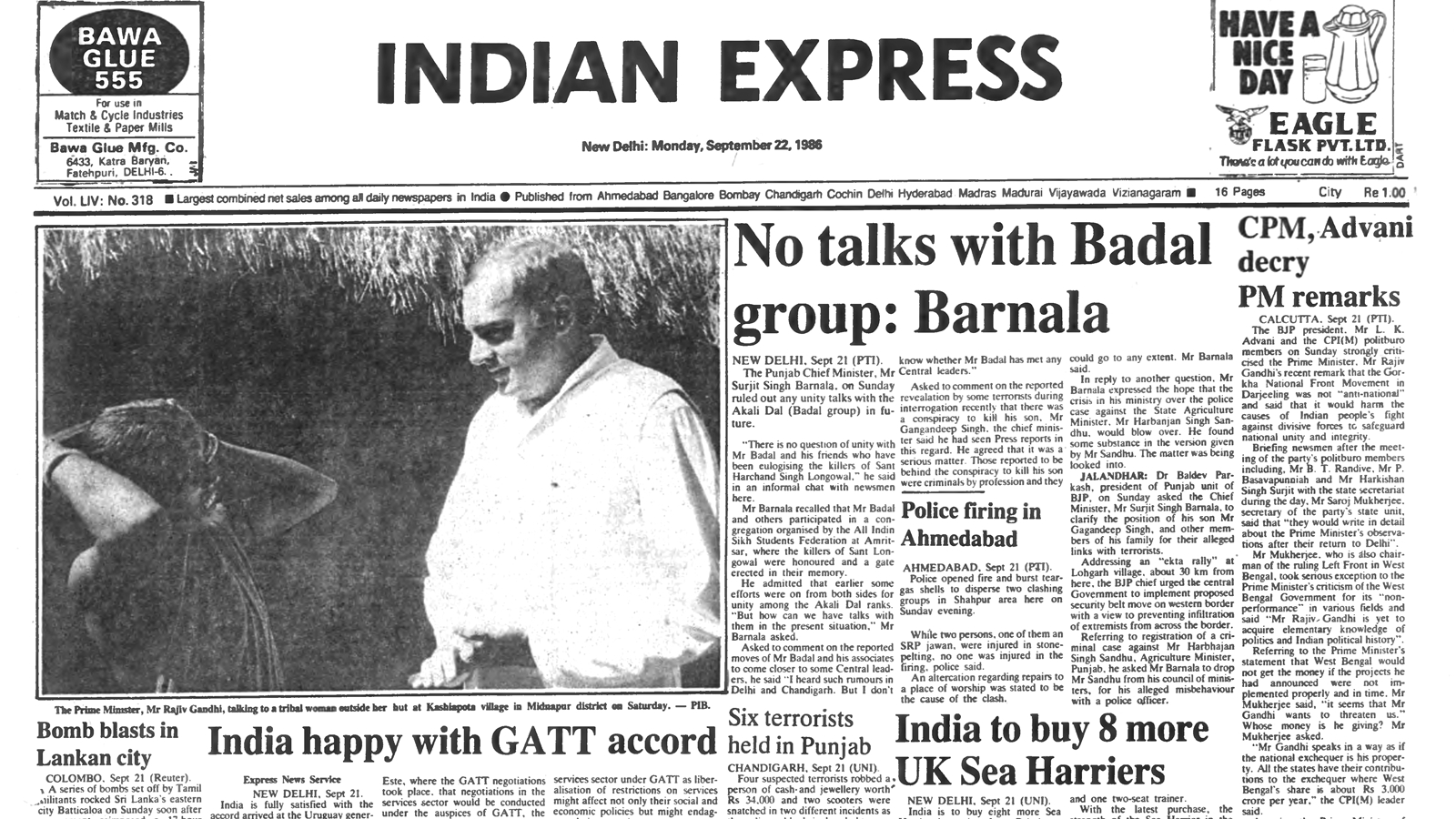
On September 22, 1986, several important political and economic developments were reported in India.
Punjab Chief Minister Surjit Singh Barnala said he would not make peace with the Badal group of the Akali Dal.
He was angry because he said the group had praised people who killed Sikh leader Sant Harchand Singh Longowal.
BJP leader L. K. Advani and Communist Party leaders also disagreed with Prime Minister Rajiv Gandhi.
They objected to his description of the Gorkha movement in Darjeeling as not being against the nation.
India was pleased with progress in international trade talks called GATT.
The talks opened a path for negotiations on goods, while services negotiations would take place outside GATT.
Major trade unions also began working together more often on shared issues.

Punjab Chief Minister Surjit Singh Barnala ruled out future unity talks with the Akali Dal’s Badal group.
Barnala accused Parkash Singh Badal and associates of honouring those who killed Sant Harchand Singh Longowal.
BJP president L. K. Advani and CPI(M) leaders criticised Prime Minister Rajiv Gandhi’s comments on the Darjeeling Gorkha movement.
India expressed satisfaction with the agreement reached in the Uruguay Round of GATT negotiations.
Major national trade unions, including INTUC, moved toward greater cooperation after years of rivalry.
- Who
- Punjab Chief Minister Surjit Singh Barnala, Parkash Singh Badal and his associates, Prime Minister Rajiv Gandhi, L. K. Advani, CPI(M) leaders, India, and major national trade unions.
- What
- Reports covered a Punjab political dispute, criticism of the Prime Minister’s remarks on the Gorkha movement, India’s response to GATT negotiations, and increased cooperation among trade unions.
- Where
- Barnala spoke in New Delhi; the disputed Akali gathering took place in Amritsar; the criticised movement was in Darjeeling.
- When
- September 22, 1986; the reported trade-union cooperation had developed during the preceding year.
- Why
- The disputes concerned alleged praise for Longowal’s killers and differing views over national unity, while the trade and union developments concerned negotiations and cooperation on shared issues.
Critics of the reported positions
Defenders or opposing positions
Akali Dal unity talks
Critics of the reported positions
Surjit Singh Barnala said there could be no future unity with the Badal group, accusing it of eulogising the killers of Sant Harchand Singh Longowal.
Defenders or opposing positions
The report says Parkash Singh Badal and others attended an Amritsar congregation where Longowal’s killers were honoured and a commemorative gate was erected; it does not provide their response.
Gorkha movement and national unity
Critics of the reported positions
L. K. Advani and CPI(M) politburo members said Rajiv Gandhi’s description of the Darjeeling Gorkha National Front Movement as not anti-national could weaken efforts against divisive forces.
Defenders or opposing positions
Rajiv Gandhi characterised the movement as not anti-national, according to the criticism reported; his further reasoning is not provided.
Key facts
- Date
- September 22, 1986
- Punjab chief minister
- Surjit Singh Barnala
- Rejected unity talks
- Akali Dal’s Badal group
- Trade negotiations
- Uruguay Round of the General Agreement on Tariffs and Trade
- Gorkha movement location
- Darjeeling
- Union development
- Major national central trade unions began making joint moves after years of rivalry
Quotes

Surjit Singh Barnala
Punjab Chief Minister speaking informally to newsmen in New Delhi
“There is no question of unity with Badal and his friends who have been eulogising the killers of Sant Harchand Singh Longowal”
 indianexpress.com
Sources
Related news

Punjab Police Arrest 13, Vaidya Probe Advances, Leaders Released

Sukhbir Badal Expands Save Punjab Campaign, Warns of Unrest
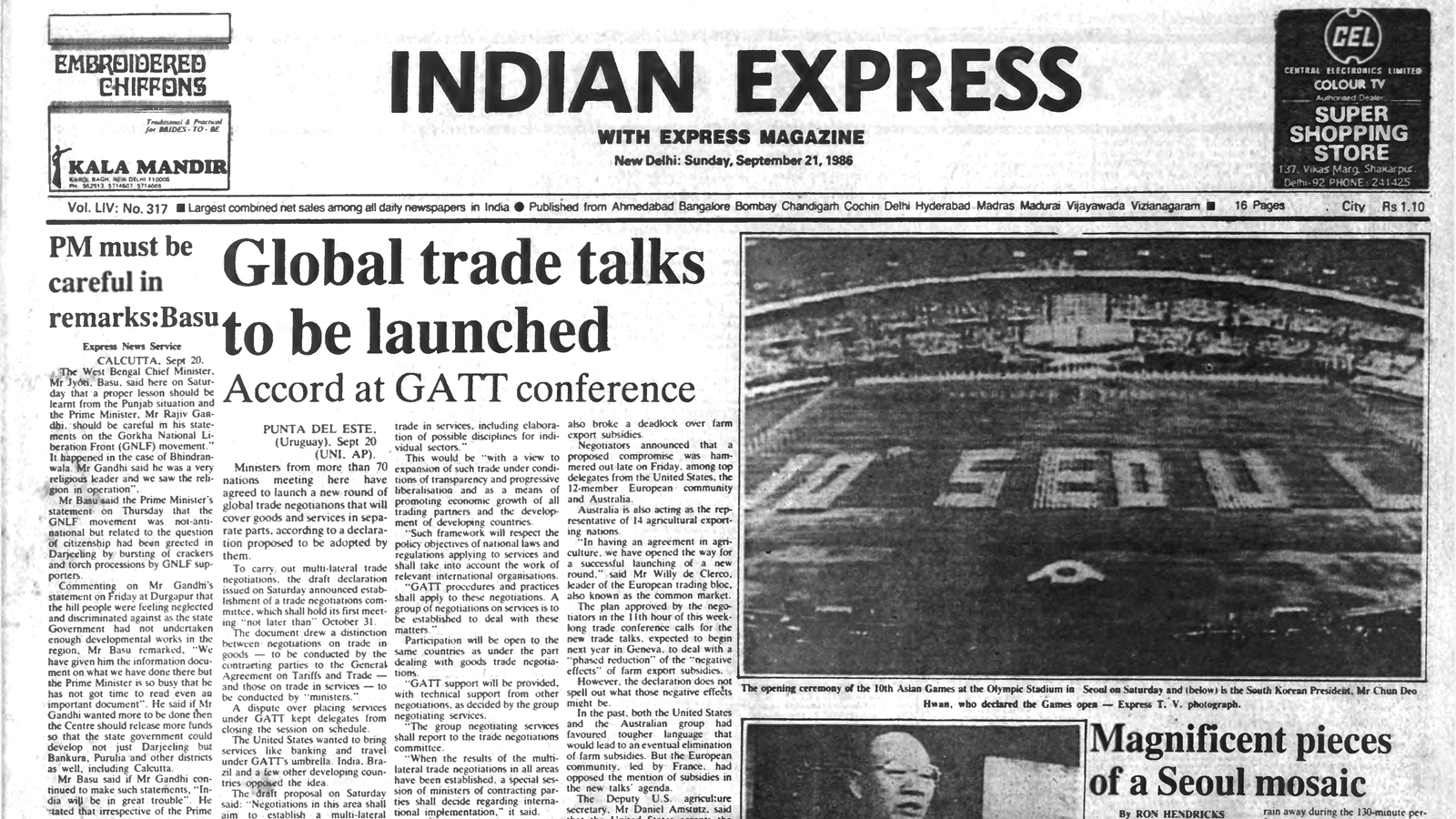
Global Trade Talks, Regional Warnings and Other September 1986 News

BJP Chief Says Nation Will Never Forget 1984 Sikh Riots
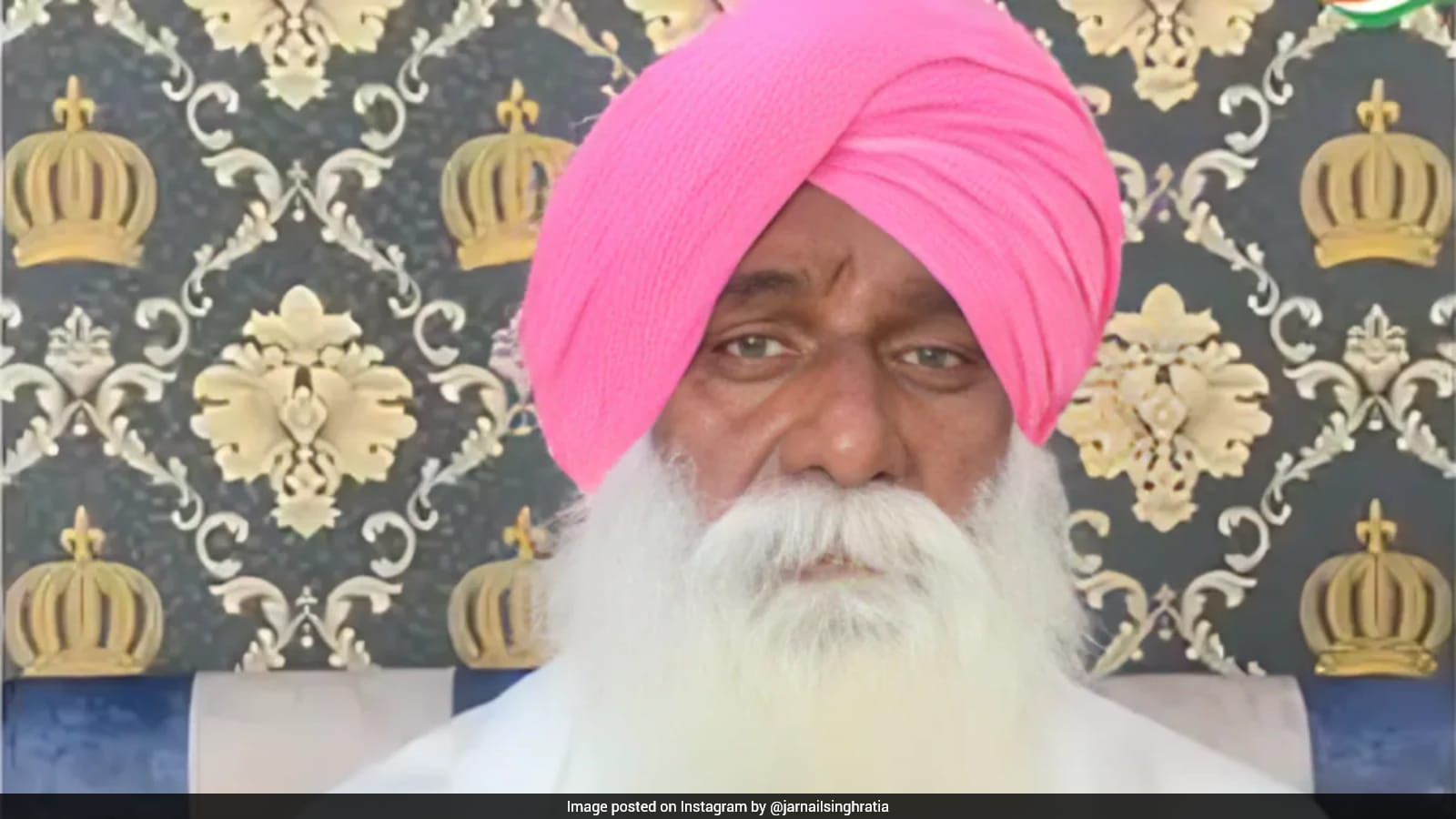
Haryana Assembly Placard Row Revives 1984 Violence Debate
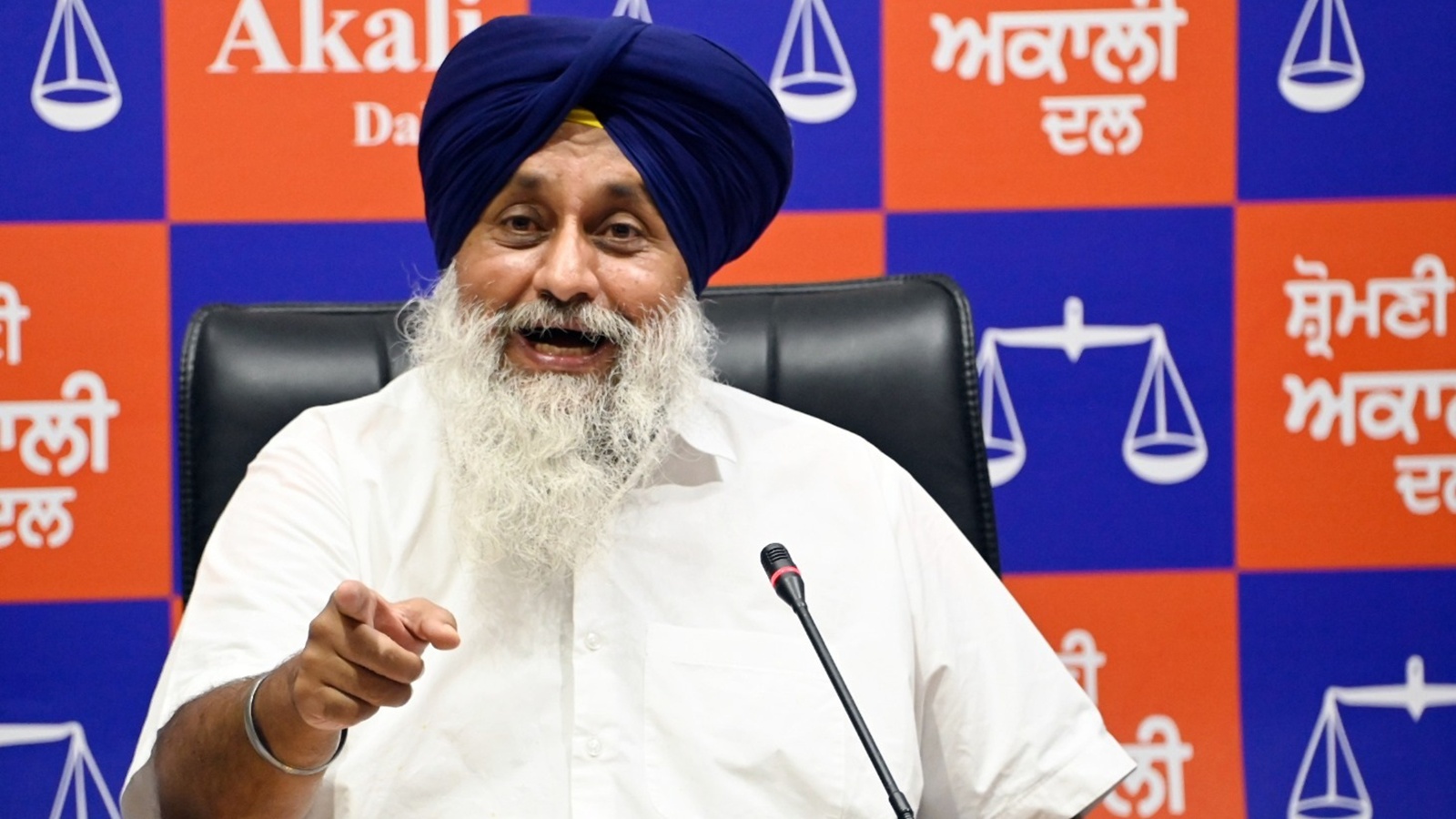
Sukhbir Badal Attacks Amritpal Singh During Punjab Campaign

8th Pay Commission Weighs Changes to Pensioner Relief Rules

8th Pay Commission Faces Calls to Raise Employee Insurance Benefits

Central Employees Seek Five MACP Upgrades From 8th Pay Commission

8th Pay Commission: Higher increments could add ₹29 lakh
