

Archive · 5 Aug 2026
Iran-Pakistan 'Axis of Sympathy' Could Reshape South Asian Power
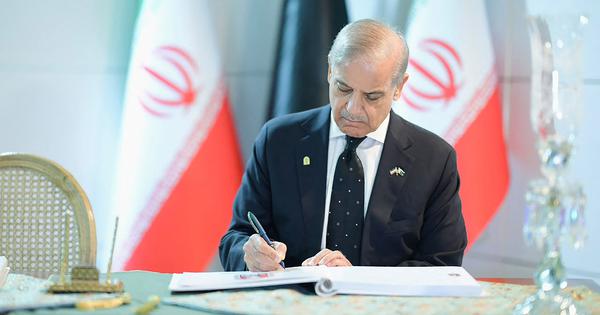
People from many countries went to say goodbye to Ayatollah Ali Khamenei, the leader of Iran, who died after an attack by the United States and Israel.
His funeral lasted four days in a city called Mashhad.
Countries usually send important people to such events, but the choice of who comes can show who their friends are.
Only two countries, Pakistan and Iraq, sent their very top leaders — their prime ministers.
Many people think this shows the three countries are becoming close friends.
The story calls this new friendship the 'Axis of Sympathy.'
Pakistan also helped stop a war between Iran and the US this year by bringing them to a peace table in Islamabad.
India, which is Pakistan's big rival, sent other officials but not its top leader.
All of this means the friendships between these countries are changing, and that can change a whole region.

Ayatollah Ali Khamenei was buried in Mashhad after a four-day funeral following his assassination in a US-Israeli airstrike on February 28.
Only Iraq and Pakistan sent their prime ministers to the funeral, pointing to an emerging 'Axis of Sympathy' with Iran.
Pakistan's Shahbaz Sharif attended, cementing Pakistan's role as a diplomatic broker that mediated the 2026 Gulf ceasefire in Islamabad.
India sent a delegation without Prime Minister Narendra Modi, who had not condemned Khamenei's assassination.
The funeral marked a reconfiguration of alliances, with Pakistan and Iran — rivals as recently as 2024 — now cooperating across the region.
- Who
- Ayatollah Ali Khamenei, Iran's Supreme Leader; Pakistan's Prime Minister Shahbaz Sharif and Iraq's Prime Minister Ali Falih Kadhim al-Zaidi, who attended the funeral; and India's delegation sent without Prime Minister Narendra Modi.
- What
- Khamenei's four-day funeral highlighted an emerging 'Axis of Sympathy' among Iran, Pakistan, and Iraq, signaling a reconfiguration of alliances in South and Southwest Asia.
- When
- The funeral took place around July 6, 2026, following the assassination in late February.
- Where
- Mashhad, Iran, with diplomacy centered on Islamabad, Pakistan.
- Why
- Pakistan's mediation of the 2026 US-Iran Gulf conflict and its shared border with Iran deepened ties, while India's cautious 'multi-alignment' approach kept it at a distance.
Alliance Shift View
Balancing Act View
Attending Khamenei's funeral
Alliance Shift View
Sending prime ministers signals an emerging 'Axis of Sympathy' and a major reconfiguration of alliances in Southwest Asia.
Balancing Act View
The decision is a delicate balancing act by neighbours and does not amount to either country picking a side.
India's approach to Iran
Alliance Shift View
India's 'multi-alignment' policy keeps cordial relations with every nation, and its delegation showed respect for Iran's Shi'a majority.
Balancing Act View
By not sending Modi or condemning the assassination, India failed to acknowledge a profound geopolitical shift and lost ground to Pakistan's assertive brokering.
Coverage of Iran-India ties
Alliance Shift View
WIONews headlines reflect that Iran appreciates India's participation and that Iran-India relations remain in a good place.
Balancing Act View
Such headlines fail to acknowledge that the US-Israeli war forged a Pakistan-Iran alliance, signaling a huge shift in regional power dynamics.
- Supreme Leader of Iran
- Ayatollah Ali Khamenei
- Burial location
- Mashhad, Iran
- Funeral
- Four-day ceremony, July 6, 2026
- Assassination
- Joint US-Israeli airstrike on February 28
- Prime ministers in attendance
- Shahbaz Sharif (Pakistan) and Ali Falih Kadhim al-Zaidi (Iraq)
- India's delegation
- Sent without PM Narendra Modi; included General Ata Hasnain
- 2026 Gulf conflict
- Erupted over 40 days; ceasefire brokered in Islamabad
- Ceasefire status
- US-Iran ceasefire broken as of mid-July