3 weeks ago
Air India Flight Mid-Air Drop: Pilot Body Cites Hydraulic Failures
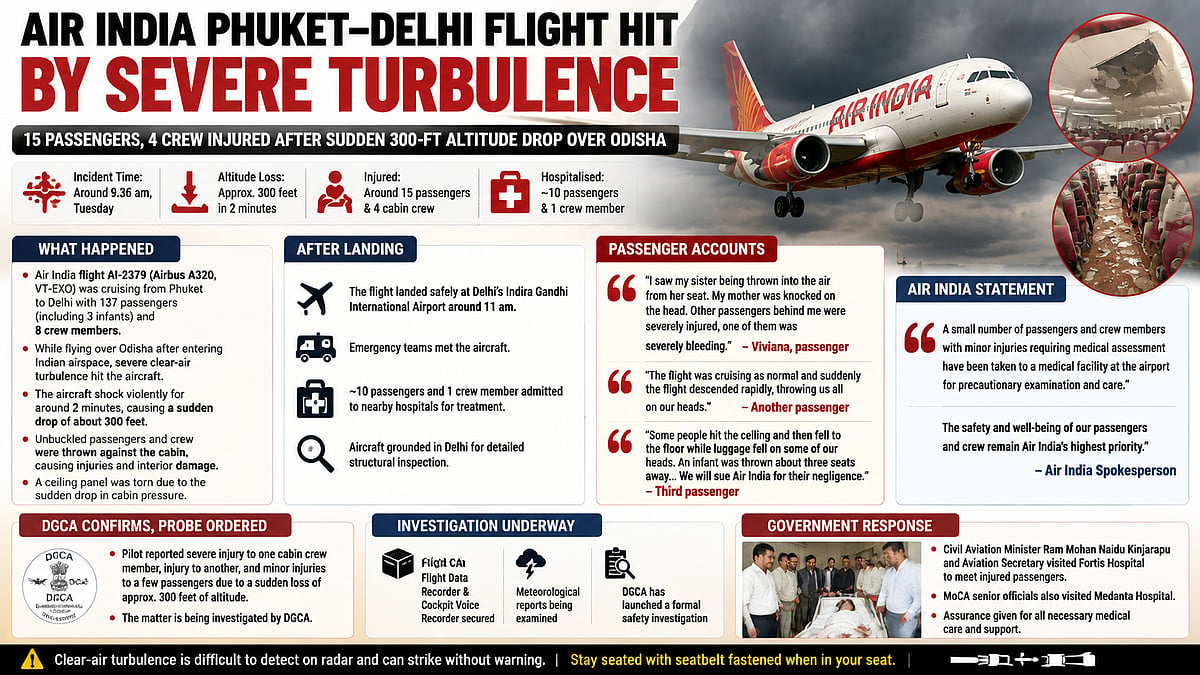
A big airplane flying from Phuket to Delhi suddenly dropped in the sky.
The plane's machines gave warning signs because something went wrong with parts that help control the aircraft.
The pilots acted quickly to make the plane safe again and landed it in Delhi.
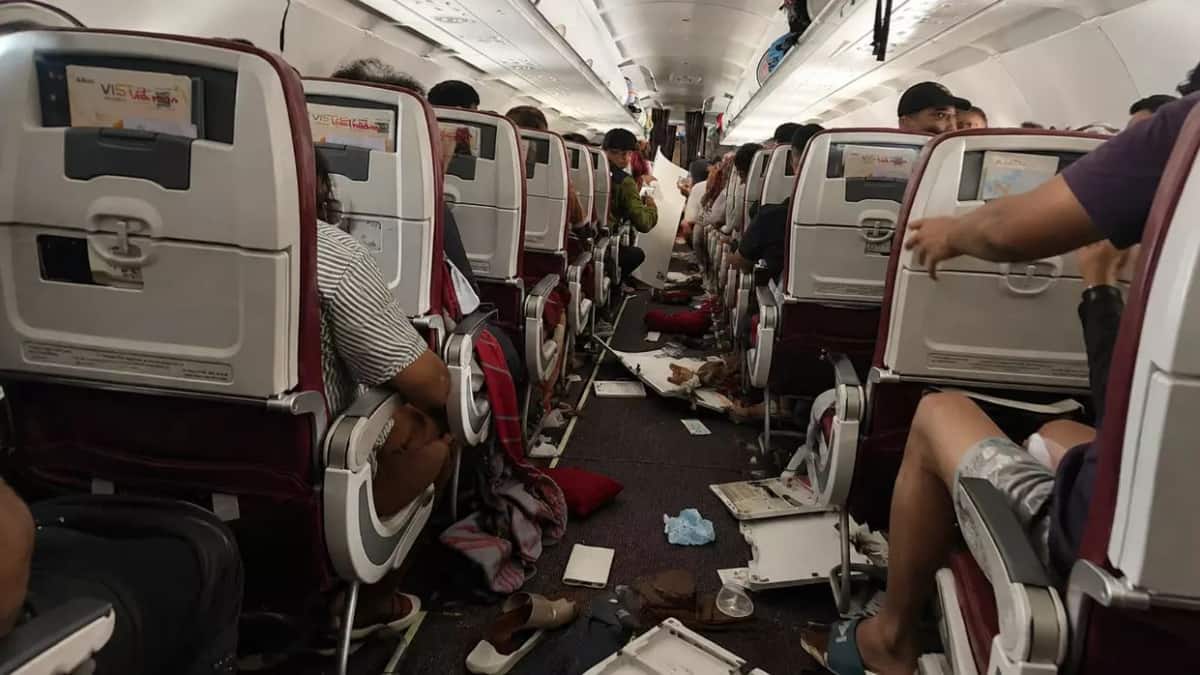
Some people who were not wearing seatbelts got pushed up because the plane tilted suddenly.
The flight attendants kept helping passengers even though they were hurt themselves.
There was also a question about a drug test for one of the pilots.
The other pilot, who was flying the plane during the trouble, passed the test completely.
The pilots' group says the plane's technical problem, not the pilot, should be the main focus of the investigation.
Experts from Airbus are checking the plane to find out what happened.
Everyone is reminded to keep their seatbelts fastened while seated.

Air India's Phuket–Delhi flight on August 4 suffered a mid-air altitude drop after three hydraulic pressures read low simultaneously, indicating a system malfunction.
The drop was followed by a flight control warning, an autopilot disconnect and a stall warning; the co-pilot pushed the nose down to recover, causing negative G-forces that threw unrestrained passengers upward.
Captain Sam Thomas, President of the Airline Pilots Association of India, said the investigation must focus on the aircraft's technical warnings, not solely on the pilot's psychoactive-substances test.
The co-pilot who was flying passed his drug test completely, while the Pilot in Command's 'non-negative' result requires B-sample analysis; Thomas noted over-the-counter drugs and antihistamines can cause false positives.
Airbus teams have arrived in India to investigate, and Thomas said the probe should take about 10 days, though Aircraft Accident Investigation Bureau backlogs could extend it to a month.
The cabin crew, who sustained serious injuries during the sudden drop, continued serving passengers, administering first aid and ensuring safety until the plane landed safely in Delhi.
- Who
- The Air India Phuket–Delhi flight crew, including the co-pilot who recovered the aircraft and the Pilot in Command; Captain Sam Thomas, President of the Airline Pilots Association of India, spoke on their behalf.
- What
- The flight experienced a mid-air altitude drop caused by three hydraulic pressures reading low simultaneously, followed by a flight control warning, autopilot disconnect and stall warning; the crew recovered the aircraft and landed it in Delhi.
- Where
- On the Air India flight en route from Phuket to Delhi, which landed in Delhi, India.
- When
- August 4, with the investigation ongoing at the time of reporting.
- Why
- The aircraft suffered a rare technical/system malfunction, with three hydraulic pressures failing at once; authorities are also examining a 'non-negative' drug test result for the Pilot in Command.
Crew and pilots' association
Scrutiny over drug test and decisions
Root cause of the mid-air drop
Crew and pilots' association
Three hydraulic pressures read low simultaneously, indicating a system malfunction; the investigation should focus on the aircraft's technical warnings and snags rather than only on the pilot's drug test.
Scrutiny over drug test and decisions
The public and regulatory attention has centered on the pilot's 'non-negative' drug test result, with an allegation that the pilot tested positive for marijuana.
Interpreting the pilot's drug test
Crew and pilots' association
The co-pilot who was flying passed his test completely; false positives are possible from common self-medication, over-the-counter drugs and antihistamines, and a B-sample analysis is required before conclusions.
Scrutiny over drug test and decisions
The Pilot in Command's 'non-negative' result has fueled speculation that the pilot used psychoactive substances.
Decision to land in Delhi instead of Lucknow
Crew and pilots' association
Captain Thomas defended the decision not to divert to Lucknow, saying the judgment that Delhi offers superior emergency medical facilities was not unfounded.
Scrutiny over drug test and decisions
The choice to continue to Delhi rather than land earlier at Lucknow after the incident has been questioned.
Key facts
- Airline
- Air India
- Route
- Phuket–Delhi
- Incident date
- August 4
- Reported technical issue
- Three hydraulic pressures low simultaneously; flight control warning, autopilot disconnect and stall warning
- Crew recovery action
- Co-pilot pushed nose down; hydraulic pressures restored one by one
- Drug test status
- Co-pilot passed completely; Pilot in Command 'non-negative', B-sample analysis required
- Investigating bodies
- DGCA, Airbus teams, Aircraft Accident Investigation Bureau
- Safety advice
- Keep seatbelts fastened at all times while seated
Quotes
Captain Sam Thomas
President of the Airline Pilots Association of India
“The cabin crew did a fantastic job. Despite sustaining serious injuries themselves during the sudden drop, they continued serving, administering first aid, and ensuring passenger safety until the plane landed safely.”
 freepressjournal.in
“Technically, an investigation of this nature shouldn't take more than 10 days, though with backlogs at the Aircraft Accident Investigation Bureau, it might take up to a month.”
freepressjournal.in
Sources
Related news
Air India A320 Lost 300 Feet After Triple Hydraulic Failures

Air India Phuket-Delhi flight logged nine warnings before altitude drop

Air India Flight Lost 300 Feet After Triple Hydraulic Failure

Air India Pilot Under Marijuana Influence Claims Sleep Medication

Air India Pilot Tests Positive for Marijuana After 300-Foot Flight Drop

Pilots Warn Senior Attrition Could Challenge Air India Safety

Air India Express Passenger Arrested After Allegedly Hiding Drugs

New Phuket Resort Offers Luxury Escape From Crowds

India Considers Year-Round Drug Tests for Commercial Pilots

Phuket Shopkeeper Confronts Israeli Tourists, Chants ‘Free Palestine’