Archive · 24 Jul 2026
Sebi Proposes Faster Online Dispute Resolution

The Securities and Exchange Board of India (Sebi) has proposed changes to make the online dispute resolution (ODR) process faster and more efficient.
Currently, there are delays in appointing arbitrators and enforcing awards.
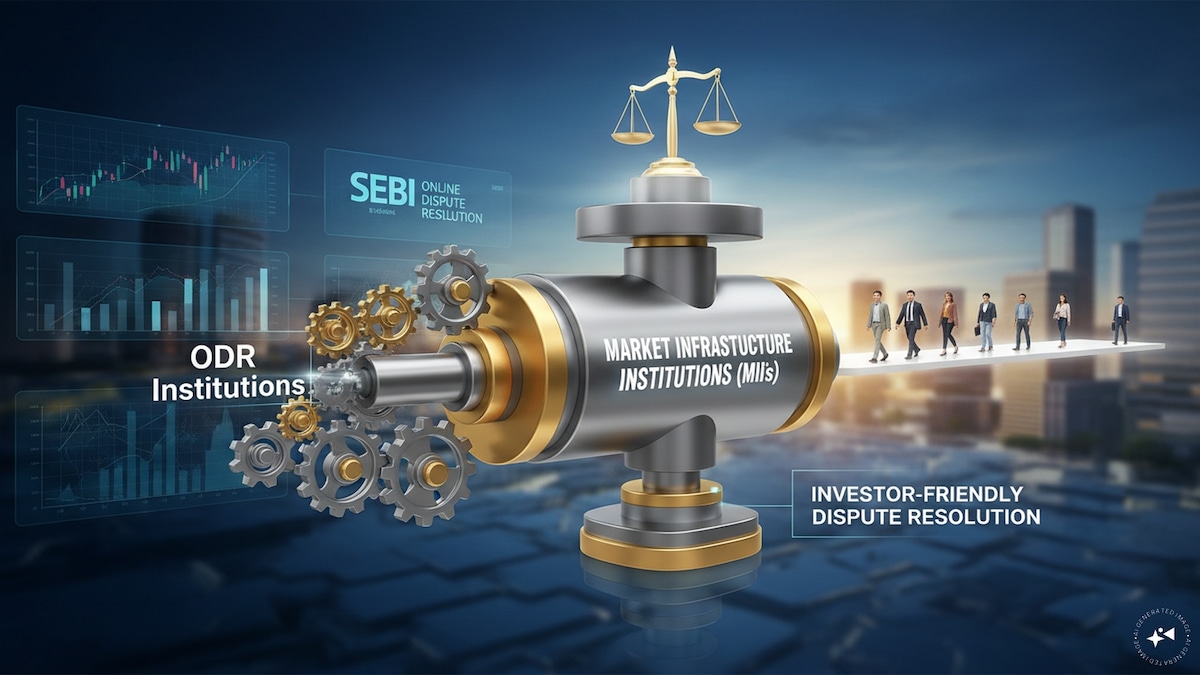
Sebi wants to transfer the responsibility of dispute resolution to stock exchanges, depositories, and clearing corporations, which are better equipped to handle these issues.
Investors will have a say in choosing arbitrators, and the process will be streamlined to reduce delays.
The regulated entities will pay the conciliation fee, and there will be stricter timelines for resolving disputes.
This aims to make the process quicker and more accountable for investors.

Sebi proposes transferring dispute resolution responsibilities to stock exchanges, depositories, and clearing corporations.
Investors will participate in appointing arbitrators from an approved panel.
The review process under the SCORES platform will be merged with the pre-conciliation stage to reduce timelines by 21 days.
Stronger enforcement measures include depositing 100% of the award amount by regulated entities challenging awards.
Investors can seek interim relief of up to 50% of the award amount or ₹5 lakh, whichever is lower.
- Who
- Securities and Exchange Board of India (Sebi)
- What
- Proposed overhaul of the online dispute resolution (ODR) framework
- When
- Consultation paper issued on Thursday
- Where
- India
- Why
- To cut delays, tighten accountability, and speed up investor grievance redressal
Investors
Market Infrastructure Institutions (MIIs)
Role of MIIs in Dispute Resolution
Investors
Investors may have concerns about the impartiality and efficiency of MIIs handling dispute resolution.
Market Infrastructure Institutions (MIIs)
MIIs argue they are better positioned to handle dispute resolution due to their existing regulatory oversight and infrastructure.
Cost of Conciliation
Investors
Investors benefit as they will not bear the cost of conciliation, which will be paid by the regulated entity.
Market Infrastructure Institutions (MIIs)
MIIs and regulated entities may see this as an additional financial burden.
- Proposed Changes
- Transfer of dispute resolution to MIIs, investor participation in arbitrator appointment, merging review with pre-conciliation stage, stronger enforcement, tighter timelines.
- Current Framework
- Introduced in 2023, faced delays in appointing arbitrators, slow payments, weak enforcement of awards.
- Timeline Reduction
- Estimated reduction of 21 calendar days by merging review with pre-conciliation stage.
- Interim Relief
- Investors can seek interim relief of up to 50% of the award amount or ₹5 lakh, whichever is lower.
- Conciliation Fee
- ₹6,000 conciliation fee to be paid upfront by the regulated entity.
- Arbitration Fees
- Successful party entitled to a refund of the amount deposited, subject to the arbitral award.
- Timelines for Resolution
- Intermediaries to respond within 21 days, conciliators to complete proceedings within 21-31 days, arbitrators to issue awards within 3-5 months.