2 hrs ago
Experts Warn Customers Against Renting Accounts to Cybercriminals

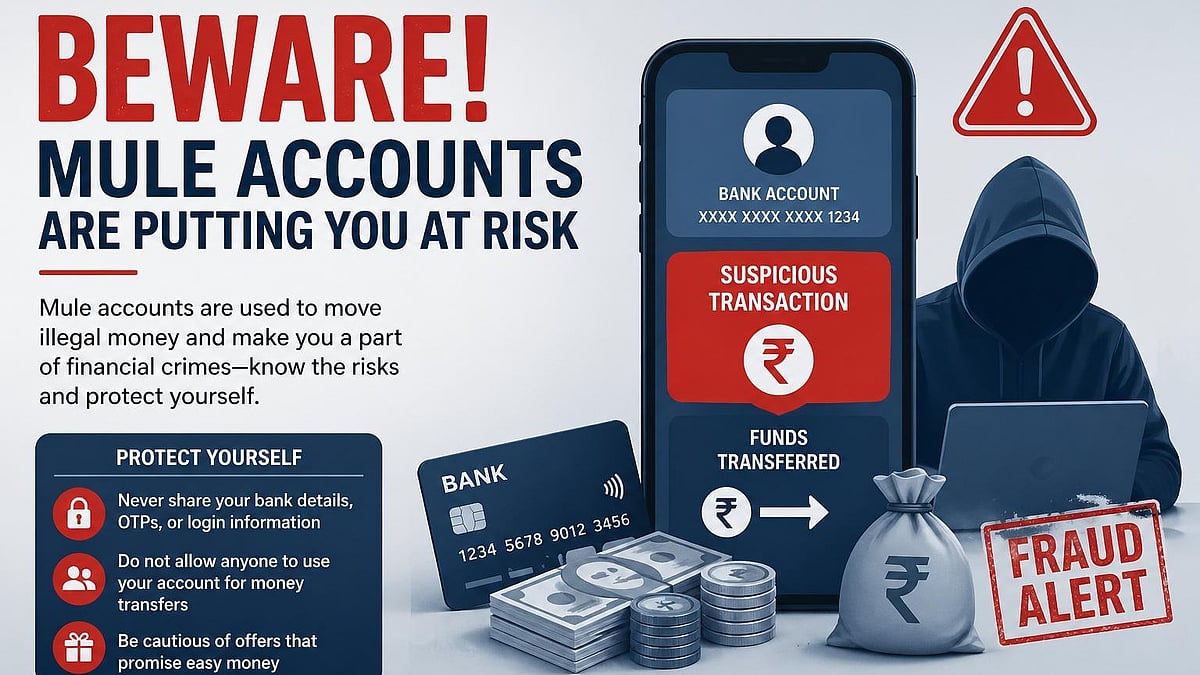
A mule account is a bank account that criminals use to move money from fraud.
Sometimes people knowingly let criminals use their accounts for a fee, and sometimes they are tricked.
Fake jobs and promises of easy money can be used to recruit account holders.
Experts say you should never lend or rent your account to anyone.
Keep an eye on accounts you do not use often, because they can still be targeted.
Never share your passwords, PINs or one-time codes.
If money arrives unexpectedly, do not send it to someone who tells you to do so.
Contact your bank through an official channel.
Report suspected fraud quickly to the bank and to the cybercrime helpline or portal.

Three people were arrested in Delhi over alleged use and supply of mule bank accounts.
Police in Maharashtra’s Thane district uncovered a syndicate linked to alleged fraudulent transactions worth ₹57.25 crore.
Experts warn customers never to let others use their accounts or accept commissions for receiving and transferring money.
Customers should monitor dormant accounts, protect banking credentials and contact their bank about unexpected credits.
Suspected fraud should be reported to the bank promptly and through helpline 1930 or the National Cyber Crime Reporting Portal.
- Who
- Bank customers, with advice from financial and cybersecurity experts.
- What
- Customers are urged to protect their accounts from being used to receive or transfer proceeds of cyber fraud.
- Where
- Delhi and Thane district, Maharashtra; the guidance applies to bank customers generally.
- When
- The advice follows recent arrests in Delhi and a separate police case in Thane district.
- Why
- Mule accounts can help criminals move money obtained through cyber fraud and may expose account holders to financial and legal consequences.
Key facts
- Mule account
- A bank or financial account used to receive, hold or transfer illegally obtained money.
- Delhi case
- Three people were recently arrested for allegedly supplying and using mule bank accounts.
- Thane case
- Police reported a syndicate allegedly involved in fraudulent transactions worth ₹57.25 crore through several mule accounts.
- Report suspicious activity
- Contact the bank immediately and report suspected cyber fraud through helpline 1930 or the National Cyber Crime Reporting Portal.
- Protect account access
- Do not share banking credentials, OTPs, PINs, passwords or banking cards with others.
- Dormant accounts
- Monitor rarely used accounts regularly, or consider formally closing an account that is no longer needed.
- eKYC safety
- Use the bank’s official website, app or verified channel; do not disclose an OTP, UPI PIN or password to an individual.
Quotes
Shailendra Awasthi
Leader Technology at chartered accountancy firm Bhuta Shah & Co LLP
“An account that is rarely used should not be left unmonitored, as fraudsters may attempt to gain access to dormant or low-activity accounts through phishing, social engineering or by offering money in exchange for account access.”
 livemint.com
“The biggest mistake customers make is treating their bank account as a facility that can be ‘lent’ to someone else. Your bank account should only be used for transactions that you personally understand and are responsible.”
livemint.com
Sources
Related news
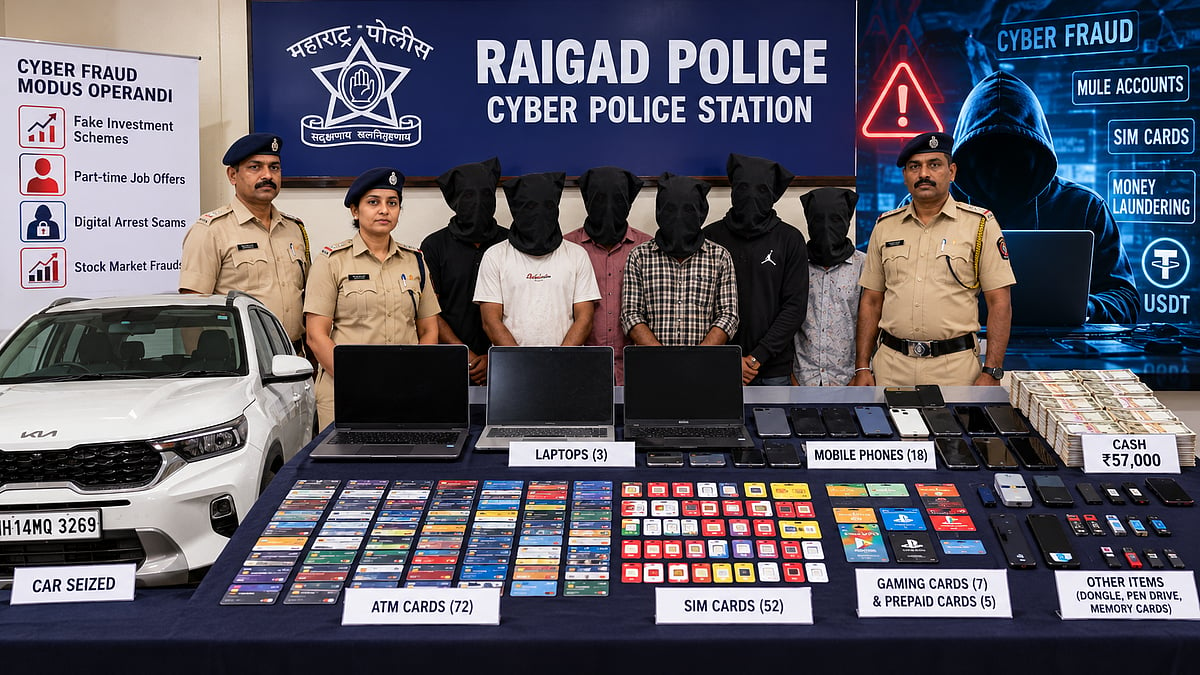
Raigad Police Arrest Six in Alleged Cyber Fraud Account Network
₹9 Lakh Cyber Fraud Trail Leads To Mule Account Arrest
Goa Women Allegedly Duped Into Mule Accounts; Two Arrested

Money Trail From Rs 67 Lakh Fraud Saves Senior Citizen

Three Arrested in Delhi Cyber Fraud Mule Account Case

Mumbai Cyber Police Arrest Two Employees In ₹29.83 Lakh Fraud

Gadchiroli Declared Naxal-Free, but C-60 Should Remain

Mumbai Redevelopment Boom May Strain Civic Infrastructure

Jayant Patil Backs MPSC Students’ Protest, Demands Probe

Sanjay Singh Backs MPSC Protest, Demands Chairman’s Resignation