

Archive · 25 Sep 2025
Emergency's Impact on Indian Democracy Explored 50 Years Later
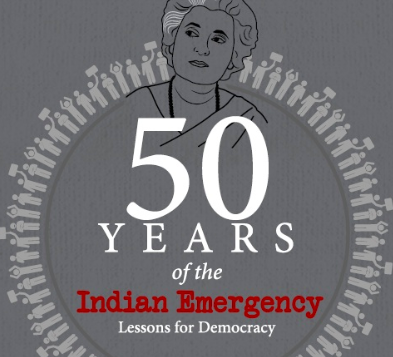
Imagine a time in India, 50 years ago, when the government had a lot of power, called the Emergency.
This event is being discussed in a book and at a meeting.
People are talking about how this event still affects India today.
They're looking at laws, police, and memories.
They also look at the economy during that time, like how much money people had and how prices changed.
It shows us that democracy isn't just rules; it's also about choices, the groups that stay strong, and how we remember things.

A discussion was held in Hyderabad to analyze the effects of the Indian Emergency.
The event focused on the Emergency's impact on democratic institutions and societal practices.
Contributors from law, economics, literature, and politics participated.
The discussion highlighted the economic context, including per capita income and inflation.
The event concluded that the Emergency remains an important question for Indian democracy.
- Who
- Academics, scholars, and the public.
- What
- A discussion on the enduring impact of the Indian Emergency.
- When
- 50 years after the Emergency.
- Where
- Hyderabad, India, at Vidyaranya High School.
- Why
- To explore the Emergency's ongoing effects on India's democratic institutions, practices, and collective memory.
- Event
- Book launch and discussion: "50 Years of the Indian Emergency: Lessons for Democracy"
- Location
- Hyderabad, India
- Key People
- Peter Ronald deSouza, Kalpana Kannabiran, Sasheej Hegde, Errol D’Souza
- Focus
- Examination of the Emergency's enduring effects on India's democracy.