

Archive · 23 Jul 2026
South Korea's Q2 Growth Driven by Chip Exports
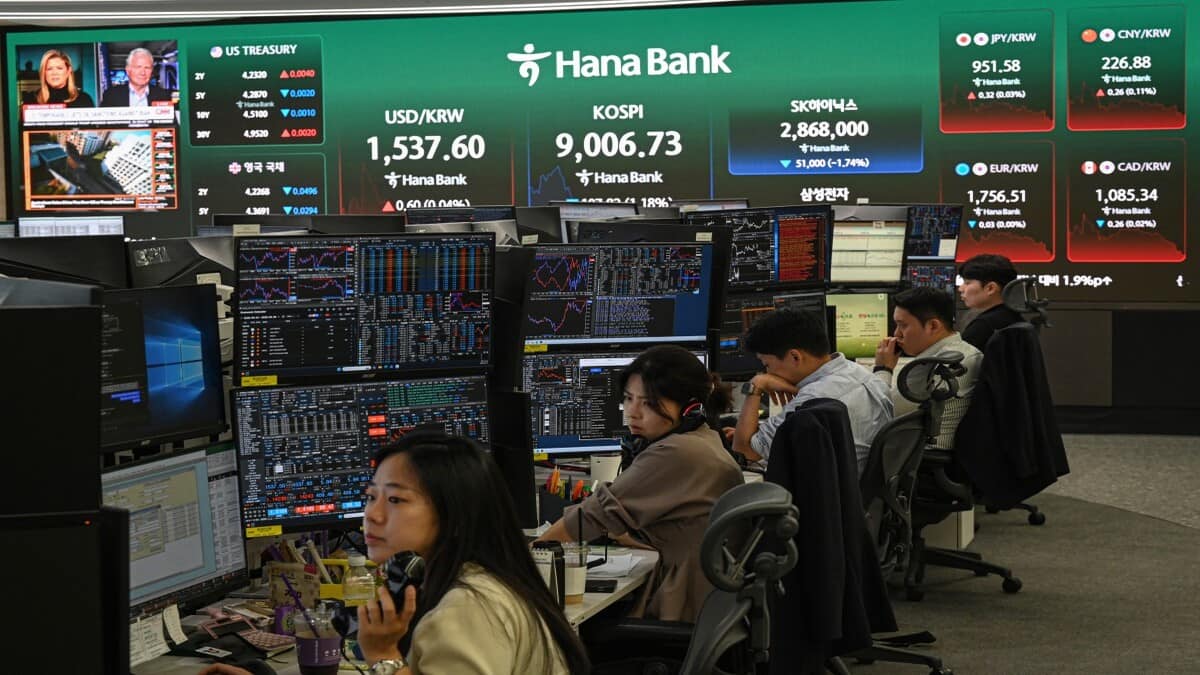
South Korea's economy grew faster than expected in the second quarter of 2023.
This growth was mainly due to a big increase in exports, especially semiconductors.
Companies around the world are investing more in artificial intelligence, which has boosted demand for memory chips.
South Korea is home to major semiconductor companies like Samsung Electronics and SK Hynix.
However, domestic demand and construction investment were weak, which slowed down the overall economic growth.
The Bank of Korea raised interest rates in July, showing a shift towards tighter monetary policy.
While exports are helping the economy, there are risks if global technology demand slows down.

South Korea's economy grew 0.6% in Q2, higher than expected.
Semiconductor exports drove growth, rising 1.4% from the previous quarter.
Global demand for memory chips boosted South Korea's export sector.
Domestic demand and construction investment were weak, slowing overall growth.
Bank of Korea raised interest rates by 25 basis points in July.
- Who
- South Korea's economy
- What
- Grew faster than expected in Q2 due to semiconductor exports
- When
- April-June 2023
- Where
- South Korea
- Why
- Driven by global demand for memory chips and AI infrastructure
Export-Driven Growth Supporters
Domestic Demand Advocates
Economic Growth Strategy
Export-Driven Growth Supporters
Focus on semiconductor exports to drive economic growth.
Domestic Demand Advocates
Strengthen domestic demand and construction investment to balance the economy.
- GDP Growth (Q2)
- 0.6% (quarter-on-quarter), 3.7% (year-on-year)
- Exports Growth (Q2)
- 1.4% (quarter-on-quarter)
- Private Consumption Growth (Q2)
- 0.4% (quarter-on-quarter)
- Construction Investment (Q2)
- -0.2% (quarter-on-quarter)
- Bank of Korea Interest Rate Change
- 25 basis points increase in July
- Key Industries
- Semiconductors, machinery, equipment
