

Archive · 1 Sep 2026
Rare combined heart procedure helps 77-year-old avoid blood thinners
Jagdip Shah’s heart sometimes beat in an irregular way called atrial fibrillation.
This can allow blood clots to form and cause a stroke.
Doctors gave him blood-thinning medicine, but it caused dangerous bleeding from stomach ulcers.
They needed to protect him from both clots and bleeding.
During one procedure, doctors placed a small plug to close a pouch where clots often form.
They also used short electrical pulses to stop faulty heart signals.
The procedure took about 90 minutes and did not require open-heart surgery.
Afterward, Shah was able to stop taking blood thinners and was found to have a normal heart rhythm at follow-up.

Jagdip Shah, 77, developed repeated atrial fibrillation after previously undergoing bypass surgery and heart failure.
Blood-thinning medicines caused severe stomach-ulcer bleeding, sometimes requiring transfusions, so doctors had to stop them.
On August 14, doctors at Lilavati Hospital performed left atrial appendage occlusion and pulsed field ablation in one catheter-based procedure.
The first procedure sealed the left atrial appendage, a common source of clots in people with atrial fibrillation.
The second used short, high-voltage electrical pulses to block abnormal signals around the pulmonary veins and treat the irregular rhythm.
- Who
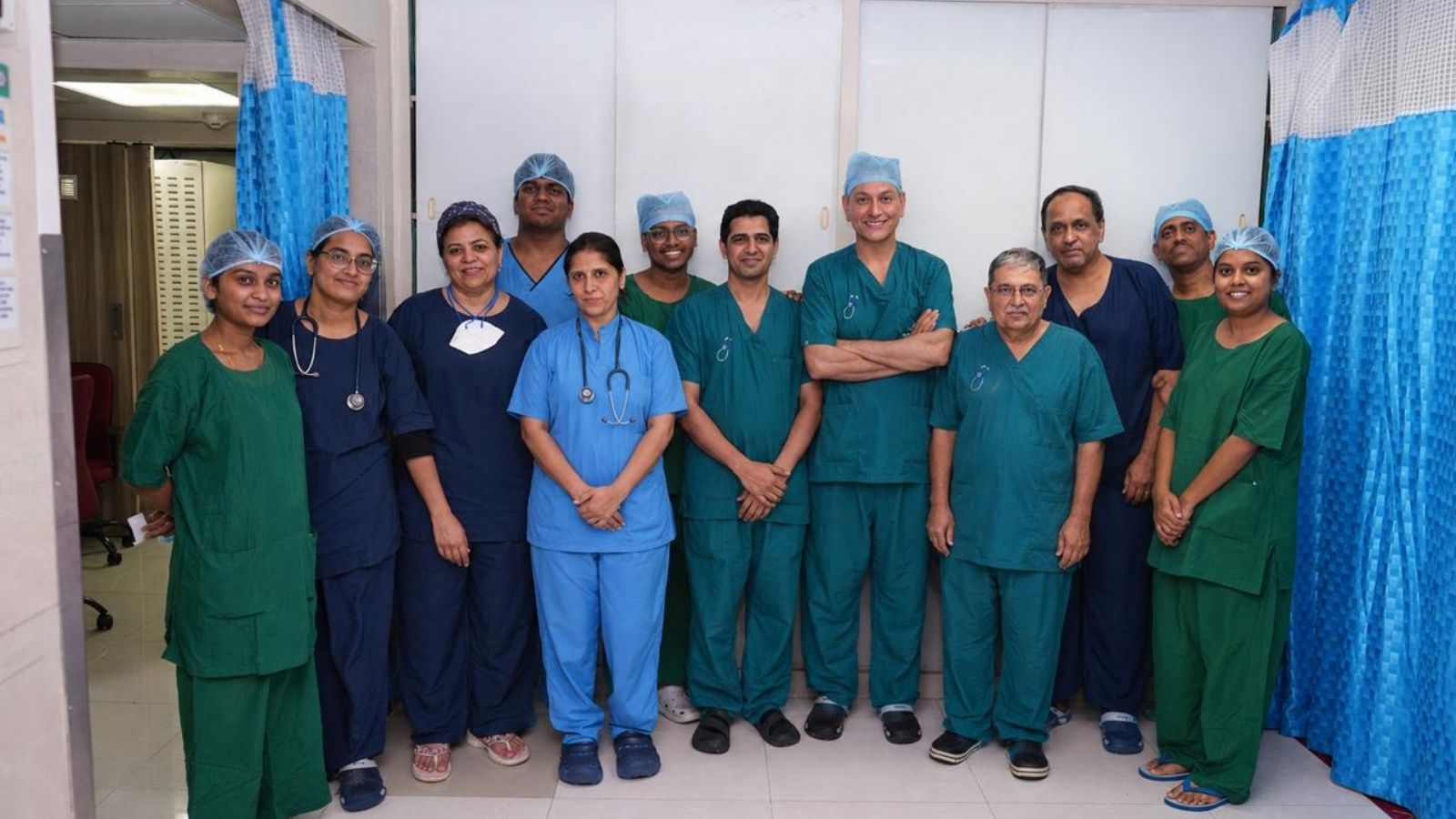
- Jagdip Shah, 77, was treated by a team led by cardiologist and electrophysiologist Dr Dhiraj Gupta.
- What
- Doctors performed left atrial appendage occlusion and pulsed field ablation during the same catheter-based intervention.
- When
- The procedure took place on August 14; follow-up imaging was performed on August 27.
- Where
- Lilavati Hospital and Research Centre in Mumbai.
- Why
- Shah needed protection from stroke linked to atrial fibrillation but could not safely continue blood thinners because they caused severe bleeding.
- Patient
- Jagdip Shah, 77, a resident of Juhu, Mumbai
- Heart condition
- Repeated episodes of atrial fibrillation
- Medication problem
- Blood thinners caused severe bleeding from stomach ulcers and sometimes required transfusions
- First procedure
- Left atrial appendage occlusion using a collapsible plug-like device
- Second procedure
- Pulsed field ablation using short, high-voltage electrical pulses
- Procedure duration
- About one-and-a-half hours
- Follow-up
- Imaging on August 27 showed the device was correctly positioned and Shah had a normal heart rhythm
- Medication outcome
- Shah was reported to be completely off blood-thinning medication