

3 weeks ago
Corporate NPS: Key Tax-Saving Option Under New Tax Regime

NPS is a retirement savings plan that helps people save money for when they are older.
Corporate NPS is a special version that companies can offer to their employees.
The company puts some money into the employee's NPS account every year.
The Indian government recently increased how much money a company can put in from 10% of salary to 14% of salary.
This is good because the money added by the company is not counted fully as taxable income.
That means the employee pays less tax and saves more for retirement.
The government made this bigger limit available for people who choose the new tax system.
An example in the article shows a person could save about Rs 65,520 in taxes in one year.
The money in NPS is invested in a mix of stocks, bonds, and government securities.
Over many years, it grows through something called compounding.
Not every company offers Corporate NPS yet, but the number of people using it is growing very quickly.
It is best to think of it as a long-term retirement benefit, not just a tax-saving trick.

The Union Budget 2024-25 increased the eligible employer NPS contribution limit to 14% of salary (Basic + DA) for non-government employees under the new tax regime, up from 10%.
Corporate NPS subscriber base grew from 16.8 lakh at end of FY23 to 27.6 lakh in FY26, with a 21% increase in FY26 alone.
Under the new tax regime, an employer contribution of Rs 2.1 lakh can yield a tax saving of approximately Rs 65,520 for an employee in the 30% tax slab, including 4% Health & Education Cess.
Deductions for an employee's own NPS contributions are not available under the new tax regime.
Over 20,000 corporate entities have registered for Corporate NPS, though many companies are yet to offer the scheme as an employee benefit.
Under the old tax regime, employees can combine a Rs 50,000 self-contribution deduction under Section 80CCD(1B) with the employer contribution deduction under Section 80CCD(2).
- Who
- Salaried and private-sector employees in India, employers offering the scheme, the Pension Fund Regulatory and Development Authority (PFRDA), and experts such as Abhishek Goenka of PPFAS Pension.
- What
- Corporate NPS, the employer-linked version of the National Pension System, and the tax benefits available on employer contributions under the new tax regime.
- Where
- India.
- When
- The new tax regime was launched in the February 2020 Budget and became the default option from 1 April 2023; the 14% employer contribution limit was announced in the Union Budget 2024-25; subscriber figures cover FY23 to FY26.
- Why
- To help salaried employees save tax and build a larger retirement corpus through employer contributions, especially as the new tax regime removed many other deductions.
Key facts
- Employer contribution limit (new regime)
- 14% of salary (Basic + DA), up from 10%
- Tax section
- Section 80CCD(2) of the Income-tax Act
- Subscriber base (FY26)
- 27.6 lakh, up from 16.8 lakh at end of FY23
- FY26 subscriber growth
- 21% increase in one year
- Maximum tax saving example
- Rs 65,520 per year on a Rs 2.1 lakh employer contribution (30% slab)
- Self-contribution deduction (new regime)
- Not available
- Registered corporate entities
- More than 20,000
- Investment mix
- Equity, corporate bonds, and government securities
Quotes
Abhishek Goenka
Chief Investment Officer, PPFAS Pension
“An employee who starts contributing in their 20s or 30s can build a meaningfully larger corpus than someone who starts a decade or more later, purely due to the extra years of compounding.”
 financialexpress.com
“This illustrates why Corporate NPS is both a valuable retirement benefit and one of the few tax-efficient components available to salaried employees under the new tax regime.”
financialexpress.com
Sources
Related news

PFRDA's Jagpal: Corporate NPS Can Supplement EPF Pension Layer
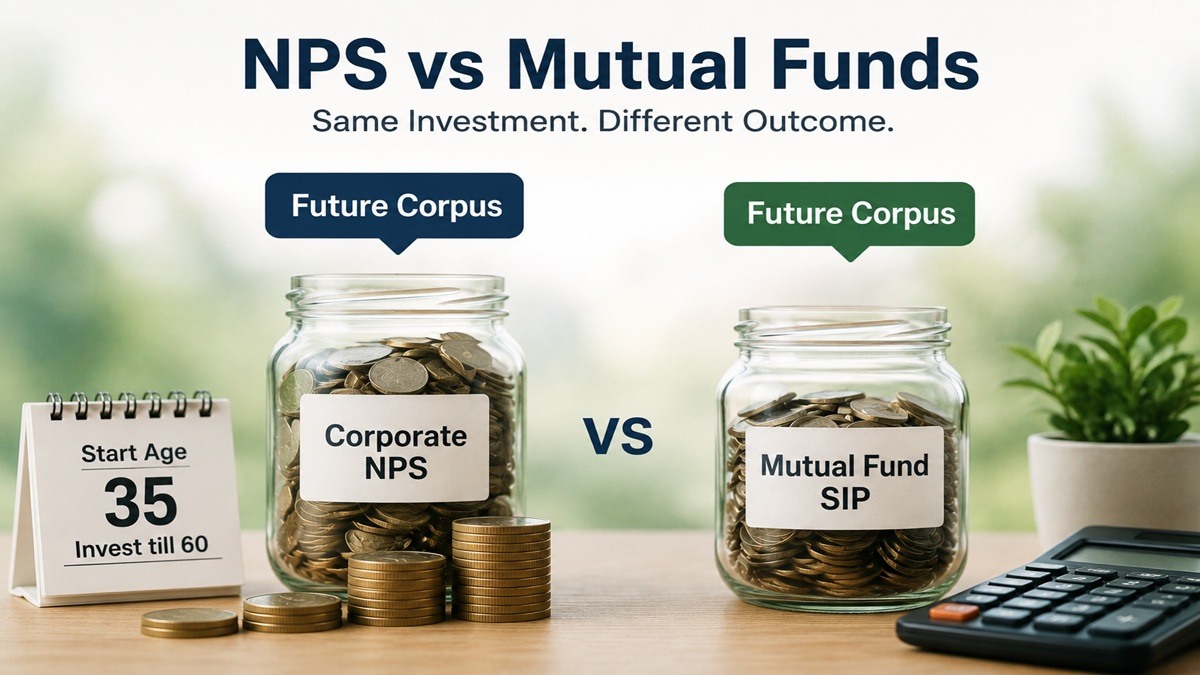
Corporate NPS vs mutual funds: Tax benefits build bigger retirement corpus

EPF to NPS Transfer Tax-Free Only With Employer Corporate NPS

NPS gains edge over mutual funds as pension tag fades

NPS Tier I and Tier II: Tax and Withdrawal Rules

NPS's biggest makeover yet: 100% equity option transforms retirement planning

India Draws Record $127 Billion Through FCNR Deposit Scheme

Major Banks Cut FCNR Deposit Rates After Subsidy Ends

Uber Driver Returns ₹37,000 Sent by Mistake, Refuses Reward

ICICI Bank Nears HDFC Bank as Nifty’s Top Influence

Brokerages Suggest HDFC Bank, PB Fintech, Parag Milk Foods
