

Archive · 22 Jan 2026
AI Enhancing Urban Safety in India
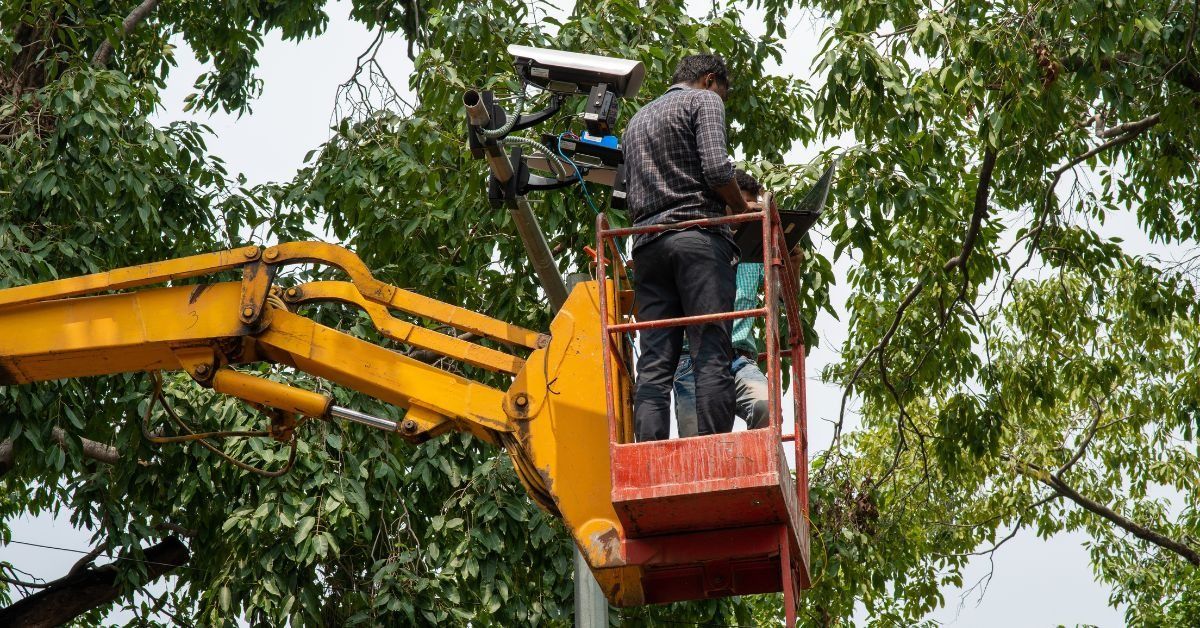
Indian cities are using artificial intelligence to make public spaces safer.
AI helps by watching for unusual activities, managing crowds, and guiding police patrols.
Cities like Kalyan-Dombivli and Varanasi use AI to detect crimes, track unattended objects, and ensure people follow safety rules.
These systems work with existing cameras and are cost-effective.
They help reduce the workload on police and improve response times.
AI is making cities smarter and safer by predicting and preventing problems before they happen.

AI-powered surveillance systems are being used in Indian cities to enhance urban safety.
Cities like Kalyan-Dombivli and Varanasi use AI for crime heat mapping, crowd analytics, and unattended object tracking.
AI systems reduce manual patrolling burden by up to 40% and improve anomaly detection accuracy to over 85%.
These systems are cost-effective and scalable, utilizing existing camera infrastructure and edge computing.
AI applications span critical infrastructure, smart tourism, industrial zones, and disaster-prone areas.
- Who
- Municipal and law enforcement bodies in Indian cities
- What
- Implementation of AI-powered surveillance systems for urban safety
- When
- Ongoing, with specific implementations during the COVID-19 pandemic
- Where
- Cities like Kalyan-Dombivli, Pimpri Chinchwad, New Town Kolkata, Varanasi, and Visakhapatnam
- Why
- To enhance public safety, optimize patrol deployment, and manage crowds and anomalies in real-time
- Cities Using AI
- Kalyan-Dombivli, Pimpri Chinchwad, New Town Kolkata, Varanasi, Visakhapatnam
- AI Applications
- Crime heat mapping, mask detection, unattended object tracking, crowd analytics, ANPR data
- Impact of AI
- 24/7 surveillance, 40% reduction in patrol burden, 85% anomaly detection accuracy
- Cost-Effectiveness
- Modular architecture, edge computing, existing camera infrastructure
- Scalability
- Critical infrastructure, smart tourism, industrial zones, school and hospital security, disaster-prone areas