

Archive · 19 May 2025
Antarctic Ice: Recent Gains Mask Long-Term Melting Trend
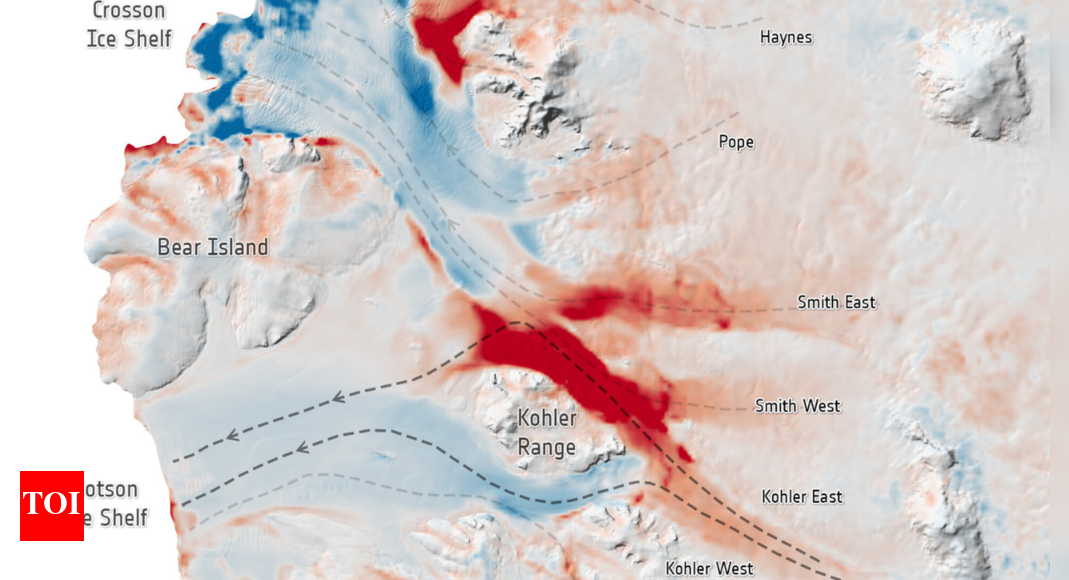
Scientists are looking at how the ice in Antarctica is changing.
They found that there has been a bit more ice recently.
This is because more snow has been falling.
However, over the last 20 years, there has been a lot less ice overall.
The ice loss sped up in the last decade.
This means that while there might be a small temporary increase, the long-term trend is still of the ice melting away.

A new study indicates recent ice gains in Antarctica between 2021 and 2023.
The gains were attributed to increased precipitation over Antarctica.
The overall trend over two decades shows a significant loss of ice.
Ice loss accelerated between 2011 and 2020 compared to the previous decade.
Researchers used NASA satellite data from GRACE and GRACE Follow-On.
- Who
- Researchers from Tongji University used NASA satellite data.
- What
- A study showing both ice loss and gain in Antarctica over two decades.
- When
- 2002 to 2023
- Where
- Antarctica.
- Why
- To understand the impact of climate change on the polar regions and predict future sea-level rise.
Scientists
General Public
Ice Loss vs. Gain
Scientists
Ice gain is evident, but not enough to ignore the overall trend of long term ice loss
General Public
Focus on the overall long term ice loss, to emphasize that we are still losing ice
- Study Period
- 2002-2023
- Study Source
- Tongji University, NASA
- Overall Trend
- Substantial Ice Loss
- Ice Loss (2002-2010)
- 81 billion tons per year
- Ice Loss (2011-2020)
- 157 billion tons per year
- Ice Gain (2021-2023)
- 119 billion tons per year
