

Archive · 11 Nov 2025
Whale DNA Repair Mechanisms Offer Clues to Cancer Prevention
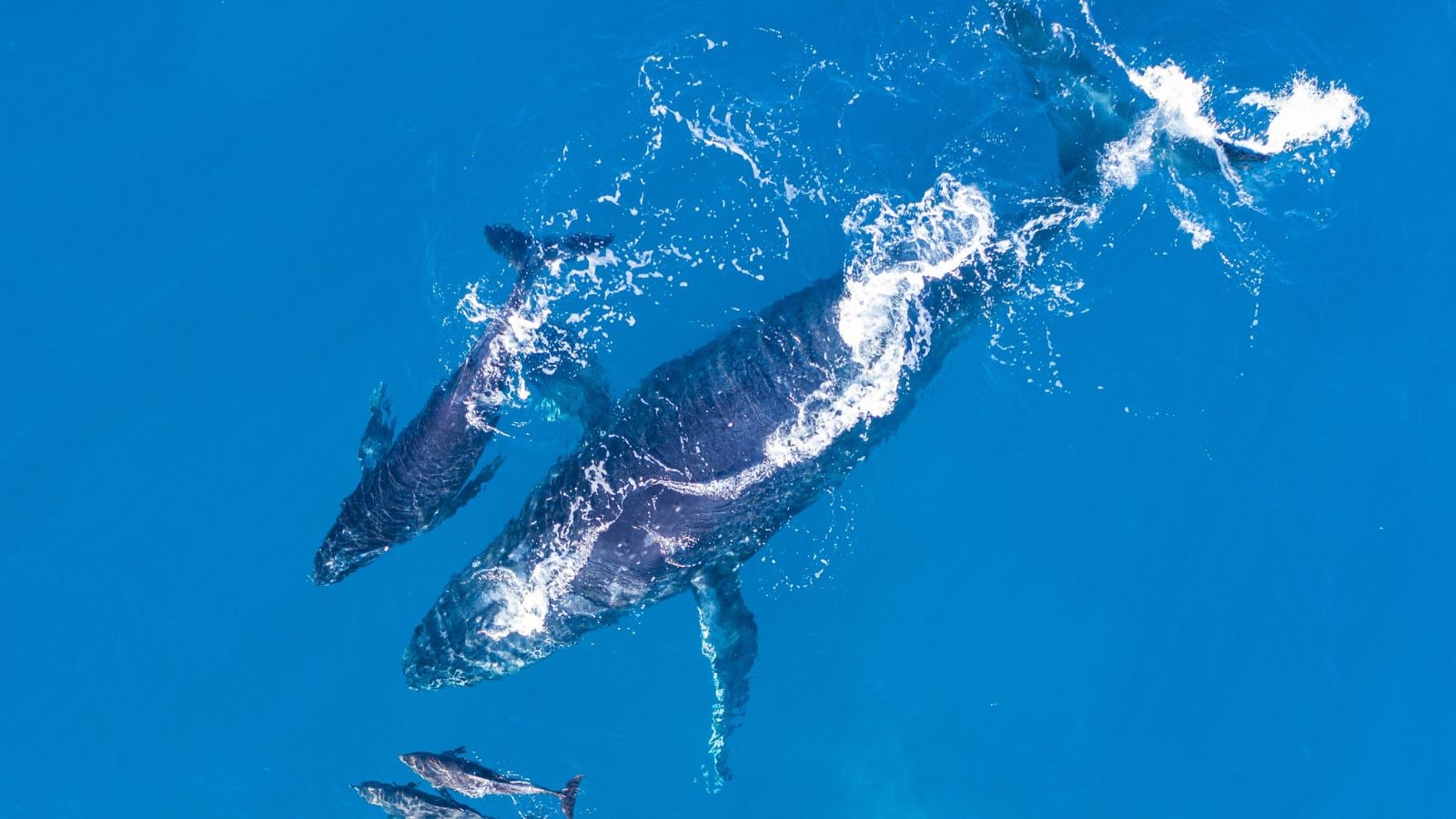
Imagine animals are like cars with lots of parts that can break.
Bigger animals have more parts, so you'd think they'd break down more often, especially from getting 'cancer sickness.'
But scientists looked at whales, who are super big and live for a very long time, and found they rarely get this sickness.
It turns out their car parts, their cells, are much better at fixing themselves when they get tiny damages, called mutations.
It's like their cells have super-glue instead of regular glue for fixing broken DNA.
They also have a special helper protein that is better at fixing things than ours.
By studying these amazing whales, scientists hope to learn how to make our own 'car parts' better at fixing themselves so people get cancer less often.

Peto's Paradox highlights that larger, longer-lived animals, contrary to expectations, do not develop cancer more frequently.
Bowhead whales, the longest-living mammals, rarely develop cancer despite having more cells and longer lifespans.
Whale cells demonstrated a superior ability to repair DNA mutations and became malignant with fewer cancer-associated mutations compared to human cells.
Whale DNA mutates at a significantly lower rate, and their cells are more adept at fixing double-strand DNA breaks through a process called NHEJ.
A protein called CIRBP, found to be more efficient in whales than humans, enhances DNA repair and reduces mutations, offering potential insights for human cancer research.
- Who
- International scientists, including researchers from the University of Rochester, Albert Einstein College of Medicine, and other institutions.
- What
- Investigated how bowhead whales, despite their large size and long lifespan, rarely develop cancer, uncovering superior DNA repair mechanisms and a more efficient version of the CIRBP protein.
- When
- The study is published in Nature (November 2025).
- Where
- Research conducted by international scientists, with findings applicable to human cancer research.
- Why
- To understand Peto's Paradox, which questions why larger, longer-lived animals don't develop cancer more frequently than smaller ones, potentially leading to new cancer prevention strategies for humans.
- Research Focus
- Peto's Paradox and cancer resistance in whales
- Key Species Studied
- Bowhead whale
- Publication Mentioned
- Nature (November 2025)
- Key Protein Identified
- CIRBP (cold-inducible RNA-binding protein)
- Lead Researchers Mentioned
- Vera Gorbunova, Andrei Seluanov, Jan Vijg
- Institutions Involved
- University of Rochester, Albert Einstein College of Medicine, Johns Hopkins University, MD Anderson Cancer Center, Harvard Medical School, and others.