

2 weeks ago
F.R.I.E.N.D.S. was problematic, but ours: Revisiting beloved old sitcoms
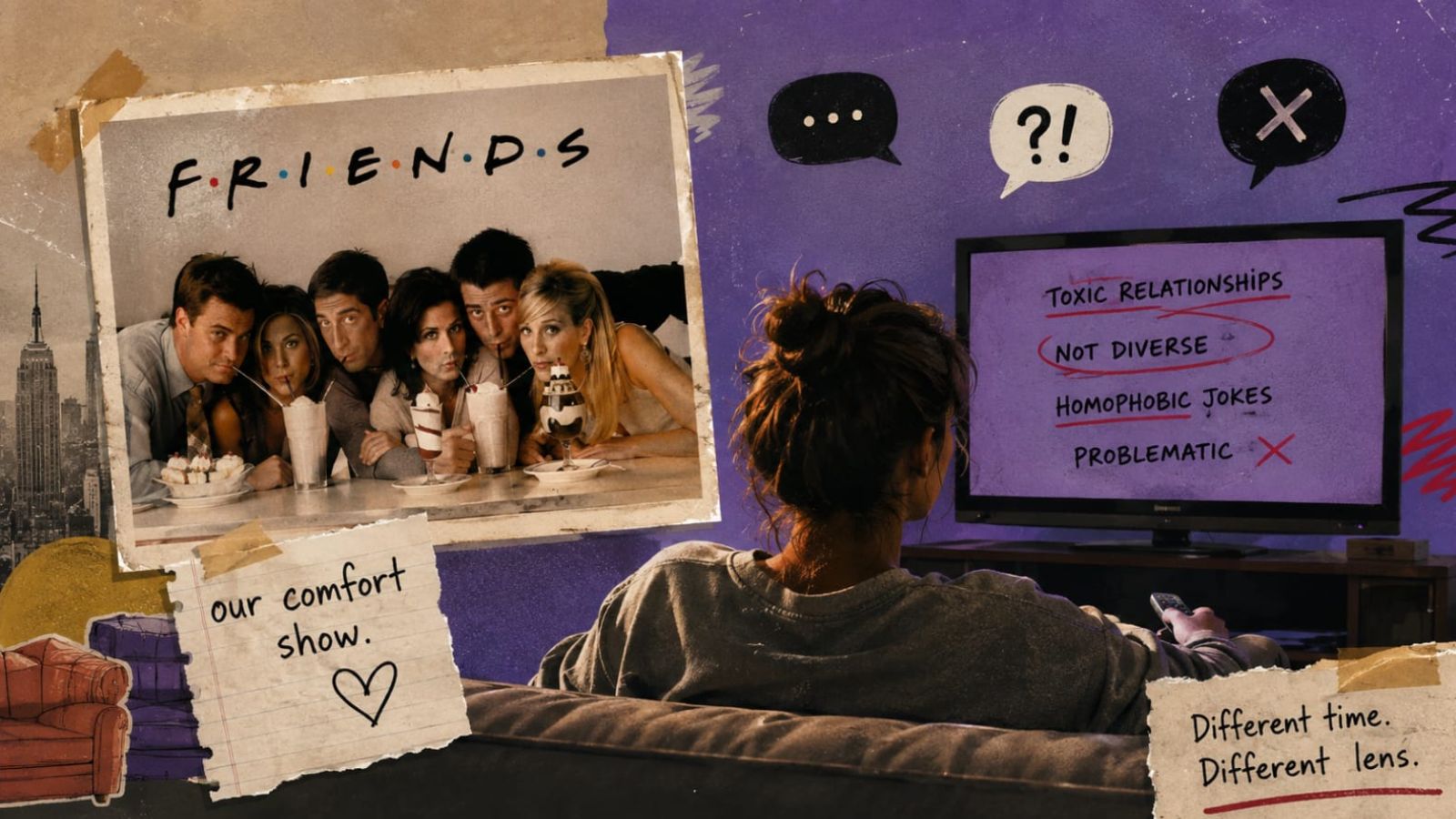
Long ago, a TV show called F.R.I.E.N.D.S. told funny stories about six friends living in New York City.
Many grown-ups loved watching it when they were young.
Now, kids who watch it for the first time think some parts are not fair or kind.
They notice that all six friends look the same, that one friend is too bossy with his girlfriend, and that some jokes about gay people are mean.
The grown-ups who loved the show say it taught them a lot.
It showed people living on their own, working as a waiter and being proud, and it talked about gay people in a calm, normal way.
Other old shows like The Big Bang Theory and That '70s Show were also criticized later.
The writer says every generation calls out the shows from before.
Maybe one day children will find problems in the shows kids watch today.
The writer hopes that every new generation makes the world a little more open and kind.

F.R.I.E.N.D.S., the American sitcom about six friends in New York that first aired in the mid-1990s, ended 22 years ago and is now being re-evaluated by a new generation.
Critics, especially Gen Z, point to the all-white main cast, Ross's possessive behavior toward Rachel, and jokes about homosexuality as problematic.
Defenders argue the show was a revelation for cocooned audiences, teaching a generation about independence, dignity of labor, and sexual minorities at a time of limited information access.
Other older sitcoms faced similar criticism: The Big Bang Theory for stereotyping nerds, That '70s Show for racial jokes about Fez, and How I Met Your Mother for having no Black main cast member.
The author notes today's shows, such as Adolescence, may themselves be criticized by future generations for regressive manosphere ideas portrayed by new-age influencers.
- Who
- Gen Z critics who critique old sitcoms and older generations, such as the article's author, who grew up loving shows like F.R.I.E.N.D.S.
- What
- An opinion piece examining why beloved sitcoms like F.R.I.E.N.D.S. are now viewed as problematic and how each generation re-evaluates the shows of those who came before.
- Where
- The column discusses the American sitcom set in New York City and is written from the perspective of an Indian readership.
- When
- 22 years after F.R.I.E.N.D.S. ended; the series originally aired in the mid-1990s.
- Why
- Newer generations, with earlier access to diversity and awareness, find offensive jokes, lack of representation, and toxic dynamics in the shows older generations loved.
Modern critics (Gen Z)
Nostalgic defenders (older generations)
Representation in F.R.I.E.N.D.S.
Modern critics (Gen Z)
All six main characters are white and there is no Black cast member, a serious flaw given the show's international popularity.
Nostalgic defenders (older generations)
For viewers in cocooned societies, the show's casual, matter-of-fact treatment of homosexuality and of living independently opened up a new, more diverse world.
Judging old shows by today's standards
Modern critics (Gen Z)
Each new generation is right to call out the offensive jokes, stereotypes, and toxic relationship dynamics that older shows contained.
Nostalgic defenders (older generations)
Shows must be judged within the context of their time; flaws can be accepted without disowning something that offered guidance and light when it was needed.
Whether today's shows will face the same reckoning
Modern critics (Gen Z)
Shows now favored by Gen Z, such as Adolescence, portray regressive manosphere ideas and may be torn apart by a future, more aware generation.
Nostalgic defenders (older generations)
Every generation so far has opened up its world a little wider, and the hope is that the path ahead continues to accommodate more rather than moving backward.
Key facts
- Show examined
- F.R.I.E.N.D.S., an American sitcom
- Setting
- New York City, mid-1990s
- Time since ending
- 22 years
- Main characters
- Six friends, all white
- Main criticisms
- All-white cast, Ross's possessive behavior toward Rachel, homophobic jokes
- Main defenses
- Taught a generation about independence, dignity of labor, and sexual minorities
- Other shows criticized
- The Big Bang Theory, That '70s Show, How I Met Your Mother
- Modern show referenced
- Adolescence
Sources
Related news

Why Every Generation Complains About the One After It
New Hangout Sitcoms Turn Friendship FOMO Into Streaming Appeal

Mumbai’s Friends Experience Turns Longtime Fandom Into Emotional Memories
Why Young People Are Society’s Early-Warning System Today
Dil Chahta Hai at 25: Adulthood Changes Friendship

Vijay-Trisha Friendship Beyond the Noise Draws Public Attention
Josh Radnor Says He Isn’t Close to HIMYM Co-Stars

Heavy Rain Disrupts Life in South Gujarat

Josh Radnor Reveals Auditioning for The Office
The Sunk Cost Fallacy: Why Viewers Can't Quit Prestige TV
