

Archive · 24 Sep 2025
Bathing Habits: Mughals vs. British in Colonial India
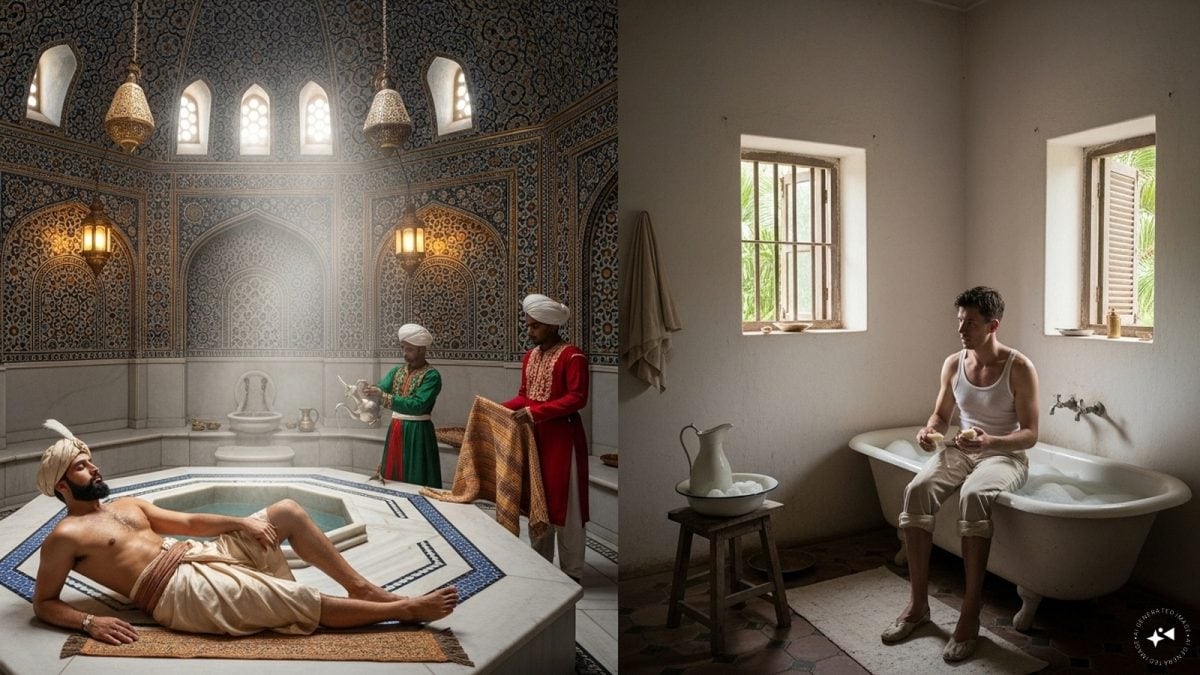
Imagine two groups, the Mughals and the British, coming to India a long time ago.
They each had their own ways of getting clean!
The Mughals built special bathhouses like fancy spas, using natural scrubs and enjoying cold baths.
The British initially took baths in tubs like they did back home, but they learned to change as India was hotter.
The British brought soap, helping people get cleaner.
Both groups changed how they bathed to fit in with India's heat and customs.

Mughals built hammams inspired by Persian and Turkish bathhouses.
Mughals used scrubs made from gram flour, turmeric and other ingredients instead of soap.
Some Mughals admired and used water from the Ganges river.
British initially bathed in bathtubs, similar to European customs.
British introduced modern soap and adapted to local conditions over time.
- Who
- Mughals and British
- What
- Adapted bathing habits to the Indian climate and culture.
- When
- 16th-19th centuries for Mughals; starting in 17th for British
- Where
- India
- Why
- Adapt to the climate, culture, and maintain hygiene.
- Mughal Bathhouses
- Hammams inspired by Persian and Turkish models
- Mughal Soap
- Used natural scrubs like gram flour and turmeric
- Ganges River
- Revered by some Mughals for its purity
- British Bathing
- Initially used bathtubs, later adapted
- British Soap
- Introduced modern soap brands like Lifebuoy