

Archive · 18 Sep 2025
Oldest Dome-Headed Dinosaur Fossil Discovered in Mongolia
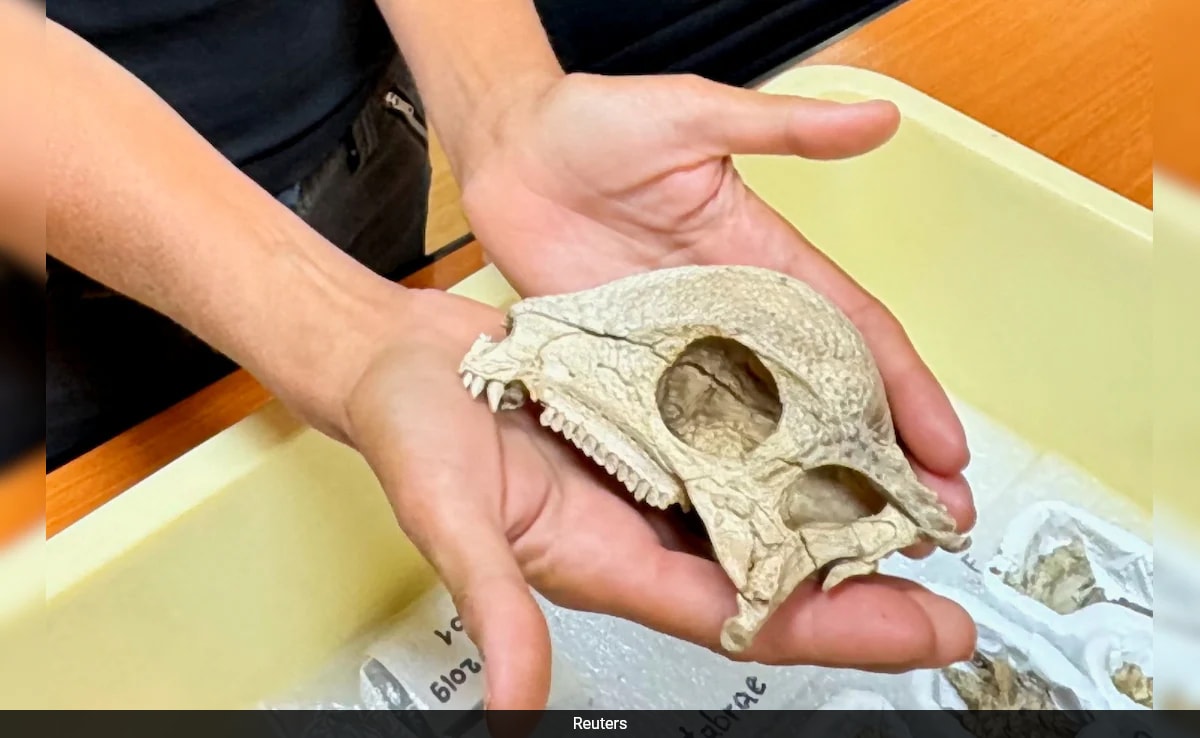
Imagine a dinosaur with a thick, bony dome on its head.
Scientists found a remarkably preserved fossil of a juvenile, named Zavacephale, in Mongolia.
This dinosaur lived about 108 million years ago and had a well-formed dome, possibly used for social behaviors.
This discovery is the oldest and most complete pachycephalosaur fossil, offering clues about how these dinosaurs behaved.
The fossil also includes stomach stones, known as gastroliths.
The environment where Zavacephale lived included lakes and other plant-eating dinosaurs.

A largely complete fossil of a juvenile pachycephalosaur, named Zavacephale rinpoche, was discovered in Mongolia.
The fossil is the oldest and most complete pachycephalosaur fossil found to date.
Zavacephale lived about 108 million years ago during the Early Cretaceous Period.
The dinosaur had a well-developed cranial dome, which may have been used for social behaviors.
The discovery provides new insights into the anatomy, evolution, and behavior of pachycephalosaurs.
- Who
- Researchers
- What
- Discovery of the oldest and most complete fossil of a juvenile pachycephalosaur, Zavacephale rinpoche.
- When
- Dating back to about 108 million years ago during the Early Cretaceous Period.
- Where
- Gobi Desert of Mongolia
- Why
- To understand the anatomy, evolution, and behavior of pachycephalosaurs.
- Dinosaur Name
- Zavacephale rinpoche
- Age of Fossil
- Approximately 108 million years old
- Location of Discovery
- Gobi Desert, Mongolia
- Cretaceous Period
- Yes
- Size of Juvenile
- Approx. 1 meter long, under 6 kg
- Estimated Length of Adults
- Possibly less than half of 14 feet (4.3 meters)
