

Archive · 28 Sep 2026
Rare Copper Coins Reveal Shorapur Nayakas’ Deccan History
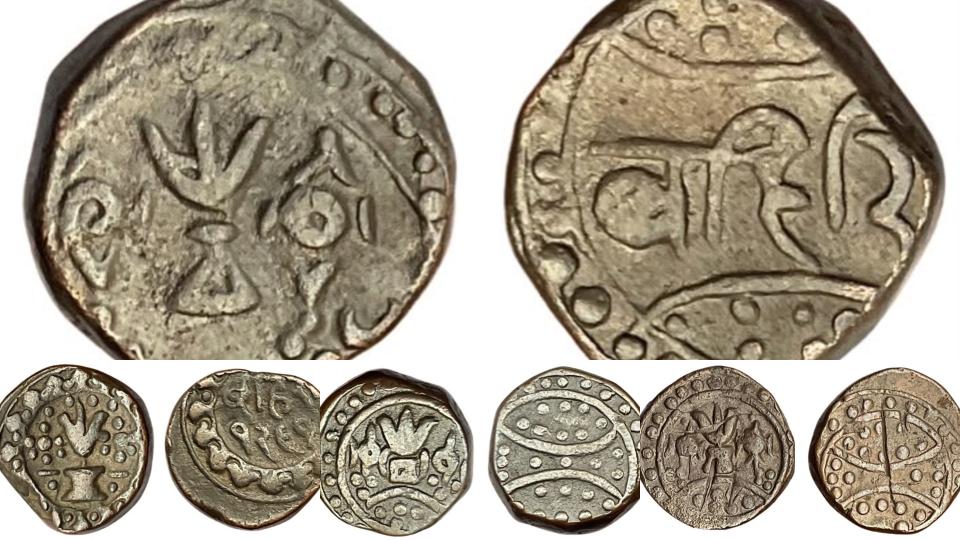
Some rulers in Shorapur made small copper coins long ago.
Shorapur is now in Yadgir district of Karnataka.
The coins were made during the rule of Raja Venkatappa Nayaka.
One side shows symbols connected with the Hindu god Lord Venkateswara.
These include a conch, a special U-shaped mark and a chakra.
The other side has dots and the words “Venkatap Raja” in Devanagari.
The coins show that people used Devanagari and Persian writing at that time.
Historians study them because they reveal details about Deccan history, religion and government.

Copper coins issued during Raja Venkatappa Nayaka’s reign preserve aspects of Shorapur’s political, religious and cultural history.
The coins feature Vaishnava symbols linked to Lord Venkateswara, including a conch, a U-shaped mark and a chakra.
Their reverse carries a dotted design and a Devanagari inscription reading “Venkatap Raja.”
The coins also reflect the period’s use of both Devanagari and Persian scripts.
Numismatist R. Vaikuntachary said the Nayakas traced their origins to the Kakatiya era and later served as Vijayanagara feudatories.
- Who
- Raja Venkatappa Nayaka and the rulers of the Shorapur Nayaka dynasty.
- What
- Rare copper coins associated with Shorapur’s rulers have been examined as historical artifacts.
- When
- The coins date to the reign of Raja Venkatappa Nayaka; the article does not provide a precise date.
- Where
- Shorapur, in present-day Yadgir district of Karnataka, in the Deccan.
- Why
- They provide evidence about the region’s political, religious, cultural and economic history.
- Ruler
- Raja Venkatappa Nayaka
- Region
- Shorapur, present-day Yadgir district, Karnataka
- Material
- Copper
- Obverse symbols
- Vaishnava symbols including a conch, Namam and Chakra
- Reverse inscription
- “Venkatap Raja” in Devanagari script
- Historical affiliations
- The Nayakas reportedly served as feudatories to the Vijayanagara Empire
- Historical origins
- Traditions cited by numismatist R. Vaikuntachary link them to the Kakatiya era