

Archive · 8 Nov 2025
US and China vie for AI supremacy in technological and economic race
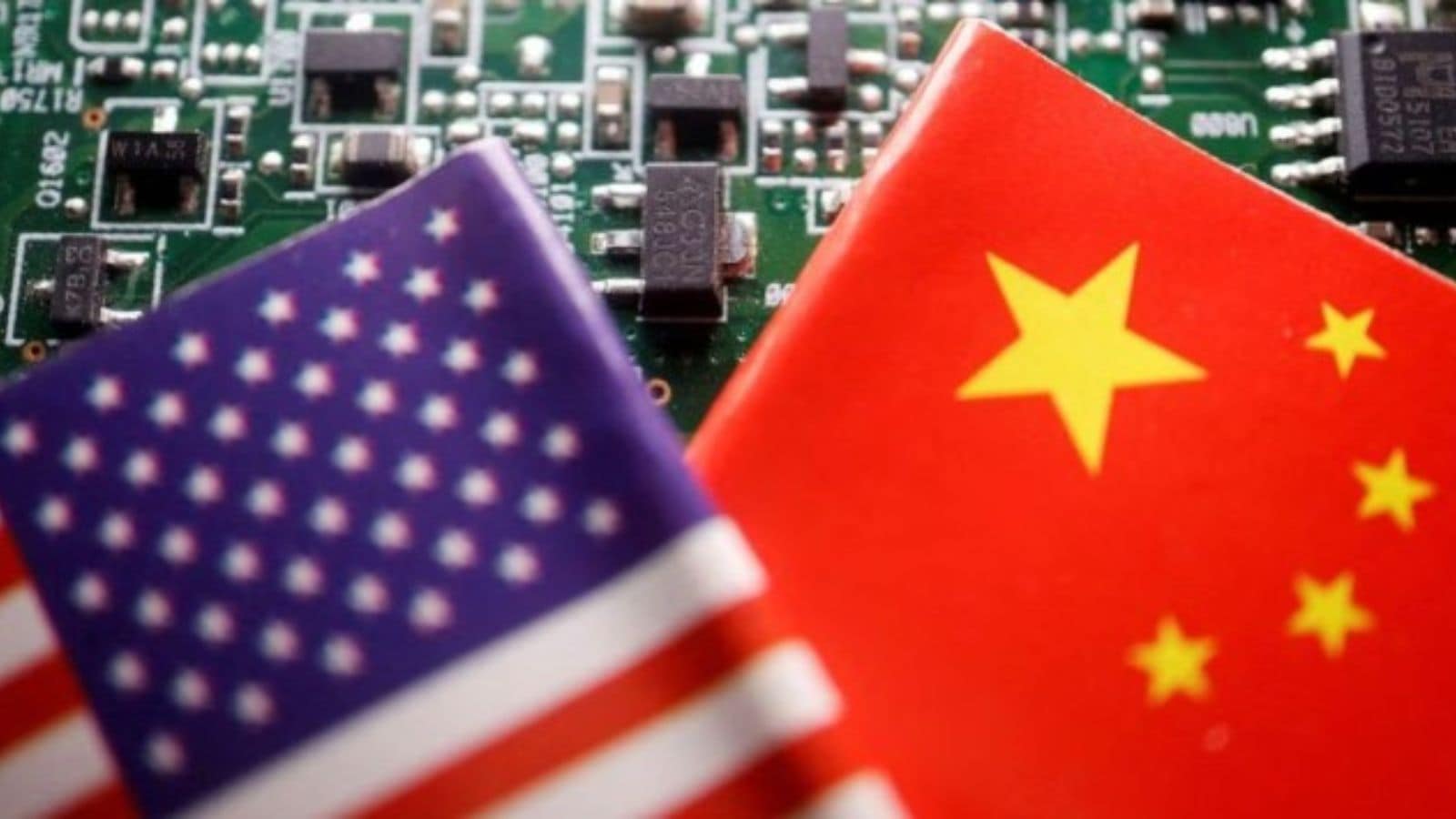
Imagine two kids, America and China, having a big race to see who can build the best super-smart computer brains, called AI.
America got a head start with really clever ideas and super-fast computer chips.
China is catching up fast, sometimes using clever tricks to make their AI work well with less power and sharing their ideas for free so more people can use them.
Both countries' governments think AI is super important, like a new kind of superpower.
America wants everyone to use its technology, while China sees AI as something everyone should benefit from.
Building these AI brains is very expensive, and both countries are spending lots of money, with governments and big companies investing billions.
America has many smart people from all over the world helping, but China is also working hard to bring its smart people back home.
A big challenge for China is getting the best computer chips, as America has put rules on who can buy them.
Both are also building huge buildings called data centers to house the AI, and need lots of electricity, which is becoming a problem for both.
The race is very close, and the winner could shape the future of technology.

The US and China are in a close race for global AI leadership, with the US having an early lead in breakthroughs and advanced chips.
China is rapidly developing its AI capabilities, often by making models work with less computing power and embracing open-source standards.
Both countries view AI as a crucial economic, political, and national defense imperative, with significant government support and investment.
Key challenges include access to advanced AI chips (a hurdle for China due to US export controls) and sufficient energy infrastructure (a growing concern for both nations).
The competition extends to talent acquisition, with the US relying on international talent and China working to bring back its educated citizens.
- Who
- United States (government and tech firms like OpenAI, Google, Nvidia) and China (government and tech firms like DeepSeek, Alibaba, Huawei)
- What
- A technological and economic competition for global leadership in Artificial Intelligence, focusing on AI development, state support, chip manufacturing, talent acquisition, infrastructure, and market access.
- When
- Current, with US AI boom starting nearly three years ago, and significant government plans and investments ongoing.
- Where
- Global competition, with primary focus on the US and China.
- Why
- AI is seen as a critical economic, political, and national defense imperative for both countries, determining the technological superpower of the 21st century.
United States
China
AI Development Strategy
United States
The US focuses on proprietary AI systems, charging for access to top-tier models to offset development costs, and encourages open models for their geostrategic value. The government emphasizes leading the world in AI and wants the global technology stack to be American-based.
China
China prioritizes AI as a public good and embraces open-source standards, making AI products freely available to ensure global adoption and compete with US models. They aim to prevent AI from being solely a 'game of rich countries.'
Government Role and Regulation
United States
The US government is implementing an AI Action Plan to cut red tape, build data centers, and ensure AI systems do not promote ideological dogmas. State-level regulations are seen by some executives as slowing down development.
China
China's centralized system prioritizes societal stability and censorship, with AI developers needing to adhere to these priorities. There are no explicit directives for open-source, but it's a strategic interplay of market and state priorities. AI is integrated into education and deployed for surveillance.
Chip Access and Infrastructure
United States
The US leads in advanced AI chips from companies like Nvidia but faces constraints with aging power grids. There is a push for significant investment in physical infrastructure and energy to support AI data centers.
China
China faces a significant obstacle due to US export controls limiting access to cutting-edge AI chips, prompting a focus on domestic production. They have built vast data pools and are increasing energy capacity, offering cut-price power for AI operations using locally-made semiconductors.
Talent Acquisition
United States
The US has historically dominated AI talent through attracting international researchers, but tighter visa regimes and fluctuating funding pose risks to this pipeline.
China
China is actively reversing brain drain by luring scientists and entrepreneurs educated abroad back to domestic institutions, emphasizing patriotism over high monetary compensation.
Copyright and Data Usage
United States
The US grapples with 'fair use' legal gray areas regarding copyrighted material for AI training, leading to lawsuits from creators. There are calls to be freed from state-level laws that hinder access to copyrighted works.
China
China's legal landscape allows for the ingestion of copyrighted material for AI training, considering it temporary reproduction as long as it's not reused in its original form, resulting in few binding copyright infringement decisions.
- US AI Action Plan
- July plan focusing on reducing red tape for data centers and electricity supply to maintain AI leadership.
- China's AI Priority
- National priority with government support, interlinked data processing hubs, and a focus on open-source AI models.
- US AI Investment
- $193 billion into AI startups (as of early October), with Google, Meta, Microsoft, and Amazon expected to spend over $370 billion in 2025.
- China AI Investment
- Projected $98 billion in AI capital expenditure for this year, with significant government and big tech contributions; $8.2 billion AI Industry Investment Fund established.
- Talent Development (US)
- Historically strong, with 60% of top AI companies founded by immigrants and 70% of AI graduate students being international.
- Talent Development (China)
- Reversing brain drain through programs like the rebranded Thousand Talents Plan, luring back over 7,000 scientists and entrepreneurs.
- Chip Constraints
- US export controls limit China's access to advanced AI chips; China is focusing on domestic production (e.g., Huawei, SMIC) which is less effective but improving.
- Energy Infrastructure
- US faces aging power grids; China added 429 GW of new capacity in 2024, offering cut-price power for AI operations.

