

Archive · 6 Nov 2025
Dark Dining: Eating in Darkness to Enhance Senses and Shift Perspective
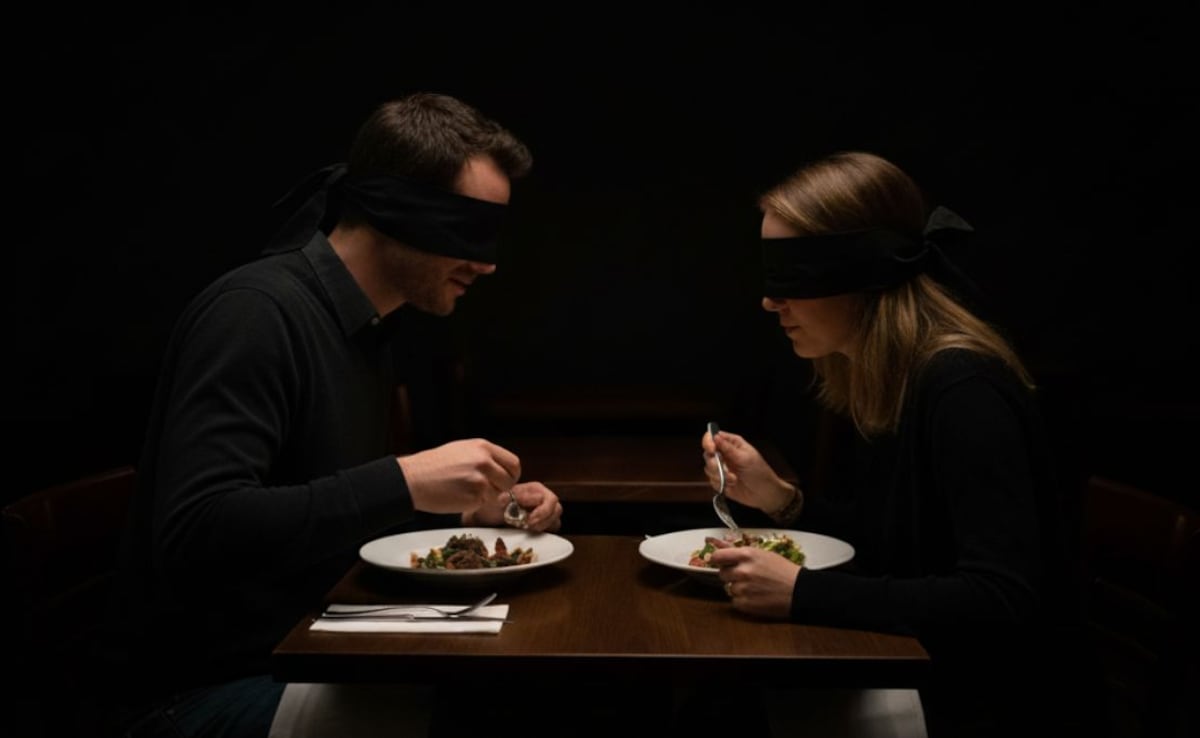
Imagine eating a meal where you can't see anything at all!
That's called 'dark dining.'
It's like a game where you have to use your nose, ears, and hands to figure out what you're eating because your eyes are closed or it's super dark.
Some restaurants use people who can't see very well to help guide you to your seat and serve your food.
Because you can't see the food, it tastes and smells different, making the flavors more exciting.
It helps us realize how much we usually rely on our eyes to decide if we like something.
This idea started a long time ago in Europe, partly to help people understand what it's like to not see, and also to give jobs to people who are blind.
While it's a fun and unique way to eat, some people think it might not be fair to pretend to be blind for entertainment.
The goal is to help everyone understand each other better and appreciate all their senses.

Dark dining is an experience where patrons eat in complete darkness or while blindfolded to heighten other senses.
The concept aims to shift focus from visual cues to taste, smell, sound, and touch during a meal.
Originating in Europe in the late 1990s, dark dining often employs visually impaired staff as guides.
The experience can alter the perception of flavors and textures, offering surprise and a new appreciation for food.
Ethical discussions surround dark dining regarding the potential trivialization of blindness and the role of visually impaired staff.
- Who
- Sighted diners and visually impaired servers/guides.
- What
- A dining experience in complete darkness or while blindfolded to heighten non-visual senses and potentially foster empathy and understanding.
- When
- Popularized since the late 1990s, with ongoing variations and events globally.
- Where
- Restaurants and pop-up events worldwide, originating in Europe.
- Why
- To transform the dining experience by focusing on taste, smell, sound, and touch; to offer a glimpse into life without sight; and to provide employment and visibility for visually impaired individuals.
Perceived Benefits and Intentions of Dark Dining
Ethical Criticisms and Concerns of Dark Dining
Sensory Experience and Cognitive Shift
Perceived Benefits and Intentions of Dark Dining
Dark dining offers a unique culinary experience by eliminating visual cues, forcing diners to engage and enhance their senses of taste, smell, sound, and touch, leading to a deeper appreciation of food and a new perspective on sensory perception.
Ethical Criticisms and Concerns of Dark Dining
The act of intentionally simulating blindness for a dining experience risks trivializing the daily lived realities and challenges faced by individuals with genuine visual impairments. It can turn a disability into a spectacle or a trendy novelty.
Employment and Social Impact
Perceived Benefits and Intentions of Dark Dining
Many dark dining establishments intentionally employ visually impaired individuals as guides and servers, providing them with employment, skill development, and financial independence, thereby fostering greater understanding and visibility for the blind community.
Ethical Criticisms and Concerns of Dark Dining
There is a concern that visually impaired staff might be reduced to props that enhance the sighted diner's experience, rather than being genuinely empowered. Questions arise regarding fair compensation, respect, and whether their voices are truly integrated into the operations beyond serving the novelty.
- Origin
- Popularized in Europe in the late 1990s, with the first permanent restaurant 'blindekuh' opening in Zurich in 1999.
- Core Concept
- Diners eat in complete darkness or while blindfolded, relying on senses of taste, smell, sound, and touch.
- Sensory Impact
- Enhances the perception of flavors, textures, and aromas by removing visual preconceptions and shifting brain's sensory weighting.
- Employment Model
- Often employs visually impaired individuals as servers and guides to foster understanding and provide employment opportunities.
- Experience Duration
- Guests typically leave phones and watches at the door before being guided into the dark dining room.
- Post-Meal Activity
- Many venues offer a debriefing session after the meal to reveal the dishes served and discuss the experience.