

Archive · 20 Jul 2026
Trump's presidency strains US-India relations
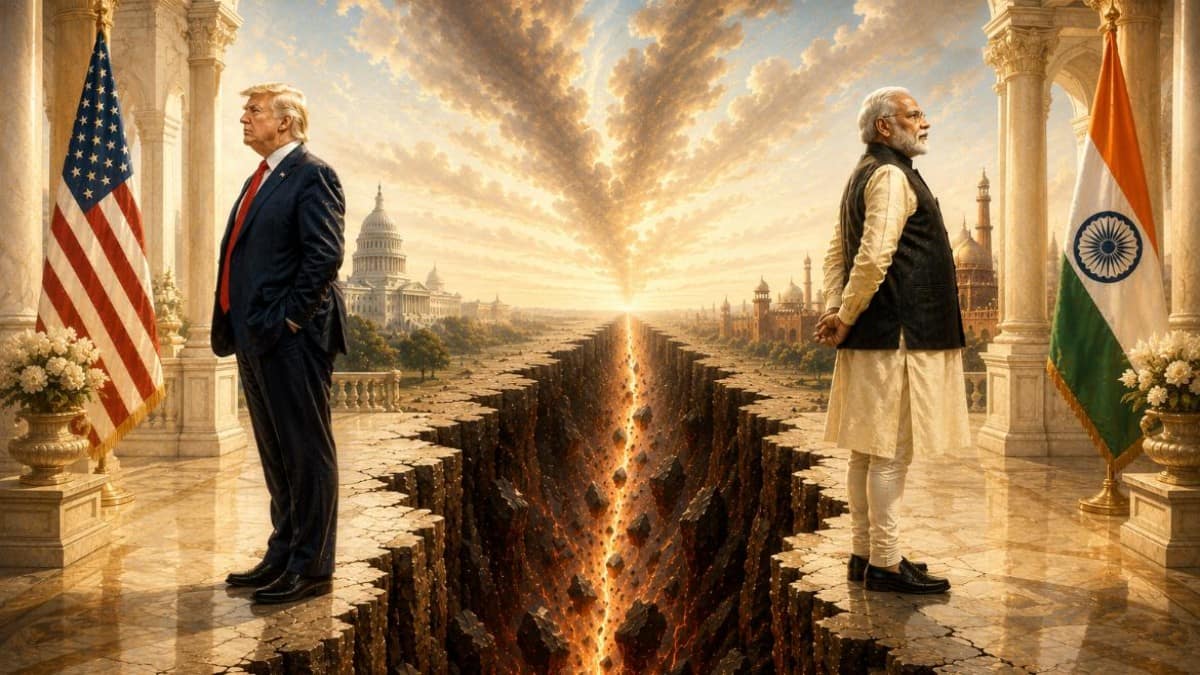
The relationship between the United States and India has been strained under President Donald Trump's second term.
Trump's policies, such as imposing tariffs and sanctions, have undermined Indian interests.
The US sees India as a partner to counter China but wants to limit its power to prevent it from becoming a rival.
India, on the other hand, values its autonomy and resists external prescriptions.
The two countries have a history of strategic convergence and recurring disagreements, with Trump's presidency highlighting the transactional nature of their relationship.
India must prepare for a 'resisted' rise and come up with a post-Trump plan to navigate the complex dynamics of US-India relations.

US-India relations have been strained under Donald Trump's second term.
Trump's policies, such as imposing tariffs and sanctions, have undermined Indian interests.
The US sees India as a partner to counter China but wants to limit its power to prevent it from becoming a rival.
India values its autonomy and resists external prescriptions, leading to friction with the US.
The relationship between the two countries is transactional, with the US supporting India only so long as it reinforces American primacy.
- Who
- Donald Trump (US President), Narendra Modi (Indian Prime Minister), Lindsey Graham (US Senator)
- What
- Strained US-India relations due to Trump's policies and the transactional nature of the relationship.
- When
- Since January 2025, with the return of Donald Trump to the White House.
- Where
- United States and India.
- Why
- The US wants to support India's rise as a counterweight to China but limit its power to prevent it from becoming a rival, leading to friction and a transactional relationship.
US Strategic Interests
Indian Autonomy
US Support for India
US Strategic Interests
The US supports India's rise as a counterweight to China but wants to limit its power to prevent it from becoming a rival.
Indian Autonomy
India values its autonomy and resists external prescriptions, aiming to rise on its own terms.
Trade and Tariffs
US Strategic Interests
The US imposes tariffs and sanctions to protect its economic interests and maintain primacy.
Indian Autonomy
India seeks fair trade practices and resists economic coercion that undermines its strategic interests.
- Key Figures
- Donald Trump (US President), Narendra Modi (Indian Prime Minister), Lindsey Graham (US Senator)
- Key Events
- Imposition of 25% tariff on Brazil, Proposal of 100% secondary tariffs on India for buying Russian oil
- Strategic Context
- US sees India as a democratic counterweight to China but wants to limit its rise to prevent it from becoming a rival.
- Historical Context
- US-India relations have been characterized by strategic convergence and recurring disagreements, with Trump's presidency highlighting the transactional nature of the relationship.
- Civilizational Divide
- India thinks in long-term civilizational terms, while the US thinks in immediate strategic terms, leading to friction.