

Archive · 28 Oct 2025
H-1B Visa Rule Changes Spark Debate Over Immigrant Behavior
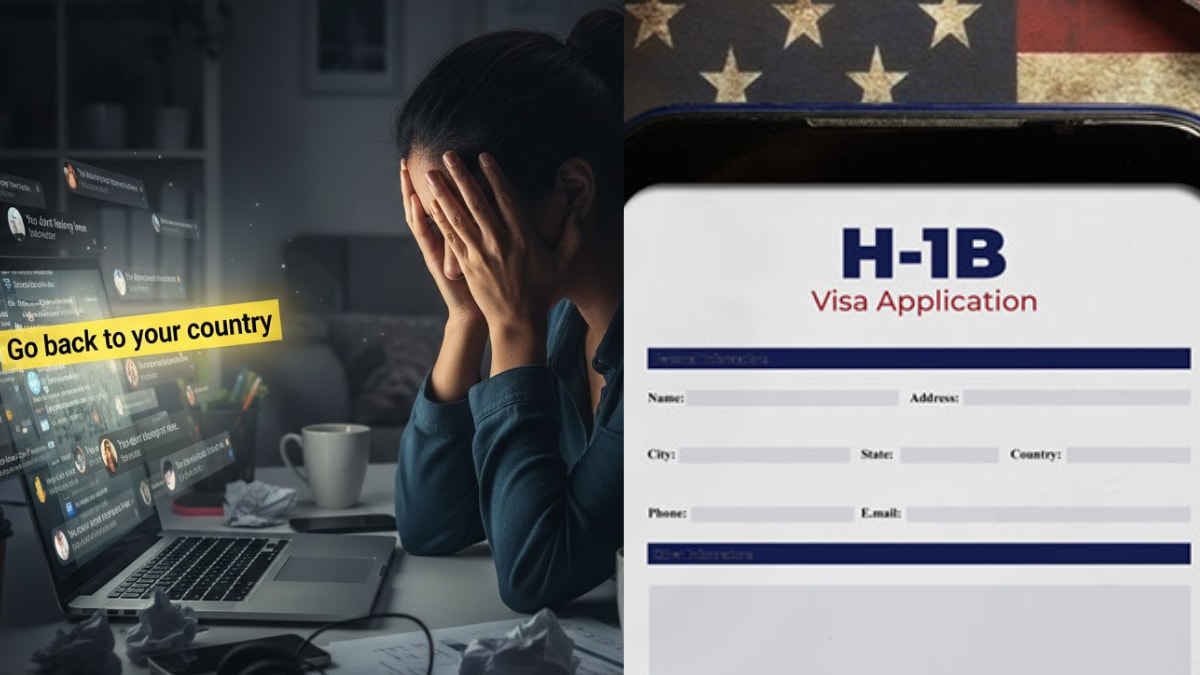
Imagine the government is making new rules for companies wanting to hire people from other countries, like India.
One person wrote online that they are happy about these new rules because they think some people from India who come to the US are not polite.
They shared stories about a man who got a free ticket but didn't show up for a meeting, and about people in their apartment building not cleaning up.
But other people disagreed.
They said that being rude is something people do no matter where they are from, and it's not fair to blame all people from India for what a few people might do.
They also said that just because someone is from a certain country doesn't mean they are all the same.

A viral social media post praised new H-1B visa rules, citing perceived rudeness among some Indian immigrants.
The original poster shared anecdotes about a demanding customer and inconsiderate behavior in his apartment building.
Netizens were divided, with some agreeing with the original poster's observations about certain immigrant behaviors.
Others strongly criticized the post, calling it racist and arguing that individual behavior does not represent an entire ethnicity.
The debate highlights differing views on immigration, cultural integration, and the validity of generalizing from individual experiences.
- Who
- An American professional and other social media users.
- What
- A social media post about H-1B visa rule changes sparked debate, with the original poster linking the changes to perceived 'rudeness' and 'inconsideration' of some Indian immigrants, while others defended against generalizations.
- When
- Recent, in response to new H-1B visa rules.
- Where
- Social media platforms (US-centric discussion).
- Why
- The debate was triggered by the announcement of stricter H-1B visa rules and a viral post connecting these rules to negative stereotypes about Indian immigrants.
Concerns About Immigrant Behavior
Defense Against Generalizations
Individual Experiences Cited as Evidence
Concerns About Immigrant Behavior
The original poster shared anecdotes about a perceived 'rudeness' and 'inconsideration' from some Indian immigrants, including a specific instance involving a conference ticket and general observations about building etiquette.
Defense Against Generalizations
Critics argue that individual behavior does not represent an entire ethnic group and that 'Karens' and other negative stereotypes exist within all demographics, including native-born Americans.
H-1B Visa Rules and Immigration Impact
Concerns About Immigrant Behavior
The poster linked the perceived negative behaviors to H-1B visa changes, suggesting that 'poorer-class' Indians and 'H1B abuse' have contributed to issues.
Defense Against Generalizations
Others point out that rude people exist in every ethnicity and that attributing such behavior to an entire community and then tying it to visa policies is an exaggeration.
Generalizations and Stereotypes
Concerns About Immigrant Behavior
The original post implies a pattern of inconsiderate behavior among a group of Indian immigrants based on personal experiences in a building and with a customer.
Defense Against Generalizations
Several users called out the original poster as racist and emphasized that individual actions should not lead to broad generalizations about all members of an ethnic group.
- New H-1B Visa Rule
- Requires employers to pay a $100,000 application fee for each new foreign worker.
- Viral Social Media Post
- An American professional praised the H-1B visa rule changes due to perceived 'rudeness' and 'inconsideration' from some Indian immigrants.
- Original Poster's Examples
- Conference ticket negotiation, no-shows, and issues with building etiquette (garbage, noise).
- Counterarguments
- Rudeness exists in all ethnicities; individual behavior doesn't define a group; H-1B visa policies are separate from personal conduct.