

Archive · 9 Jan 2026
Circular Economy: Key for Indian MSME Survival
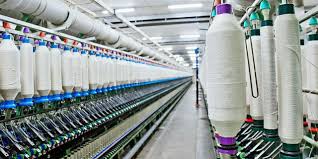
Small and medium textile businesses in India are facing new rules from buyers in Europe.
These rules require proof that their products are made in ways that are good for the environment.
This means businesses must now focus on using less water, saving energy, and managing waste properly.
Many of these businesses already do some of these things, but they need to document and improve these practices to keep selling their products.
Working together in clusters can make it easier and cheaper for these businesses to adopt new, sustainable methods.
This not only helps the environment but also makes their businesses more competitive and profitable.
Examples from places like Panipat show that simple changes can make a big difference.

Indian textile MSMEs must adopt circular economy practices to meet strict environmental regulations from export markets like Europe.
Circular practices, such as wastewater reuse and energy efficiency, are already informally used but need to be formalized for market recognition.
Clusters like Panipat, Tirupur, Surat, Coimbatore, and Karur are well-positioned to benefit from circular economy opportunities due to existing practices.
Financing and technology adoption remain challenges, requiring blended finance, grants, and concessional loans to support MSMEs.
Successful transition to a circular economy requires a sequenced approach: awareness, diagnostics, demonstration, aggregation, finance, and policy alignment.
- Who
- Indian MSME textile units and clusters
- What
- Adoption of circular economy practices for sustainability and market access
- When
- Currently and projected future
- Where
- Textile clusters in India, particularly Panipat, Tirupur, Surat, Coimbatore, and Karur
- Why
- To meet environmental regulations, maintain market access, and improve competitiveness
- Industry
- Textile
- Regions Mentioned
- Tirupur, Panipat, Surat, Coimbatore, Karur
- Market Demand
- Sustainability compliance for exports
- Circular Practices
- Wastewater reuse, heat recovery, energy efficiency
- Financial Opportunities
- USD 1 trillion in circular textiles
- Cluster Business Volume
- Rs1,30,000 crore (Panipat)
- Key Actions
- Shared vision, low-cost actions, long-term partnerships